UK inflation rate hits 3.6% as petrol and diesel surge
UK inflation rate rose to 3.6% in October, a 12-month high, as petrol and diesel prices climbed. Energy bills are forecast to jump 26% in January.
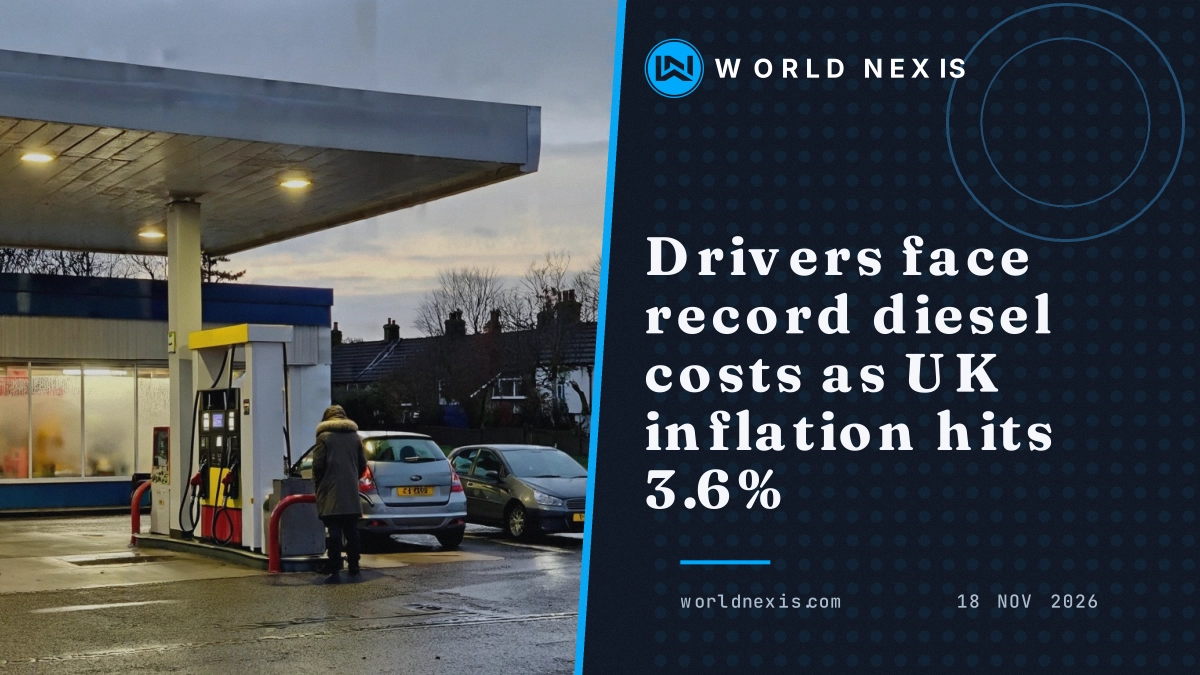
The UK inflation rate rose to 3.6% in the year to October, its highest level for 12 months, as petrol and diesel prices pushed up household costs, the Office for National Statistics said on Wednesday. The reading is up from 3.5% in September and marks a fourth consecutive monthly increase. Transport was the largest single contributor to the rise.
Key points
- The UK inflation rate hit 3.6%, a 12-month high, driven mainly by motor fuel.
- Petrol averaged 174.7p a litre last month, the highest since August 2022.
- Diesel averaged 199.5p a litre, the highest since records began 30 years ago.
- Hotels, restaurants and several electrical goods recorded slower price growth.
Why the UK inflation rate climbed in October
Filling a car with petrol cost 29.7% more than a year earlier, up from 26.5% in September, so petrol price inflation accelerated sharply. Diesel rose 39.5% year on year, against 35.8% a month before. Between September and October, petrol added 5.2p a litre, the ONS said.
Grant Fitzner, chief economist at the ONS, said fuel prices were “once again a major contributor” to the increase. He added that annual costs of raw materials and goods leaving factories “continue to climb, driven by higher crude oil and petrol prices, respectively”.
The acceleration is linked to the US-Israel war with Iran and to renewed hostilities between Russia and Ukraine, which have disrupted global oil supplies. Fuel prices have eased in recent weeks, however, which may soften the November reading.
Tobacco, gas and computers
Annual tobacco duty increases took effect at the start of October. Cigarette prices were 12.9% higher than a year earlier, up from 7.2% in September, while cigars rose 12.8%. Gas climbed 15.6%, compared with 9.8% the previous month.
Personal computers were 7.7% more expensive year on year, against 2.1% in September, and software swung from a 3.3% fall to a 4.2% rise. Train travel inflation accelerated to 3.7% from 0.9%, and bus and coach travel to 2.6% from 1.6%.
Groceries added pressure too. Pasta and couscous inflation reached 7.5%, tea 4.7%, bread 1.9% and fresh fruit 2.7%. Eggs rose 2.2% and olive oil 1.1%, both slightly faster than a month earlier.
Where prices eased in October
The UK inflation rate would have climbed further without relief in hospitality. Hotel stays rose 0.8% year on year, down from 1.2%, and restaurant and cafe inflation slowed to 4.2% from 4.5%.
Food price inflation rose by 0.9%, the slowest pace in five years, the BBC reported. Fish, crisps, rice and soft drinks all recorded slower annual increases than in September. Butter, chocolate, cheese and jam fell further in price than a month earlier.
Some electrical goods swung into deflation. Irons, washing machines, dryers and coffee machines were cheaper than a year earlier in October, after rising in September. Core inflation, which strips out energy and food, and services inflation were little changed.
Energy bills and Bank of England interest rates
Consultancy Cornwall Insight expects a typical annual energy bill to rise 26% from January, an increase of £443 to £2,166. The official price cap announcement is due next week.
Craig Lowrey, Cornwall Insight’s retail markets principal, said the support “can only chip away at the edges of a bill that continues to be pushed up by events in the Middle East”. Emma Reynolds, chief secretary to the Treasury, said the government was helping households with energy costs. VAT on electricity has been cut to zero until next July, and 20 million homes will receive £100 in January.
Bank of England interest rates rose from 3.75% to 4% earlier this month, the first increase in three years, and policymakers signalled a further rise unless the Middle East conflict is resolved. The UK inflation rate is the main gauge the Bank uses when setting borrowing costs. Higher rates lift payments on some mortgages, loans and credit cards.
The Bank believes inflation could peak at 4.9% in the middle of next year and not return to 2% until 2028. Andrew Griffith, the shadow chancellor, said four successive rises were down to “soaring energy costs” and Labour’s decision to “hike taxes and employment costs”.
Analysis
Having covered central banking and market structure for WNN, I look at core and services inflation before reading anything into a headline print. In October both were little changed, which suggests the UK inflation rate is being driven by fuel arriving through the ports rather than by domestic demand. The ONS is clear that transport, not wages, did the lifting.
On that evidence I side with those who call this an imported energy shock. The Bank’s own projections, with a 4.9% peak next year and a return to target only in 2028, already assume a long slog, and a December hike would not lower the price of crude. The strongest counter-argument is that January’s bill increase and the risk of an adverse scenario hitting 6.2% in 2027 could harden expectations, making a pre-emptive rise cheaper than a late one.
For readers, the consequence is that the UK inflation rate is no longer the only number that matters. Borrowers remortgaging in the coming months face a Bank that has explicitly kept another rise on the table. Volatility in fuel and gas, rather than the headline level, is what will shape household budgets this winter.
What happens next
The price cap announcement next week will confirm or challenge Cornwall Insight’s 26% forecast. The Bank of England then decides in December whether to follow this month’s increase with another.
November’s inflation figures will show whether the recent easing in fuel prices feeds through. The £100 payment to 20 million households lands in January, and zero-rate VAT on electricity runs until next July.
Related coverage
- UK inflation rate hits 3.6% on record diesel prices
- UK inflation hits 3.6% as record diesel prices drive rise
- UK inflation confirmed at 3.6% as energy bills drive highest rate in a year
Sources
- Typical energy bill forecast to go up by £443 a year from January as UK inflation rate rises again (bbc.co.uk)
- What factors helped lift inflation in October – and where did prices fall? (leaderlive.co.uk)
- What factors helped lift inflation in October – and where did prices fall? (newsandstar.co.uk)
- What factors helped lift inflation in October – and where did prices fall? (wiltsglosstandard.co.uk)
- What factors helped lift inflation in October – and where did prices fall? (harrowtimes.co.uk)
About the author: Daniel Whitmore is World Nexis News’s Business & Markets Editor, covering business & markets. The analysis section reflects the writer’s view.

Daniel Whitmore
Daniel Whitmore is Business & Markets Editor at World Nexis News, based in New York. He leads coverage of companies, economies, markets and the forces that move them, from central bank decisions to corporate earnings and the cost-of-living pressures facing households on both sides of…



