UK inflation hits 3.6% as record diesel prices drive rise
UK inflation rose to 3.6% in October, a 12-month high, as record diesel and higher petrol prices pushed costs up, with energy bills forecast to jump 26%.
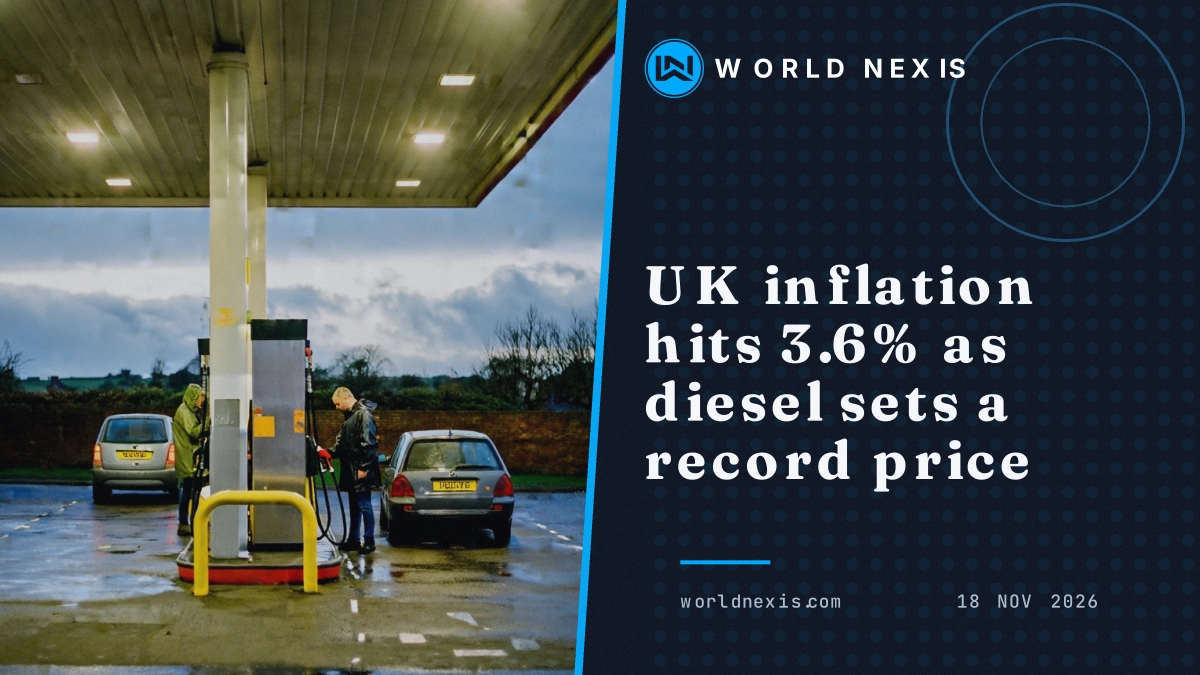
UK inflation rose to 3.6% in the year to October, a 12-month high, as another increase in petrol prices pushed the annual rate further above the Bank of England’s 2% target, the Office for National Statistics said on Wednesday.
The UK inflation reading matched economists’ forecasts and marked the fourth consecutive monthly increase in the Consumer Prices Index, up from 3.5% in September. It leaves the headline rate at its highest level in a year.
Key points
- UK inflation reached 3.6% in October, the fourth rise in a row and the highest annual rate in 12 months.
- Petrol rose 5.2p a litre to an average 174.7p, while diesel climbed 7p to 199.5p, the highest since ONS records began in 1996.
- Food inflation slowed to 0.9%, the weakest pace since September 2021, as chocolate and fish prices fell.
- Cornwall Insight expects the energy price cap to rise 26% in January, adding £443 to a typical annual bill.
UK inflation lifted by fuel, tobacco and the energy cap
Transport prices rose 7.5% year on year, up from 6.6% in September, the ONS said. Grant Fitzner, the ONS chief economist, said fuel prices were “once again a major contributor” to the increase in the annual rate.
He added that the annual costs of raw materials and goods leaving factories “continue to climb, driven by higher crude oil and petrol prices, respectively”. Separate ONS figures showed factory gate prices rising 5.1%, up from a revised 4.7% in September.
Higher petrol prices have now pushed UK inflation up for four consecutive months. Diesel averaged 199.5p a litre in October, the highest since records began 30 years ago, while petrol reached 174.7p, its highest since August 2022, as tensions in the Middle East kept oil prices elevated. The Guardian reported that both fuels have since eased back in November after oil prices moved lower following the US midterm elections.
Tobacco duty adds to the squeeze
Higher tobacco duty at the start of October added around £1.21 to an average pack of 20 cigarettes, according to HMRC data. Tobacco prices rose 5.2% over the month and 12.4% over the year, the fastest rate in almost two years.
The Ofgem energy price cap rose 4% in October, and changes to the way the cap is calculated lifted household gas costs, the Guardian reported. Households are already bracing for energy bills to rise much more sharply in the new year.
Cheaper food offers partial relief
Food price inflation eased to 0.9% from 1.3% in September, the slowest pace in five years. Chocolate prices fell 2.9%, compared with a rise of 0.4% a year earlier, after cocoa costs retreated from the levels reached during the 2024 cocoa crisis.
Restaurants and hotels made the largest downward contribution to the headline rate, the ONS said. Core inflation, which strips out energy and food, and services inflation were little changed on the month.
Even so, UK inflation would have been higher without that relief. Sophie, who manages a cafe at the Old Boat Corner community centre in Brighton, told the BBC she watches her smart meter at home “like a hawk”. She said: “I try to cook using the oven a lot less than I used to. We haven’t got the heating on yet in our household.”
Energy bills forecast to jump 26% in January
UK inflation is likely to keep rising on forecasts that energy bills will jump in the new year. Researchers at the consultancy Cornwall Insight expect Ofgem to lift the annual cap on gas and electricity by 26%, taking a typical household bill to £2,166 a year. The regulator announces the new cap on Wednesday 25 November.
Emma Reynolds, chief secretary to the Treasury, said the government was providing help with energy costs. VAT has been cut to zero on electricity bills until next July, and £100 will be paid to 20 million homes in January.
“Ultimately this support can only chip away at the edges of a bill that continues to be pushed up by events in the Middle East.” Craig Lowrey, Cornwall Insight
Andrew Griffith, the shadow chancellor, said four successive rises in the inflation rate were down to the UK’s “soaring energy costs” and Labour’s decision to “hike taxes and employment costs”.
The Bank of England raised interest rates from 3.75% to 4% earlier this month, its first increase in three years. It signalled a further rise could follow unless the Middle East conflict is resolved. Policymakers believe inflation could peak at 4.9% in the middle of next year and not return to 2% until 2028. In an adverse scenario, with the US-Iran war escalating, the Bank has suggested inflation could reach 6.2% in 2027.
Analysis
Having covered central banking for WNN, I look first at what a rate rise can actually achieve in a shock like this one. The pressure is coming through forecourts, gas bills and crude oil rather than from demand running hot on the high street, and core inflation was little changed. The Bank itself has said there is “limited evidence” that firms are passing costs on.
That is why I side with Cornwall Insight’s Craig Lowrey rather than with the Treasury’s emphasis on support. A £100 payment and a zero VAT rate cannot cover a £443 increase in the cap, and the bigger bill will land around the time higher mortgage costs from the rate rise bite. The strongest counter-argument sits in the ONS factory gate numbers: if raw material and output prices keep climbing, wage and services inflation could follow the energy spike, which is the second-round effect the Bank is trying to pre-empt.
In my view UK inflation will keep climbing into the new year whatever the Bank does in December, so I expect policymakers to hold rather than hike again while the core reading is flat. Mortgage borrowers on variable deals and anyone remortgaging should plan for higher payments, while savers may find better returns. The second-round effects are the number I will be watching, because they decide whether UK inflation stays above target into 2028.
What happens next
Ofgem will publish the new price cap on Wednesday 25 November, confirming or revising the Cornwall Insight forecast. The Bank of England’s rate-setters meet in December, when they will weigh the unchanged core reading against the energy forecasts.
The £100 payment to 20 million homes is due in January, the same month the new cap takes effect, and the zero VAT rate on electricity runs until next July. The Guardian reported that petrol and diesel prices have already eased back in November, which may limit further increases in the headline rate.
Related coverage
- UK inflation confirmed at 3.6% as energy bills drive highest rate in a year
- Jet2 winter cuts: 240,000 seats slashed as fuel costs rise
- AAA Thanksgiving travel dips to 81.5 million on record fuel
Sources
- Energy bills forecast to go up by £443 a year from January as UK inflation rate rises again (bbc.co.uk)
- UK inflation rises to highest level in a year on back of higher petrol and diesel prices – business live (theguardian.com)
- Inflation hits 12-month high after further rise in petrol prices (witneygazette.co.uk)
- Inflation hits 12-month high after further rise in petrol prices (oxfordmail.co.uk)
- Inflation hits 12-month high after further rise in petrol prices (harwichandmanningtreestandard.co.uk)
About the author: Daniel Whitmore is World Nexis News’s Business & Markets Editor, covering business & markets. The analysis section reflects the writer’s view.

Daniel Whitmore
Daniel Whitmore is Business & Markets Editor at World Nexis News, based in New York. He leads coverage of companies, economies, markets and the forces that move them, from central bank decisions to corporate earnings and the cost-of-living pressures facing households on both sides of…



