UK inflation confirmed at 3.6% as energy bills drive highest rate in a year
UK inflation is forecast to have risen to 3.6% in October from 3.5%, as higher energy bills, fuel and a tobacco duty hike push up the cost of living.
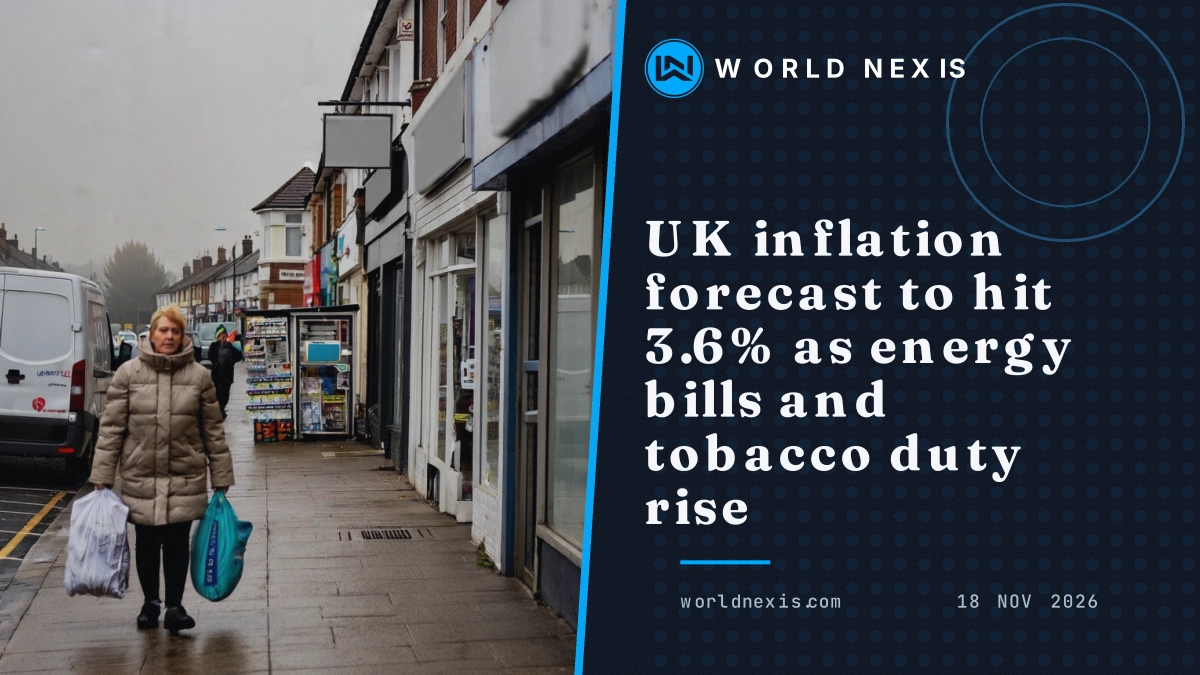
Updated 18 Nov 2026, 07:40 (UK time): The Office for National Statistics confirmed UK inflation rose to 3.6% in October, matching forecasts, with new reporting pointing to a possible further energy cap rise of up to a quarter in January.
The Office for National Statistics has confirmed that UK inflation rose to 3.6% in October, up from 3.5% in September, the Guardian reported. The reading matched the consensus forecast of city economists and marks the highest rate in a year.
The Guardian reported that the figures reflect the 4% increase in the Ofgem energy price cap that took effect at the start of October, driven by rising wholesale gas prices. Forecasters are now warning of a further cap increase of as much as a quarter from January.
The same report said the government has pledged support for households facing a fresh cost of living squeeze, after the chancellor, John Healey, announced plans at last month’s budget for a £100 winter handout covering 20 million households. Financial markets anticipate at least two quarter-point interest rate increases before the end of next year, the Guardian added, after the Bank of England raised rates to 4% earlier this month.
My take: the confirmed number is old news within hours, but the January cap signal is the part that matters for household budgets and for how hard the Bank has to push.
UK inflation is expected to have risen to 3.6% in October from 3.5% in September, according to a consensus of forecasters compiled by Pantheon Macroeconomics, with the Office for National Statistics due to confirm the figures on Wednesday.
If the forecast is right, that would be the highest rate since CPI inflation last stood at 3.6% in October last year. It would also mark a fourth consecutive acceleration since the rate dipped to 2.6% in June.
Key points
- Forecasters expect UK inflation to have reached 3.6% in October, up from 3.5% in September.
- Pantheon economists Rob Wood and Elliott Jordan-Doak expect tobacco duty and motor fuel price rises to add 21 basis points to the index.
- Ofgem’s 4% price cap increase at the start of October lifted a typical annual energy bill by around £60 to about £1,723.
- The Bank of England has said inflation may not return to its 2% target until the third quarter of 2028.
Energy bills and tobacco push UK inflation higher
Households absorbed two clear price increases at the start of October. Energy regulator Ofgem raised its quarterly cap by 4%, adding around £60 to the annual bill for a typical household in England, Scotland and Wales paying by direct debit, which now stands at about £1,723.
Smokers faced a separate increase when tobacco duty went up. According to HMRC, the duty rise added around £1.21 to an average pack of 20 cigarettes, and Pantheon expects tobacco prices to have jumped 8.3% in October compared with the previous month.
Fuel costs were the third pressure point. The Middle East energy shock has pushed up the price of fuel and household energy through the summer, and economists expect that to leave a mark on October’s reading.
Pantheon also flagged higher vape duty alongside tobacco and energy bills. Its economists said they expect higher household energy bills, vape and tobacco duty increases, and more expensive fuel to contribute to the uptick.
How much each factor adds
Pantheon’s economists set out a breakdown of the likely reading in basis points. Their conclusion is that tax and fuel do most of the work.
“Tobacco duty and motor fuel price hikes should add 21 basis points,” the economists said. “Ofgem’s 4% utility-price-cap hike should add three basis points to inflation compared to September, but weaker food inflation will, we assume, cut four basis points.”
In other words, the regulated energy cap matters far less than the duty changes. Cheaper food prices are expected to offset part of the increase, though not enough to stop the headline rate climbing.
UK inflation moves further from the Bank of England’s 2% target
The forecast reading would leave the UK inflation rate well above the Bank of England’s 2% target. The central bank warned earlier this month that inflation is unlikely to return to target until the third quarter of 2028.
The Bank raised interest rates to 4% earlier this month, acting on an outlook in which price growth keeps climbing from here. It has said it expects inflation to peak at around 5% next year.
The path has been steady rather than sudden. CPI fell to 2.6% in June, then climbed through the summer as the Middle East energy shock lifted fuel and household energy costs. October’s expected reading would extend that run and take UK inflation further from target.
For readers, the effect is cumulative. Energy, fuel and tobacco are costs that appear on regular bills or at the shop counter, so a fourth month of acceleration feeds directly into household budgets.
Analysis
Having covered central banking and market structure for WNN, I look first at what is driving a price index rather than at the headline number alone. On the Pantheon breakdown, most of October’s expected increase comes from tax and regulated prices: tobacco duty, motor fuel and the Ofgem cap. Those are policy decisions and imported energy costs, not evidence of an overheating domestic economy.
On balance, the evidence supports Pantheon’s reading better than a more alarmed interpretation. Wood and Jordan-Doak put 21 basis points on tobacco and fuel and only three on the utility cap, with weaker food prices taking four back. That is a narrow, identifiable set of increases, and it argues for patience rather than a sharp reaction from rate-setters.
The strongest counter-argument is the Bank of England’s own forecast of a peak around 5% next year, which implies these shocks are feeding through rather than fading. I would still side with the economists who treat this as an externally driven episode, but the burden of proof now sits with services prices and pay settlements, not with the headline figure.
What happens next
The Office for National Statistics publishes the October CPI figures on Wednesday. Until then, 3.6% remains a consensus forecast rather than an official number, and the release will settle whether a fourth consecutive acceleration materialised.
The Bank of England has already set out its expectations beyond that date. It sees CPI inflation rising further in the coming months, peaking at around 5% next year, and returning to the 2% target only in the third quarter of 2028.
Related coverage
- Met Office snow warning brings rush hour travel disruption
- US embassy warning: citizens told to keep low profile
- Lindsay Clancy retrial set for 29 March 2027, judge rules
Sources
- Inflation set to have risen amid energy bill increases and tobacco duty hike (wharfedaleobserver.co.uk)
- Inflation set to have risen amid energy bill increases and tobacco duty hike (lancashiretelegraph.co.uk)
- Inflation set to have risen amid energy bill increases and tobacco duty hike (northwalespioneer.co.uk)
- Inflation set to have risen amid energy bill increases and tobacco duty hike (yourlocalguardian.co.uk)
- Inflation set to have risen amid energy bill increases and tobacco duty hike (cotswoldjournal.co.uk)
About the author: Daniel Whitmore is World Nexis News’s Business & Markets Editor, covering business & markets. The analysis section reflects the writer’s view.

Daniel Whitmore
Daniel Whitmore is Business & Markets Editor at World Nexis News, based in New York. He leads coverage of companies, economies, markets and the forces that move them, from central bank decisions to corporate earnings and the cost-of-living pressures facing households on both sides of…