Mitchells & Butlers warns of £95m extra costs next year
Mitchells & Butlers expects around £95m of extra costs next year after absorbing £120m of headwinds, as adjusted pre-tax profits rose 5.3% to £259m.
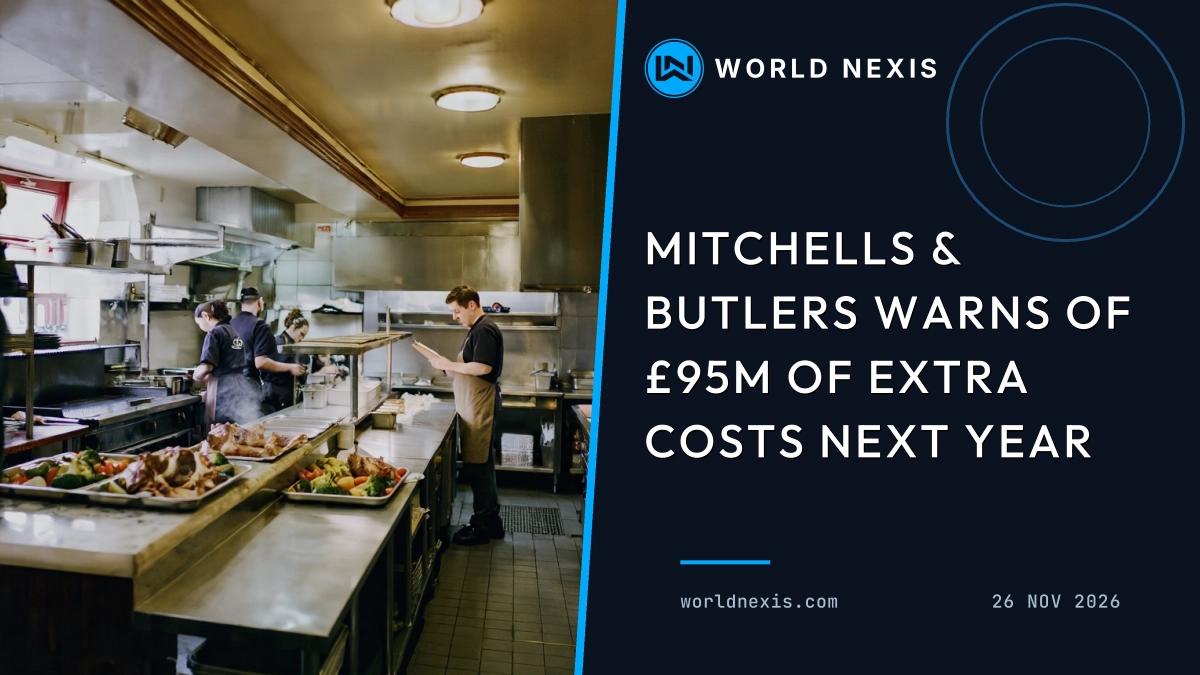
Mitchells & Butlers expects around £95 million of additional costs in its coming financial year, the Toby Carvery owner said on Thursday, even as adjusted pre-tax profits rose 5.3% to £259 million for the year to 26 September.
Mitchells & Butlers: key points
- Mitchells & Butlers forecasts £95 million of cost headwinds next year, roughly 4% of its cost base.
- It absorbed £120 million of headwinds in the year just ended, before mitigation efforts.
- Adjusted pre-tax profits climbed 5.3% to £259 million on annual sales of £2.75 billion.
- Like-for-like sales rose 1.1% in the first eight weeks of the new year, after 2.1% growth in the year to September.
Mitchells & Butlers costs driven by statutory wage rises
The company said the £95 million would come primarily from labour cost increases linked to statutory rate rises. Wage bills have already climbed sharply, as higher national minimum wage rates and employer national insurance contributions fed through during the year just reported.
Food has added to the pressure. Mitchells & Butlers said it also faced high increases in the cost of ingredients, particularly meat. Energy remains the wildcard: the group flagged volatility in the markets but stressed that half of its energy needs are already covered for the current year.
Profits edge higher after a year of absorbing £120m in costs
The new guidance follows £120 million of hospitality cost headwinds in the year to 26 September, measured before the company’s mitigation efforts. Profits nevertheless edged higher as management cut costs across the business, and sales reached £2.75 billion despite what the group called a challenging backdrop.
“We are pleased to report another year of strong performance, with adjusted operating profit growth despite the well-publicised cost headwinds facing the sector in addition to the effect of a very hot summer.”
That was the assessment of chief executive Phil Urban, who also pointed to the group’s Ignite improvement programme and a disciplined capital investment strategy as reasons for confidence in the year ahead.
Trading stumbles in spring before a stronger finish
Mitchells & Butlers said like-for-like sales grew 2.1% across the year. The spring quarter from April to June was the weakest, hit by periods of extreme heat and the timing of Easter. Growth returned in the final quarter on accelerating drinks demand and strong trading in London.
The first eight weeks of the new financial year produced like-for-like growth of 1.1%. That is a slower starting pace for a year carrying a heavier cost burden, and it leaves the group relying on mitigation and operational improvement to protect margins.
The FTSE 250 company runs several well-known brands alongside Toby Carvery, including Harvester, All Bar One and Miller & Carter.
Why it matters
For anyone who eats or drinks out, wage and energy bills at the big managed chains eventually show up in menu prices and staffing levels. They also shape how many sites a company is willing to keep open. A £95 million bill is about 4% of the group’s cost base, and it lands on a business whose sales are growing at roughly 1%.
For the wider hospitality sector, the statement is a reminder that statutory cost increases have not finished working through. Every operator facing the same wage and national insurance arithmetic is making similar calculations about prices, hours and investment.
Analysis
Having covered corporate earnings for World Nexis News, I look first at the space between the cost line and the sales line. That gap is where a consumer business either holds its margins or loses them, and here it looks uncomfortable. A 4% increase in the cost base against like-for-like growth of 1.1% means the group cannot simply trade its way out of the problem.
That is why I think the cost guidance is the real story, not the 5.3% profit increase. The rise was delivered by mitigation: cost control, operational discipline and a programme of small improvements. Those levers get harder to pull every year.
The strongest counter-argument is that management has just done exactly this. It absorbed £120 million of headwinds, still grew profit, and has half its energy needs covered. That track record deserves respect.
But the burden is now larger in proportion to a slower sales run-rate, and mitigation has limits before it touches the customer experience. I side with the cautious reading: this is a solid result with a harder year in front of it.
What happens next
The group starts its new financial year with like-for-like growth of 1.1% and a cost bill expected to rise by about £95 million, mainly from statutory labour costs. Investors will watch the next trading updates for evidence that mitigation is holding margins rather than merely slowing their decline. The statement gives no date for a further update on guidance.
What we don’t know yet
The company has not said how much of the £95 million it expects to offset, nor whether menu prices will rise to protect margins. It also gave no detail on site openings or closures, or on how energy needs beyond the current year are hedged.
Related coverage
- EasyJet profits: boss warns fares will rise after 96% slump
- Al Gore newspaper deal keeps 113-year-old Courier alive
- Thanksgiving meal prices climb 3% as turkey costs bite
Further reading
- Toby Carvery owner Mitchells & Butlers faces £95m of extra cost pressures
- Toby Carvery owner Mitchells & Butlers faces £95m of extra cost pressures
About the author: Daniel Whitmore is the Business & Markets Editor at World Nexis News (WNN), covering business & markets. The analysis section reflects the writer’s view.

Daniel Whitmore
Daniel Whitmore is Business & Markets Editor at World Nexis News, based in New York. He leads coverage of companies, economies, markets and the forces that move them, from central bank decisions to corporate earnings and the cost-of-living pressures facing households on both sides of…



