EasyJet profits: boss warns fares will rise after 96% slump
EasyJet profits fell 96% to £24 million as an extra £244 million in fuel costs and weaker demand hit the airline before its £5.7 billion Apollo takeover.
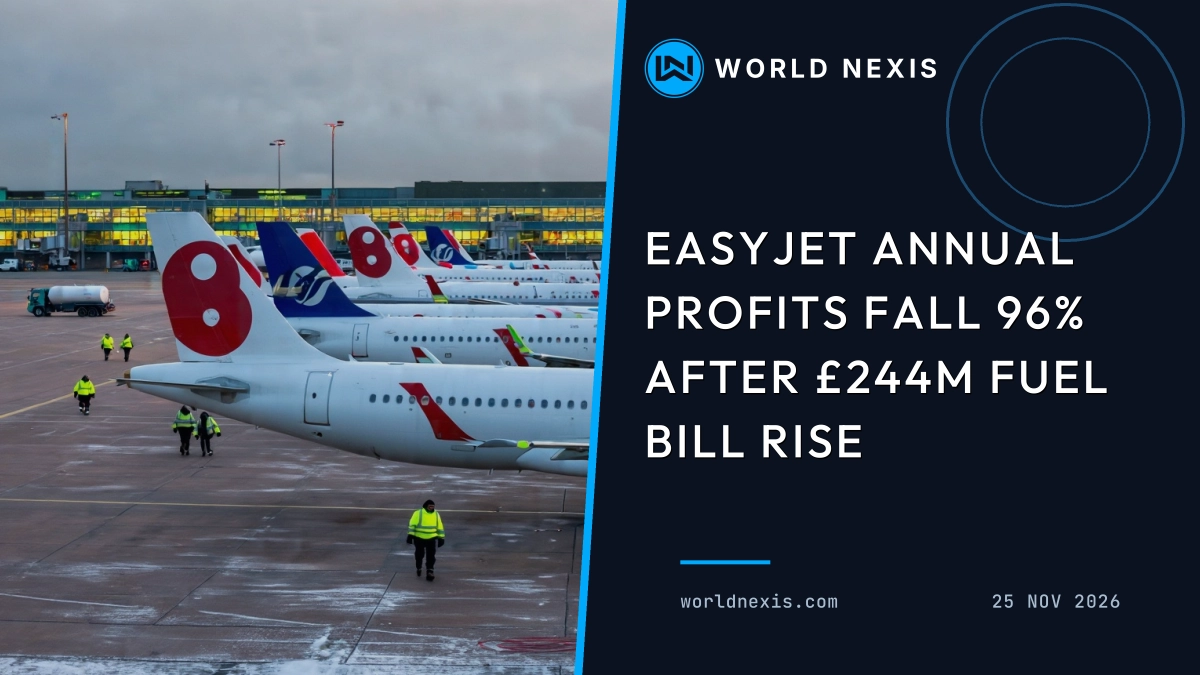
Updated 25 Nov 2026, 11:26 (UK time): EasyJet’s chief executive warned that fuel costs will push fares higher and told passengers to book early, while the airline set out a roughly £250 million cost-savings plan and disclosed that £211 million of the extra fuel bill fell in the second half.
EasyJet will pass part of its fuel bill on to passengers, chief executive Kenton Jarvis said, advising customers to book early to lock in prices. He told reporters that fuel costs would put “a lot of pressure on fares”, though he judged a 20% rise that held through the year to be “unlikely”.
The airline also used the results to set out new targets: around £250 million of cost savings across the next two financial years as it modernises its fleet. Revenue per available seat kilometre fell 2% over the year and 3% across the final six months, and the company expects that measure to improve through each quarter of the coming year.
Its package holiday arm was the bright spot, lifting pre-tax profit to £266 million from £250 million, though not enough to cover the airline division’s losses. EasyJet also disclosed that £211 million of the extra £244 million fuel hit landed in the second half alone. Jarvis said demand fell for about eight to 10 weeks after the war began on 28 February, before late bookings recovered over the summer.
The early-booking advice is the most useful line for anyone planning a trip, because it tells you plainly where the risk is being pushed. My caution is that savings targets and fuller planes can only absorb so much of a fuel shock before the fare rise has to do the rest of the work.
EasyJet profits fell 96% to £24 million in the year to 30 September. An extra £244 million in fuel costs and weaker passenger demand squeezed the budget airline’s margins, the Luton-based company said.
The figures are the last full-year set easyJet will publish as a listed business. Shareholders approved a £5.7 billion takeover by the private equity group Apollo on 11 November, and the airline says the deal is on track to complete in the first quarter of next year.
Key points
- EasyJet profits dropped 96% to £24 million in the year to 30 September, from £658 million.
- The jet fuel bill climbed 11%, or £244 million, as the Middle East conflict lifted wholesale energy costs.
- The carrier said the Iran war, which began in February, weakened consumer demand for a prolonged period.
- Investors backed the £5.7 billion Apollo purchase on 11 November, with completion expected in the first quarter of next year.
EasyJet profits hit by fuel and falling demand
EasyJet fuel costs rose 11% across the year, adding £244 million to the bill as the Middle East conflict pushed wholesale energy prices higher. For a low-cost carrier, fuel sits among the largest single cost lines, so a double-digit rise lands almost immediately on the bottom line.
The airline’s own statement makes clear the war hurt it twice. EasyJet said the conflict led to “weakened consumer demand for a prolonged period” as well as more expensive fuel.
The easyJet profits slump is therefore not purely a fuel story. Statutory pre-tax profit fell from £658 million to £24 million, a drop of £634 million. The extra fuel bill accounts for a little over a third of that fall, so softer demand did most of the damage.
Kenton Jarvis, the chief executive, described a year shaped by forces outside the company’s control.
“This year was challenging for airlines due to the Middle East conflict and its effect on demand and fuel prices, which materially impacted our financial performance.”
Apollo takeover ends easyJet’s listed era
The board agreed the £5.7 billion offer from Apollo in the summer. Completion is now expected in the first quarter of next year, after shareholders gave the deal their approval at a vote on 11 November.
The sale makes easyJet the latest British company to fall into foreign ownership. It also removes one of Europe’s best-known low-cost carriers from the scrutiny of public markets.
“The recommended acquisition of easyJet, approved by shareholders on 11 November, reflects the quality of our business, and the underlying drivers of long-term financial performance.”
Once the deal closes, the company will no longer publish the same level of financial detail to the public. Nor will it hold votes for outside shareholders or face the same open scrutiny of its route and capacity decisions.
Why it matters
EasyJet profits matter to passengers because they shape fares and schedules. A carrier squeezed on both fuel and demand has an incentive to fly fuller planes on fewer routes, which can mean thinner timetables at smaller UK airports.
They matter to the country too. After the Apollo takeover completes, one of Britain’s most recognisable airlines will answer to a private owner rather than to public shareholders, and far less of its thinking will be visible from outside.
Analysis
Having covered corporate strategy and market structure for World Nexis News, I look past the fuel line first. Fuel is a cost every airline pays, and hedging can soften it. Demand is the number that tells you whether the business model still works, and easyJet has now admitted demand weakened for a prolonged stretch.
In my view the evidence backs Apollo’s reading of this company more than the sceptics’. A 96% fall in statutory profit is the kind of dislocation private capital exists to absorb. Apollo can ride out a bad year in a way a listed board, judged every quarter, finds far harder. The strongest counter-argument is that debt raised for a £5.7 billion buyout must still be serviced through the same volatile fuel cycle.
What I would resist is the idea that easyJet was simply unlucky. Fuel added £244 million, while profit fell £634 million. Management could not control the Gulf, but it could control capacity, pricing and the pace of growth, and those choices will decide whether the new owner’s bet pays off.
What happens next
EasyJet expects the Apollo takeover to complete in the first quarter of next year. At that point the shares leave the London market and the airline reports to a single private owner.
What we don’t know yet
The company has not set out what new ownership means for fares, routes or jobs. Nor is it clear how quickly passenger demand recovers as fuel prices settle.
Related coverage
- New US tariffs to hit China, EU and 14 others over subsidies
- Center Parcs costs hit tipping point, boss warns of red tape
- Winter Fuel Payment: DWP confirms who gets £100, £200 or £300
Further reading
- EasyJet profits plunge on £244 million fuel cost hit
- EasyJet profits plunge on £244 million fuel cost hit
About the author: Daniel Whitmore is the Business & Markets Editor at World Nexis News (WNN), covering business & markets. The analysis section reflects the writer’s view.

Daniel Whitmore
Daniel Whitmore is Business & Markets Editor at World Nexis News, based in New York. He leads coverage of companies, economies, markets and the forces that move them, from central bank decisions to corporate earnings and the cost-of-living pressures facing households on both sides of…



