Winter Fuel Payment: DWP confirms who gets £100, £200 or £300
The DWP has begun paying the 2026 Winter Fuel Payment of £100, £200 or £300 to millions of pensioners born on or before 27 June 1960. Check if you qualify.
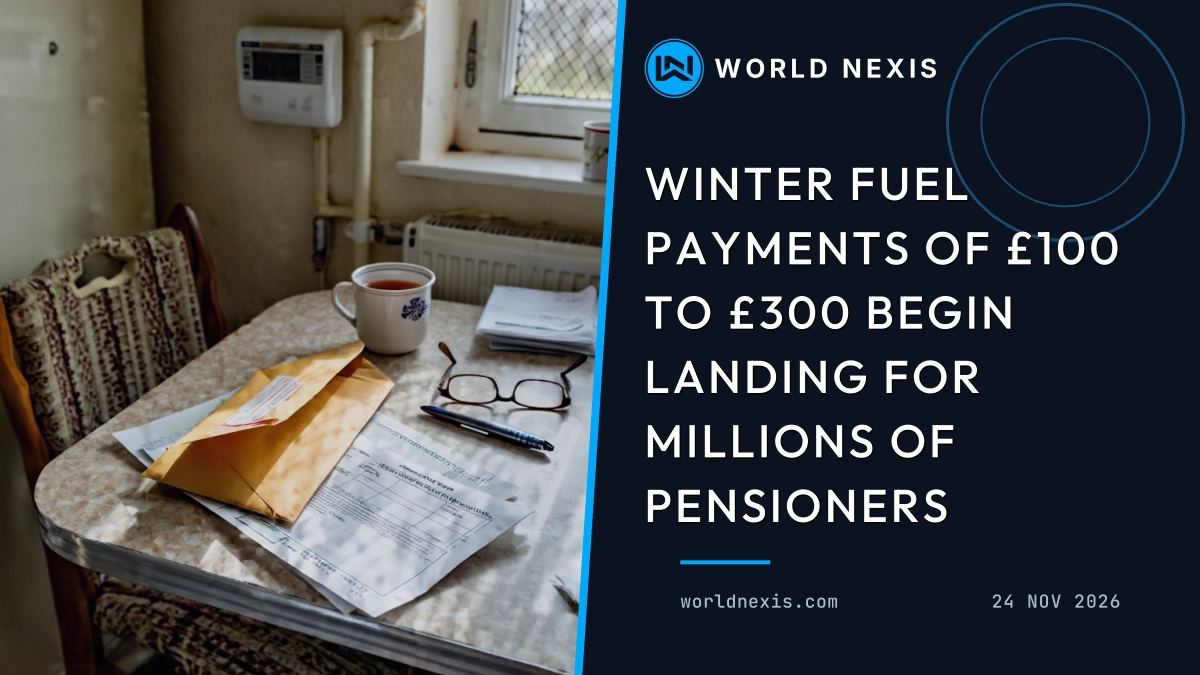
The Winter Fuel Payment for 2026/27 has started arriving in pensioners’ bank accounts, with the Department for Work and Pensions paying between £100 and £300 to millions of older people in England, Wales and Northern Ireland. Most eligible households need do nothing, because the money is paid automatically in November or December. A letter confirming the amount should already have landed in October or November.
Key points
- Winter Fuel Payment sums of £100, £200 or £300 are being paid automatically during November and December 2026.
- Eligibility rests on being born on or before 27 June 1960 and normally living in England, Wales or Northern Ireland.
- Anyone with an individual income above £35,000 has the payment reclaimed through the tax system.
- Pensioners in Scotland are outside the DWP scheme and must use a separate Scottish Government payment.
Winter Fuel Payment 2026: who qualifies and what they get
This year’s qualifying week ran from 21 to 27 September 2026, and the amount depends on date of birth, who else lives in the household and whether anyone there claims certain means-tested benefits. To qualify, a pensioner must have been born on or before 27 June 1960 and must usually live in England, Wales or Northern Ireland.
Someone who lives alone, or whose household contains nobody else who qualifies, is paid on the individual scale for their age band. Where both partners qualify and neither receives a means-tested benefit, the household is treated as a single unit for payment. Where a joint claim for Pension Credit, Universal Credit or income-related Employment and Support Allowance is in place, only one payment goes to the household, while people on one of those benefits who are not part of a joint claim receive £200 or £300 depending on their date of birth.
Most payments are automatic, so no claim is required. Anyone who believes they qualify but has not received a letter should check the government’s Winter Fuel Payment service to see whether a claim is needed.
Care homes, the £35,000 clawback and who is left out
Care home residents can still qualify, although anyone who has lived in a care home throughout the period since 29 June 2026 and receives Universal Credit, Pension Credit or income-related ESA is excluded altogether. Those who do qualify receive £100 if born between 28 September 1946 and 27 June 1960, or £150 if born before 28 September 1946.
The bigger caveat is the clawback. Eligibility is not withdrawn from pensioners on higher incomes, because the money is paid first and then recovered. Anyone with an individual income above £35,000 has the Winter Fuel Payment reclaimed by HMRC, either through a change to their tax code or on a Self Assessment return. The threshold is based on the claimant’s own income, so a partner’s earnings do not count towards it.
Scotland runs a separate payment on its own rules
Pensioners in Scotland cannot receive the DWP Winter Fuel Payment at all. Eligible older people there instead look to the Scottish Government’s Pension Age Winter Heating Payment, a separate benefit with its own rates, letters and delivery arrangements, run by ministers in Edinburgh.
That split is now one of the sharpest practical differences in how older people across the UK are helped with heating bills. Two households with similar incomes and similar energy costs, one in Carlisle and one in Dumfries, sit inside different systems. For a payment once presented as a simple, universal answer to winter bills, the divergence is easy to miss.
Why it matters
For millions of pensioners the Winter Fuel Payment is the one lump sum of the year aimed squarely at heating costs, and it arrives as energy bills remain a live pressure on fixed incomes. The gap between £100 and £300 is real money for a household weighing a warmer room against a bigger bill.
The administrative detail matters too. A missing letter does not automatically mean a missing Winter Fuel Payment, but it can mean a claim has to be made, and an unclaimed payment is money quietly lost. Higher-income pensioners should also expect a tax adjustment rather than a letter cancelling the money altogether.
Analysis
Having covered devolution and public services for World Nexis News, I read this less as a rate table than as a reminder of how quietly social security has diverged across the UK. The Winter Fuel Payment bands of £100, £200 and £300 will dominate search traffic this week, but the detail that actually changes outcomes is the border.
In my view the devolution split strengthens the case for far clearer signposting rather than for reversing the split itself. Separate Scottish provision is defensible, because housing stock, energy markets and ministerial priorities differ. The counter-argument, that Edinburgh should be free to design its own support without UK-wide uniformity, is legitimate. But legitimacy is not visibility, and when two schemes with near-identical names run side by side, the people most likely to fall through are the oldest and the least online.
The £35,000 clawback deserves the same scrutiny. Paying everyone and then taxing some of it back keeps administration cheap and avoids a claims cliff-edge, which is why I think the design is defensible. Even so, a pensioner whose money is recovered through a tax code deserves a plain explanation of why.
What happens next
The Winter Fuel Payment run continues through November and December 2026, and most eligible pensioners will see the money in the account used for their State Pension or other benefits. Anyone who expected a letter or a payment and has neither should check the government service before winter sets in.
What we don’t know yet
No closing date has been published for chasing a payment that has not arrived, and no estimate has been given for how many pensioners will need to make a claim rather than be paid automatically.
Related coverage
- ATEEZ Billboard 200: fourth No. 1 and a record top 10 run
- UK snow forecast: early winter brings -9C and health alert
- COP31 talks collapse as EU and UK reject fossil fuel deal
Further reading
- DWP Winter Fuel Payments start landing – full list of who gets £100, £200 or £300
- DWP Winter Fuel Payments start landing – full list of who gets £100, £200 or £300
About the author: Liam O’Connor is the UK Politics Reporter at World Nexis News (WNN), covering uk politics. The analysis section reflects the writer’s view.

Liam O'Connor
Liam O'Connor is UK Politics Reporter at World Nexis News, covering Westminster, devolved politics and the issues that matter to voters across England, Scotland, Wales and Northern Ireland. Based in London, he reports from primary sources — Hansard, official statements, published data — and explains…



