Center Parcs costs hit tipping point, boss warns of red tape
Center Parcs costs have reached a tipping point, its chief corporate officer says, as the holiday firm warns it can no longer pass rising bills onto guests.
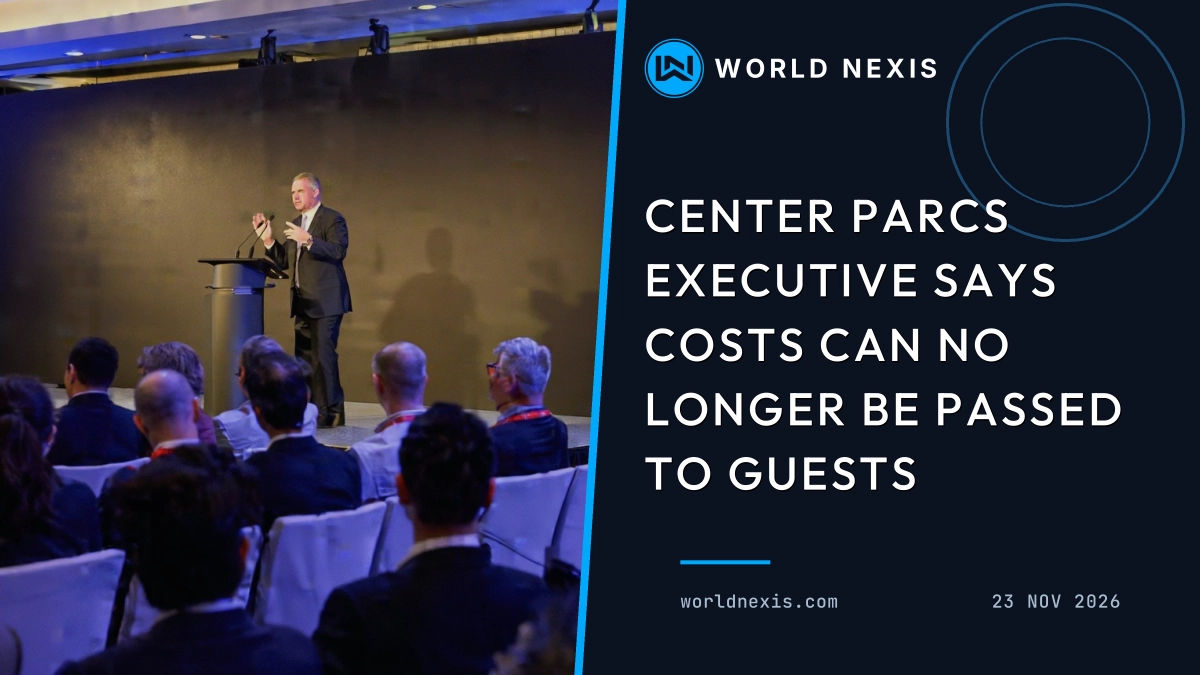
Center Parcs costs have reached the point where they can no longer be passed on to guests, the holiday village operator’s chief corporate officer said at the Confederation of British Industry’s annual conference on Monday. Raj Singh-Dehal told delegates the company had hit a “tipping point” on absorbing higher electricity and water bills. It is now looking “increasingly inwards” at its own cost base instead of raising prices again.
His remarks came after Louise Haigh, the First Secretary of State, used the same conference to argue that greater public control would reduce uncertainty for business and lower costs by speeding up decisions taken by regulators. The two appearances framed a day of argument about whether the pressure on UK companies comes mainly from energy bills or from the paperwork and delay that surround them.
Key points
- Center Parcs’ chief corporate officer, Raj Singh-Dehal, said the firm has reached a “tipping point” on passing costs to customers.
- He named planning delays as “one of the biggest issues we face” and said compliance costs compound every year.
- The company will focus on internal cost efficiencies rather than further price rises.
- Louise Haigh told the CBI annual conference that plans for greater public control would cut uncertainty and speed up regulatory decisions.
Center Parcs costs hit a saturation point
Singh-Dehal said the group had spent years absorbing inflation in its energy and water bills without fully reflecting it in the price of a short break. He argued that approach cannot continue indefinitely. “In terms of what we do as a business, I think we’ve reached the tipping point where you can’t be passing costs over to the consumer,” he said.
He went further, saying the market had reached “the point of saturation of what can just be passed straight through to the market”. The consequence is a harder look at the company’s own spending. “But we’re having to look increasingly inwards to make sure that we look at our cost base,” he said.
The Center Parcs costs warning drew a sharp contrast with the government’s message earlier in the day. No figure was put on the savings being sought, and no timetable was offered for when guests might see any difference in what a break includes.
Planning delays named as a top obstacle
Singh-Dehal singled out delays in the planning system, describing them as “one of the biggest issues we face” as he set out the regulatory hurdles in front of the business. He also pointed to the steady accumulation of administrative work. “The cost of compliance monitoring, reporting, form filling – it just grows and compounds every single year,” he said.
Center Parcs costs, in his account, are driven as much by administration as by utilities. Other industry figures have backed a lighter regulatory load, and he said he is awaiting the “bonfire of regulation” that many of them have called for.
Minister promises faster decisions from regulators
Haigh told the CBI annual conference that plans to increase public control would lead to reduced uncertainty and lower costs. The mechanism she set out is speed: quicker decision-making by regulators, and less time spent waiting for an answer before a project can proceed.
That pitch is aimed at employers who say they cannot plan while approvals stall. For the company, the test will be whether the delay he described shortens in practice. Faster decisions would ease the pressure that has pushed Center Parcs costs to what he calls saturation.
Business groups have long argued that uncertainty is itself a cost, because firms hold back spending while they wait for permission. Singh-Dehal’s complaint was narrower and more practical. The hold-up sits in the planning system, and the reporting burden grows regardless of how the wider economy performs.
Why it matters
For families, the Center Parcs costs warning is a signal that the era of quietly absorbing higher bills into the price of a holiday is closing. Center Parcs price rises can no longer be the default answer. If the company holds the line, the pressure moves instead to staffing, maintenance and the scope of what a break includes.
The Center Parcs costs question is also a question about what makes Britain expensive to build and run in. Energy and water are only part of the bill. Delay, form filling and repeated reporting carry a cost that never appears on a price list but lands on the same ledger, and it is ultimately paid by whoever books the break.
Analysis
Having covered business costs and corporate strategy for World Nexis News, I look first at what a company actually does when it says it has stopped passing costs on. Singh-Dehal’s answer, to look inwards at the cost base, is the standard response of a business that believes its customers are near their limit. It is also the point where efficiency starts to mean cuts, or a thinner product, and he did not say which he expects.
On the substance, I think the facts support his side more than the minister’s. Planning delay and compounding compliance work are measurable drags that a leisure operator cannot price away, and a genuine bonfire of regulation would help. The strongest counter-argument is that every large employer blames red tape when wages and input costs rise, and that Center Parcs sets its own prices. That has force, but it does not erase the delays he described.
What I would watch is whether Haigh’s promised speed reaches the agencies that issue the decisions. Faster regulators, rather than simply fewer rules, may prove the more credible route. That, more than any conference pledge, will decide whether Center Parcs costs rise again next year.
What happens next
The promised regulatory changes, and Haigh’s plans for greater public control, are now the test the company says it is waiting for. The Center Parcs costs squeeze will not be settled at a conference. Center Parcs will keep reviewing its cost base in the meantime, and other operators at the CBI annual conference face the same arithmetic on energy, water and administration.
What we don’t know yet
It is not clear whether Center Parcs will hold prices flat, trim its offer, or do both. No timetable has been given for the regulatory changes Singh-Dehal is expecting, and the company has not said how much of its cost inflation it has already absorbed.
Related coverage
- Next cyber attack: retailer warns over supplier data breach
- Civil Service pension: Capita boss quits as shares crash 70%
- Christmas posting dates: Post Office warns of 7 Dec peak
Further reading
- Center Parcs at ‘tipping point where you can’t pass costs onto customers’
- Center Parcs at ‘tipping point where you can’t pass costs onto customers’
About the author: Daniel Whitmore is the Business & Markets Editor at World Nexis News (WNN), covering business & markets. The analysis section reflects the writer’s view.

Daniel Whitmore
Daniel Whitmore is Business & Markets Editor at World Nexis News, based in New York. He leads coverage of companies, economies, markets and the forces that move them, from central bank decisions to corporate earnings and the cost-of-living pressures facing households on both sides of…



