Medicare open enrollment 2027: 4 million face major shift
Medicare open enrollment runs to Dec 7, and about 4 million people must pick a new plan for 2027. Premiums and drug coverage are changing fast.
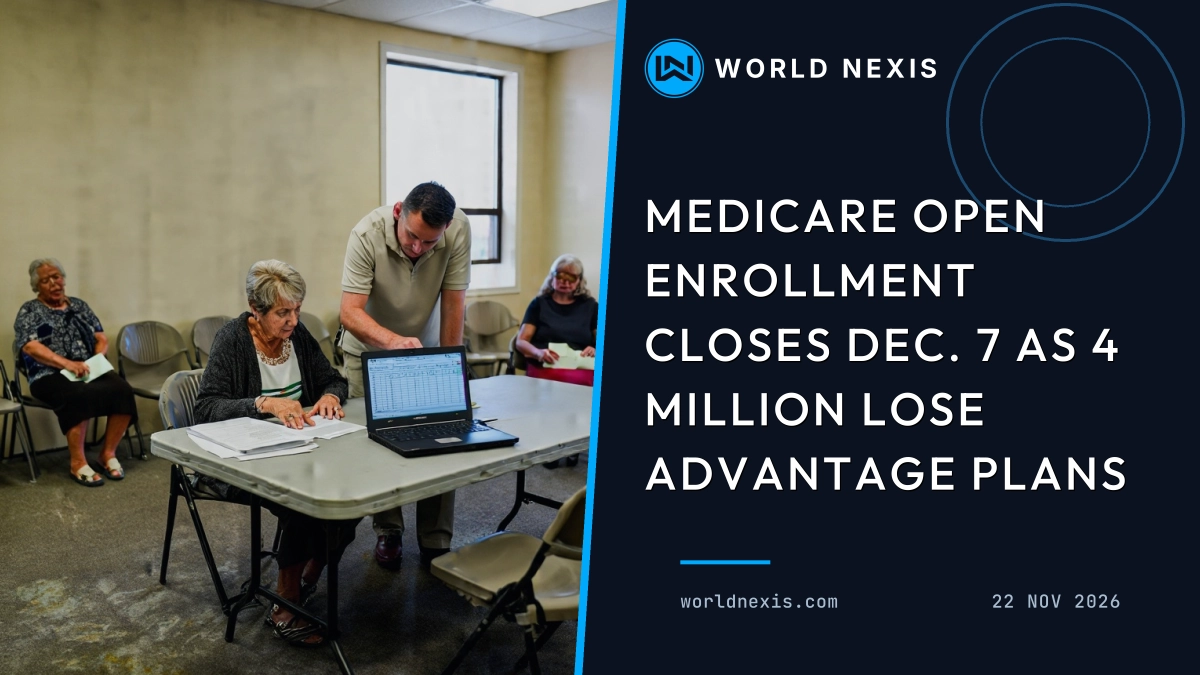
Medicare open enrollment is running until Dec. 7, and the choices made before then will set the cost of care for roughly 70 million Americans through the whole of 2027. Anyone who selects a plan now sees it take effect on Jan. 1 and last the full calendar year. Consumer advocates warn that staying on autopilot this fall is unusually risky.
Medicare covers people aged 65 and older, plus some younger people with disabilities or certain health conditions. It is not a single plan. It works more like a build-your-own insurance menu, and the two halves of the program carry very different trade-offs.
Key points
- Medicare open enrollment closes on Dec. 7, and every plan chosen takes effect on Jan. 1 for the full year.
- A KFF analysis found enrollees who stay in their standalone drug plan face a 50% premium rise on average, from $34 to $51 a month.
- About 4 million people are enrolled in Medicare Advantage plans that will not be offered in 2027.
- Insurers have sent Annual Notice of Change letters listing new premiums, deductibles and covered drugs, and many go unread.
What changes in Medicare open enrollment for 2027
About half of beneficiaries are in traditional Medicare, made up of Parts A and B and run by the federal government. It pays for hospital stays, skilled nursing care, doctor visits, outpatient care and preventive screenings. Enrollees can usually see any provider who accepts Medicare, and they rarely need approval for scans such as MRIs and CT scans.
The gaps are significant. Traditional Medicare has no cap on out-of-pocket spending and does not cover most prescriptions, dental, vision or hearing care. Most people in it therefore buy a standalone Part D drug plan from a private insurer, and some add a Medigap policy to cover deductibles, copayments and coinsurance.
The other half of beneficiaries chose Medicare Advantage, privately run managed-care plans that bundle drug coverage with dental and vision. Networks are narrower, and treatment and medication requests are more likely to require prior authorization. Advantage members still pay Part B premiums.
The premium picture
The Centers for Medicare & Medicaid Services projects that the average standalone Part D premium will rise by less than $1 a month, describing that market as stable. Averages, however, hide a great deal. A KFF analysis found that people who stay in their current drug plan will pay about 50% more on average, with premiums climbing from $34 to $51.
About 10.4 million people could pay more, before counting higher deductibles and coinsurance. That gap between a stable average and a painful rise for loyal customers is the number to watch in this Part D premium increase.
Some beneficiaries who paid no monthly premium in recent years will start paying for Part D coverage in 2027. The shift follows the federal caps on out-of-pocket drug costs introduced in 2025. It also coincides with the Trump administration ending temporary federal subsidies that had kept premiums down.
Read the letter
Every fall, insurers selling Part D and Medicare Advantage coverage send an Annual Notice of Change. The document sets out next year’s premiums, deductibles and covered drugs. Medicare open enrollment is when that letter matters most, and experts say a common and costly error is throwing it away or filing it without reading.
“People really need to do their research before they enroll in Medicare, because there are trade-offs,” said David Lipschutz, a co-director at the Center for Medicare Advocacy.
Anyone who cannot find the letter can call the insurer and ask for another copy.
Medicare Advantage plan changes send 4 million to a default
The most abrupt shift concerns Medicare Advantage. About 4 million people are in plans that will not be offered in 2027. If those enrollees do nothing, they are automatically moved into traditional Medicare rather than into another Advantage plan.
That default is not a disaster, but it is not neutral either. Traditional Medicare brings wider provider access and fewer prior authorization hurdles, alongside uncapped out-of-pocket costs and no routine drug, dental, vision or hearing coverage. People who land there by default may need to buy extra cover quickly.
Anyone affected should treat the default as a starting point rather than a decision. Comparing another Advantage plan against traditional Medicare plus a Part D policy and, where affordable, Medigap takes time. Medicare open enrollment leaves just over two weeks to do it.
Why it matters
For households on fixed incomes, a drug plan that quietly reprices itself is not an abstraction. A rise from $34 to $51 a month is roughly $200 a year before deductibles, and it lands alongside any increase in what a plan charges for the medicines people actually take.
Doing nothing is a decision with a price this year. Plans that stay exactly the same are rarer than usual, and the letters describing the changes have already arrived. Reading them, or asking for a replacement, is the cheapest step available.
Analysis
Having covered health inequality for World Nexis News, I look first at who has the hours, the broadband and the confidence to do this comparison shopping. The answer is rarely the 80-year-old managing four prescriptions alone, or the disabled enrollee juggling prior authorizations. Each Medicare open enrollment asks people to audit their own care, and the system quietly builds its savings on those least able to perform that audit.
The counter-argument deserves respect. CMS says the standalone drug market is stable and average premiums are barely moving, and competition between private plans is meant to reward insurers that hold costs down. That logic only holds if enrollees can see the differences and act on them. When 10.4 million people face increases simply by staying put, the market is not disciplining insurers so much as testing patience.
I side with Lipschutz and the consumer advocates here. The evidence in the numbers is that inertia is being priced, and the people hit hardest have the least room to absorb it. A clearer default, and a shorter, plainer notice, would do more good than another year of choice.
What happens next
Medicare open enrollment closes on Dec. 7. Any plan selected before then takes effect on Jan. 1 and covers the full 2027 calendar year. Enrollees in Advantage plans that are disappearing should expect to be moved into traditional Medicare unless they choose otherwise.
What we don’t know yet
Final 2027 premiums vary by plan and by county, so no single figure describes what any one household will pay. It is also unclear how many of the 4 million people in exiting Advantage plans will actively choose an alternative rather than accept the default. Nor is there a firm estimate of how far the withdrawal of temporary subsidies will push individual drug bills above the averages.
Related coverage
- Credit card cap: Trump backs 10% limit in major shift
- Alice Webb inquest fallout: Black Friday BBL deals face safety backlash
- Trump data centre tax: Australia warns of major AI risk
Further reading
- Medicare looks a bit different in 2027, so don’t miss open enrollment
- What really happens when you need help restoring your identity
About the author: Sofia Alvarez is the Health & Medicine Reporter at World Nexis News (WNN), covering health & medicine. The analysis section reflects the writer’s view.

Sofia Alvarez
Sofia Alvarez is Health & Medicine Reporter at World Nexis News, covering public health, clinical research, mental health and the policy decisions that shape care. Based in Manchester, she prioritises evidence over anecdote, checks claims against peer-reviewed research and official guidance, and explains uncertainty plainly…