Alice Webb inquest fallout: Black Friday BBL deals face safety backlash
The Alice Webb inquest found the 33-year-old died by accident after a liquid BBL. Her family demand urgent law changes as coroner warns of more deaths.
Updated 21 Nov 2026, 10:21 (UK time): The Advertising Standards Authority has concluded that time-limited Black Friday promotions for liquid Brazilian butt lifts can rush consumers into risky decisions, after finding only 11.5% of more than 900 monitored BBL ads complied with its rules, while Save Face reports 1,004 related patient complaints since 2023.
The market the Alice Webb inquest exposed is still trading on discounts. The Advertising Standards Authority has concluded that time-limited offers, Black Friday promotions among them, could push consumers into cosmetic surgery without enough time to weigh the consequences. Between April and December 2025 the watchdog found more than 900 ads for liquid Brazilian butt lifts in its monitoring system, and judged that only 11.5% of those it checked followed its rules. Some promised a “0% infection rate” or described the procedure as “safe” without reflecting the risks; others played on body insecurities.
Save Face, the register of accredited non-surgical practitioners that backed Webb’s family, said it had received 1,004 patient-reported complaints about non-surgical BBLs, hip-dip and breast-augmentation procedures since 2023. Its director Ashton Collins said more than half of complainants experienced sepsis, 94% required hospital treatment and 43% required surgery. She said she was outraged at BBLs being advertised as party-season bargains, adding: “These are not routine beauty treatments; they are serious medical procedures that can lead to devastating complications.”
Clinics in England are still running the offers. One London provider recently advertised a 48-hour deal of 800ml of filler plus 200ml free for £1,300, alongside breast filler at £799 for 400ml. A spokesperson for the clinic said patient safety and informed consent were its top priorities and that all treatments are subject to individual consultations and clinical suitability assessments.
None of this changes the law yet. The government is still consulting on limiting liquid BBLs, vampire facials and deep chemical peels in England to qualified healthcare professionals, and the restrictions are not in force. The discounting tells you what the incentive looks like while ministers decide. What strikes me is that advertising rules already exist and were overwhelmingly ignored, so a new statute without enforcement capacity would simply add another layer of unobserved paperwork.
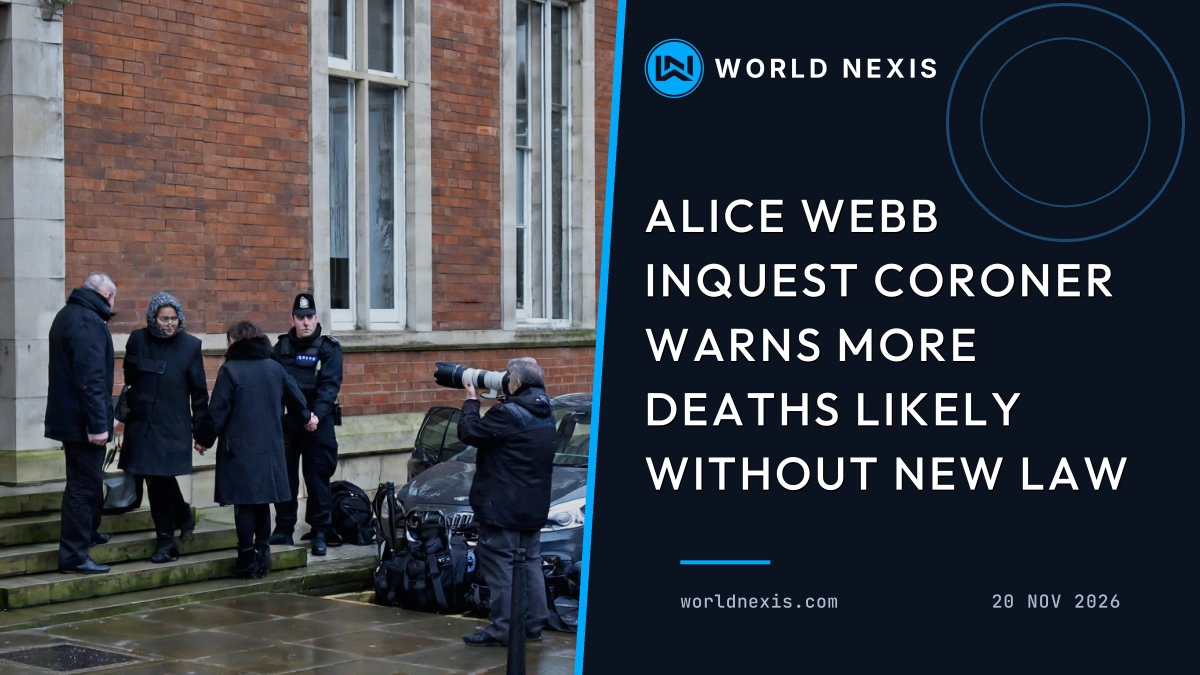
The Alice Webb inquest has ended with a jury finding that the 33-year-old mother of five died by accident after a liquid Brazilian butt lift, and with the coroner preparing a formal warning to ministers that other deaths are likely without tighter regulation. Webb collapsed at a treatment room in Gloucestershire on 23 September 2024 and died the next day, after being given seven times the recommended amount of dermal filler.
The verdict, delivered after a three-day hearing at Gloucestershire Coroner’s Court, closes one of the most closely watched patient-safety cases in England in years. It also turns the spotlight on a gap her family say allowed an unsafe practitioner to keep working.
Key points
- The Alice Webb inquest jury concluded she died by accident from “complications arising from BBL procedure”.
- Jordan Parke, known as the “Lip King”, injected seven times the recommended amount of filler; he died in February.
- The coroner found “significant risks” of further deaths and will send a Prevention of Future Deaths report to the government.
- Her family want an “Alice’s law” with national prohibition orders; ministers are consulting on restricting BBLs to doctors in England.
What the Alice Webb inquest jury decided
The jury returned a conclusion of accidental death. Home Office forensic pathologist Dr Stephen Leadbetter gave the medical cause as “embolisation of hyaluronic acid from introduction into the buttocks”.
A post-mortem examination found hyaluronic acid, the gel used in non-surgical BBLs, in the fat and muscle of Webb’s buttock, along her sciatic nerve, and in her lungs, brain, heart, thyroid gland and kidney. Jurors heard the filler may have entered her system after a blood vessel was damaged during the procedure.
Webb, who ran her own aesthetics business, messaged family while the procedure was under way to say she was in pain, writing: “OMG it kills”. She collapsed, went into cardiac arrest and died the following day.
The Alice Webb inquest also heard the treatment took place at the studio of another beautician, Jemma Pawlyszyn, who said she was doing Parke a “favour” by letting him use her premises, then known as Studio 23. Jurors were told the room had no ultrasound probes to check where the needle was going, and no life-saving kit on hand.
Webb’s sister told the hearing that she had been trying to find “elusive perfection”. The coroner concluded there were “significant risks” of future deaths and said a report would go to the government.
The loophole that let the Lip King keep working
Parke, 34, had built a large social media following for his aesthetics work. He had been issued with prohibition notices preventing him from carrying out BBLs in Dudley and Salford after concerns from environmental officers, yet he stayed free to perform the procedure elsewhere in England.
He died in February while under police investigation for gross negligence manslaughter.
Gloucestershire Police Det Insp Adam Stacey, who attended the inquest, praised Webb’s family for their “dignity” throughout a “complex and challenging” investigation. He said: “Alice’s loved ones do not want another family to endure what they have.”
What Alice Webb’s family want now
Speaking outside court, Webb’s sister April Palmer called the outcome “disappointing” and said the coroner’s recommendations would “lead to meaningful change”.
“We want to see urgent change in the law, stronger regulation and better protection for the public. We cannot change what happened to Alice but we can fight for change.”
The family want what they call “Alice’s law”, with tighter rules on who can perform cosmetic procedures. Palmer said: “We need the government to take urgent action. We believe it could prevent avoidable harm and spare other families the same heartbreak.”
Ben Kingscote, Webb’s former partner, said ministers had announced regulations but not implemented them. “They need to get on with it, get it done,” he said, adding that prohibition orders should be recognised nationally rather than locally.
He also paid tribute: “We want Alice to be remembered for who she was – warm, generous and endlessly kind. Her five girls were her world.”
Ashton Collins, director of Save Face, the register of aesthetic practitioners that backed the family’s campaign, said she was “beyond disappointed” and warned the verdict “sends a dangerous and alarming precedent”.
Why it matters
Injectable cosmetic treatments remain lightly regulated in England. The Alice Webb inquest verdict does not change that by itself, but it makes the gap hard to ignore: a prohibition notice issued in one council area does not follow a practitioner to the next town, and a treatment room can be a small room in a semi-detached house.
Ministers announced last month what they called a “cosmetic cowboys crackdown” for England, which would allow only doctors to carry out BBLs. Those plans are out for consultation and are not in force, so any liquid BBL regulation promised by the cosmetic cowboys law campaign is still some way off.
For anyone booking a cut-price procedure, the practical lesson is to ask who is injecting, what their registration is, and what emergency equipment is on site.
Analysis
Having covered patient safety for World Nexis News, I look first at where the system failed rather than at the individual practitioner. The evidence from this Alice Webb inquest supports the family’s case: a man barred from BBLs in two areas could legally offer the same procedure somewhere else, in a room without the equipment to see where a needle was going. Local prohibition notices are not regulation. They are a postcode lottery.
I think the government should legislate for national prohibition orders and a single register of who may inject, and do it in this parliamentary session rather than after another consultation. The strongest counter-argument, and it is a serious one, is Ashton Collins’s warning that a doctors-only rule could push demand towards unregulated providers before the law takes effect. That argues for speed and enforcement, not delay.
I would also go slightly further than ministers. A doctors-only rule is necessary but not sufficient: the setting matters as much as the title, and the law should require resuscitation equipment and ultrasound guidance wherever a BBL is performed.
What happens next
The coroner in the Alice Webb inquest will send a Prevention of Future Deaths report to the government setting out the risks identified during the hearing. Webb’s family and Gloucestershire Police both say they hope it will be an important step towards change.
The government’s consultation on allowing only doctors to carry out BBLs is still open. Save Face has warned of a rise in adverts from unscrupulous providers offering Black Friday and Christmas deals before any liquid BBL regulation takes effect.
What we don’t know yet
No date has been given for the coroner’s report or for the government’s response to it. It is also unclear whether ministers will adopt the family’s demand for national prohibition orders, or whether the doctors-only plan will survive the consultation unchanged.
Related coverage
- Third-party consent law change urged after four convictions
- Patrick Stewart cause of death reveals two brain diseases
- Pete Rose pardon stays symbolic as Hall call waits until 2028
Further reading
- Mum’s fatal BBL ‘an accident’ – but ‘significant risk’ of more deaths
- Bring in ‘cosmetic cowboys’ law to avoid more deaths, says family of butt lift victim
About the author: Sofia Alvarez is the Health & Medicine Reporter at World Nexis News (WNN), covering health & medicine. The analysis section reflects the writer’s view.

Sofia Alvarez
Sofia Alvarez is Health & Medicine Reporter at World Nexis News, covering public health, clinical research, mental health and the policy decisions that shape care. Based in Manchester, she prioritises evidence over anecdote, checks claims against peer-reviewed research and official guidance, and explains uncertainty plainly…