Energy price cap forecast to jump 26% to £2,166 in January
Energy price cap is forecast to rise 26% to £2,166 in January, adding £443 to bills as UK inflation climbs to 3.6%, piling pressure on the Treasury.
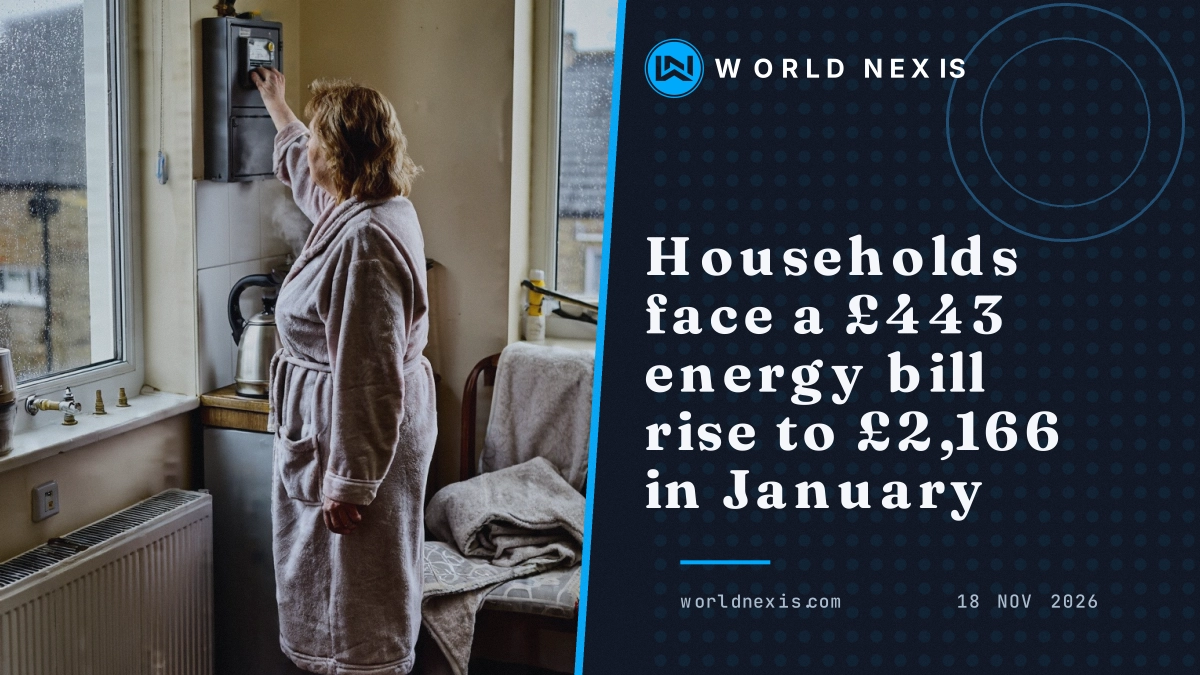
The energy price cap is forecast to rise by 26% in January, adding £443 to the average annual dual-fuel bill in Great Britain and taking it to £2,166, according to the consultancy Cornwall Insight. The forecaster published its final estimate before Ofgem confirms the cap for January to March on Wednesday 25 November. The warning came as official figures showed UK inflation climbing to 3.6%.
Key points
- The energy price cap is expected to rise 26% in January, lifting a typical annual dual-fuel bill to £2,166, a jump of £443.
- Ofgem will announce the level of the cap on Wednesday 25 November.
- Inflation rose to 3.6% in the year to October, from 3.5% in September, the Office for National Statistics said.
- The Bank of England raised interest rates to 4% earlier this month and signalled another rise is possible.
Energy price cap forecast adds £443 to annual bills
Cornwall Insight had predicted in late September that the cap would rise 16% to £1,999. Gas market prices climbed again through October, however, as violence escalated in the Middle East and fears deepened over Europe’s gas storage levels. The consultancy’s retail markets principal, Craig Lowrey, said the timing “could hardly be worse”.
“After already climbing in October, energy bills look set to rise again in the new year, and the timing could hardly be worse, with colder weather in January pushing up energy use and households already dealing with the cost of living crisis.”
The increase would be one of the biggest quarterly rises on record. The Mirror reported that bills would reach their highest level since 2023 and estimated the January change could amount to a combined £15bn bill shock. Cornwall also pointed to a “further small rise” next April, although it stressed much could change before then.
Ministers have already announced help. The Treasury will pay £100 to 20 million households in January and has cut VAT on electricity to zero until next July. The warm home discount gives about six million means-tested households in England, Wales and Scotland £150 off winter bills, and the chancellor, John Healey, used last month’s Budget to fund a £2.6bn household energy payment.
Emma Reynolds, chief secretary to the Treasury, said the government was providing help for households with energy costs. Lowrey said that support “can only chip away at the edges of a bill that continues to be pushed up by events in the Middle East”. Caroline Abrahams, charity director at Age UK, said the forecast would be frightening to many older people who have already endured years of cost-of-living pressures.
Households watch the meter
Some families are already adapting. Sophie, who manages a cafe at the Old Boat Corner community centre in Brighton, told the BBC she watches her smart meter at home “like a hawk”. She said the family uses the oven far less and has not yet switched the heating on. “We’ve got electric blankets on the sofa,” she said.
Inflation hits 3.6% as diesel reaches record price
The Office for National Statistics said inflation rose to 3.6% in the year to October, up from 3.5% in September. Petrol prices increased by 5.2p per litre between September and October, averaging 174.7p last month, the highest since August 2022. Diesel averaged 199.5p, the highest since records began 30 years ago.
Grant Fitzner, chief economist at the ONS, said fuel prices were “once again a major contributor” to the rise. He added that annual costs of raw materials and goods leaving factories “continue to climb, driven by higher crude oil and petrol prices”. Food price inflation slowed to 0.9%, its slowest pace in five years, while hotel prices fell.
Core inflation, which strips out energy and food, was little changed. That may persuade the Bank of England to hold off on a further rate rise in December. Policymakers nevertheless think inflation could peak at 4.9% in the middle of next year and not return to 2% until 2028. In an adverse scenario, where the US-Iran war escalates and oil prices climb further, it could reach 6.2% in 2027.
The Bank raised rates from 3.75% to 4% earlier this month, its first increase in three years. A spokesperson said the move was intended to “limit how much higher energy costs affect other prices”. Andrew Griffith, the shadow chancellor, blamed four successive rises in the inflation rate on “soaring energy costs” and Labour’s decisions to “hike taxes and employment costs”. Healey promised in his Budget “a new course to get energy costs down in line with Europe”.
Analysis
Having covered central banking and household finance at WNN, I look first at the gap between the shock and the cushion. A 26% energy price cap rise costs a typical household £443 a year, while January’s payment is £100 and the VAT cut saves about £50 annually. Craig Lowrey’s line that support “can only chip away at the edges” describes those numbers better than the government’s emphasis on help does.
I side with Lowrey, and with Age UK’s Caroline Abrahams: the support announced so far is too small for a bill rise of this size. The case for higher interest rates is reasonable, since the Bank must stop energy costs feeding into other prices. The strongest counter-argument is that ministers cannot control the Middle East, and borrowing for bigger handouts could keep inflation higher for longer.
That counter-argument has force, but it does not make a January rise of this scale manageable for low-income households. The relief also unwinds: the electricity VAT cut ends in July, and Cornwall flags a further small rise in April. In my view, the test of the chancellor’s “new course” is simple — whether the cap stops rising while support is still in place.
What happens next
Ofgem announces the cap for January to March on Wednesday 25 November, and the confirmed figure will set bills for the coldest months. The Bank of England’s next interest rate decision follows in December, with policymakers warning that another rise is possible unless the Middle East conflict is resolved.
The £100 payments to 20 million households arrive in January, alongside the warm home discount and the zero rate of VAT on electricity, which runs until July. Cornwall Insight has also flagged the possibility of a further small rise to the energy price cap in April.
Related coverage
- UK inflation confirmed at 3.6% as energy bills drive highest rate in a year
- UK inflation rate hits 3.6% on record diesel prices
- UK inflation hits 3.6% as record diesel prices drive rise
Sources
- Energy bills forecast to go up by £443 a year from January as UK inflation rate rises again (bbc.co.uk)
- Energy bills in Great Britain forecast to rise by 26% to £2,166 from January (theguardian.com)
- Energy bills set to rocket by more than £400 next year in eye-watering 26% rise – AOL (aol.co.uk)
About the author: Daniel Whitmore is World Nexis News’s Business & Markets Editor, covering business & markets. The analysis section reflects the writer’s view.

Daniel Whitmore
Daniel Whitmore is Business & Markets Editor at World Nexis News, based in New York. He leads coverage of companies, economies, markets and the forces that move them, from central bank decisions to corporate earnings and the cost-of-living pressures facing households on both sides of…