Veteran suicide: Face the Fight passes $58m in grants
Face the Fight has passed $58m in grants for veteran suicide prevention, funding 27 projects across 25 groups as it chases a 15,000-life target by 2032.
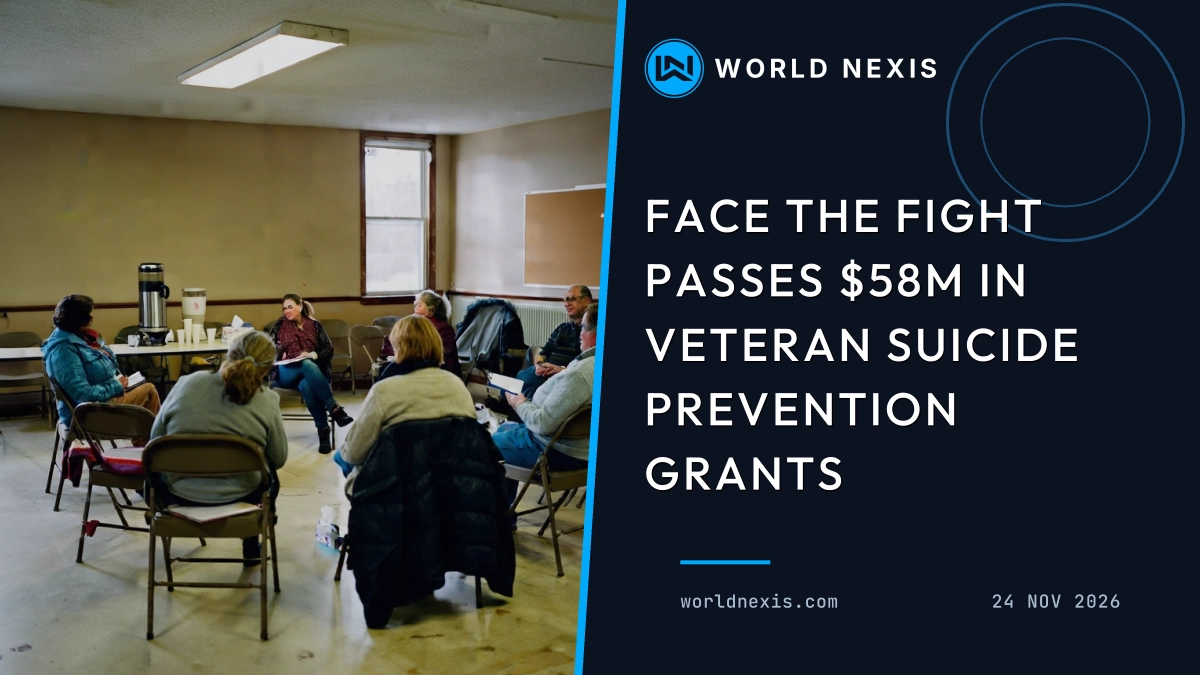
Veteran suicide prevention work across the United States has received a new round of private money after the Face the Fight coalition announced its sixth set of grants, pushing its three-year total above $58 million. The coalition said the round supports 27 projects across 25 organizations, taking its portfolio to roughly 110 funded projects since it launched.
Face the Fight was created by USAA, Reach Resilience and the Humana Foundation. Its stated ambition is to save 15,000 veterans from suicide by 2032, and it now says its investments are on course to save 10,900 lives by that date, up from a projection of 6,500 a year ago.
Key points
- The sixth round of Face the Fight grants funds 27 projects at 25 organizations, taking total awards past $58m for about 110 projects.
- The coalition says it is on track to save 10,900 veterans by 2032, compared with 6,500 projected a year ago.
- Backed programs have delivered more than 1.3 million suicide-risk screenings and trained over 119,000 people.
- Federal data shows fewer veteran suicides in 2024 than the year before, but nearly 18 a day still die.
What the new veteran suicide grants will fund
The coalition said the latest awards will widen access to evidence-informed prevention and care, with an emphasis on veterans who may not be connected to traditional health care settings. Twenty-two of the 25 organizations are returning grantees. Three are new to the portfolio: Avalon Action Alliance, REBOOT Recovery and STRIVE, the Suicide and Trauma Reduction Initiative.
Face the Fight has grown to more than 300 members, a mix of nonprofits, corporations and government liaisons. The coalition does not present itself as a replacement for federal care. Instead, it frames its money as filling gaps that clinics and hospitals miss.
A national security argument
Chris Ford, who leads Face the Fight at USAA, called the work “a national security imperative”. He said the case rests on more than compassion. “If we don’t take care of those who’ve served our country and ensure that they just don’t survive, that they thrive, I think it’s really hard for the all-volunteer force to continue and be viable,” he said.
He added: “I don’t know many young men and women who would want to sign up to serve our country if they saw all the negative outcomes on the back end of service outweighing the benefits of serving our country.”
Inside the numbers behind veteran suicide prevention
Ford said programs backed by the coalition have carried out more than 1.3 million suicide-risk screenings and provided suicide-specific care to more than 160,000 veterans. They have also held more than 350,000 conversations about firearm safety and secure storage.
More than 119,000 clinicians, peers and community members have been trained in suicide prevention, and the coalition estimates its work has touched more than 1.8 million lives across the veteran community. Ford argued that time strengthens the case. “The longer these investments are in market, time is at our advantage,” he said.
He also said the effort should not be left to specialists alone. “I firmly believe that every adult American has an opportunity to be on the front line as part of the eyes and ears in the fight against suicide, writ large,” he said, urging people to “look out for each other, listen, see if someone’s struggling, ask if they’re OK, and refer them to care”.
Why it matters
The latest Department of Veterans Affairs report found that fewer veterans died by suicide in 2024 than in the year before. Even so, nearly 18 a day still took their own lives, and veterans continue to die at much higher rates than the general adult population.
That gap is what the grants will ultimately be judged against. For families, it is the difference between a relative being picked up by a peer group or a firearm safety conversation and quietly slipping out of view. For the country, it bears on whether the all-volunteer force can keep recruiting, an argument Ford makes directly.
Veterans in crisis, or anyone worried about one, can contact the Veterans Crisis Line at any hour by dialling 988 and pressing 1, or by texting 838255. Support is free and confidential.
Analysis
Having covered health inequality for World Nexis News, I look first at who a programme reaches rather than at the size of the cheque. On that test, this sixth round is aimed at the right place. The money is explicitly meant for veterans who are not connected to traditional health care settings, and the VA’s own reporting in recent years has pointed to a widening split between veterans inside its care and those outside it. I think the community-first argument is the stronger one, because a veteran who has stopped opening letters from a hospital is far likelier to be reached by a trained peer, a faith group or a conversation about locking up a firearm than by another appointment letter.
The counter-argument deserves a hearing. Nearly 18 deaths a day is a national emergency, and $58 million spread across three years and about 110 projects is small change against a health system that spends billions. A sceptic could reasonably say that a coalition of corporate sponsors and nonprofits cannot replace sustained federal capacity, and that many small grants produce anecdotes rather than evidence. I would not dismiss that. But the alternative has already had decades to work, and it is the system that lost contact with these veterans in the first place.
What I would watch is the 10,900 figure. It is a projection about the future, not a count of deaths prevented, and a jump from 6,500 to 10,900 in a single year should be interrogated rather than celebrated. Publish independent evaluation of the screenings and follow-ups and the case becomes much stronger. Until then, I side with the strategy while staying sceptical of the scoreboard.
What happens next
Face the Fight says it will keep awarding grants in cycles until its 2032 target, and its membership has passed 300 organizations. The three new recipients join a portfolio that has already absorbed 22 returning grantees, so the coalition’s next test is whether that core group can show results at scale.
What we don’t know yet
The announcement did not set out how much each of the 27 projects will receive, or how the coalition calculates the 10,900 lives it expects to save. It also did not say whether any of the money substitutes for spending that federal programmes would otherwise provide. Those answers will shape how far $58 million really stretches.
Related coverage
- Medicare open enrollment 2027: 4 million face major shift
- PIP review: 4.09m claimants face major welfare overhaul
- Merchant cash advance leaves owner in 7-year $750,000 fight
Further reading
- Face the Fight surpasses $58 million in grants to fight veteran suicide
- Face the Fight surpasses $58 million in grants to fight veteran suicide
About the author: Sofia Alvarez is the Health & Medicine Reporter at World Nexis News (WNN), covering health & medicine. The analysis section reflects the writer’s view.

Sofia Alvarez
Sofia Alvarez is Health & Medicine Reporter at World Nexis News, covering public health, clinical research, mental health and the policy decisions that shape care. Based in Manchester, she prioritises evidence over anecdote, checks claims against peer-reviewed research and official guidance, and explains uncertainty plainly…