Energy price cap rises 26% as bills hit £2,166 in January
Ofgem's energy price cap will rise 26% from January, adding £443 to a typical annual bill of £2,166. Here is what it means and how to limit the damage.
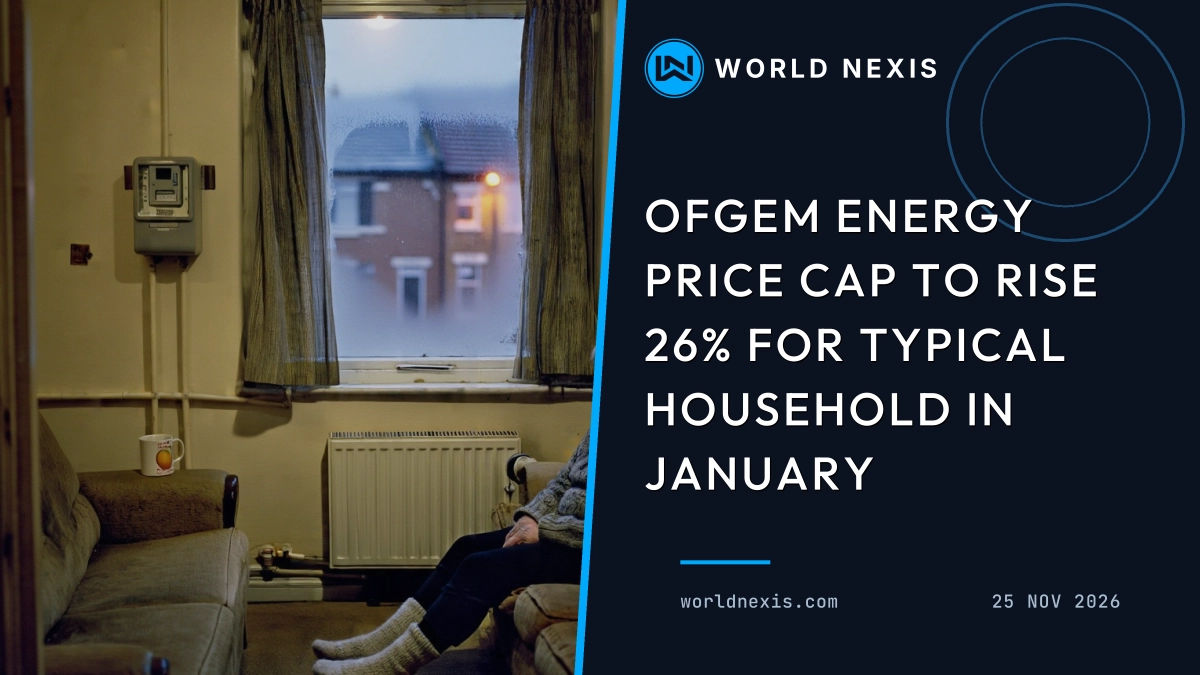
The energy price cap will rise by 26% on 1 January, lifting a typical household’s annual bill in England, Scotland and Wales from £1,723 to £2,166, Ofgem has confirmed. The change adds £443 to the bill of a home using a typical amount of gas and electricity and paying by direct debit. Charities and suppliers expect debt to rise and a growing number of households to need emergency support.
Key points
- The energy price cap rises 26% on 1 January, taking a typical annual bill to £2,166.
- Ofgem says wholesale gas costs, up 33% in the three months used to set the cap, drove the increase.
- Millions of households receive a £100 government payment from 4 January.
- Analysts expect only a slight fall in April, with bills still far above pre-conflict levels.
What the energy price cap rise means for your bills
The energy price cap is not a ceiling on the total a household pays. It limits what suppliers can charge for each unit of gas and electricity, and the daily standing charge for staying connected to the grid. A home that uses more than the typical amount will pay more than £2,166, and one that uses less will pay less.
Ofgem’s figures show average electricity unit prices rising from 26.32p to 32.69p per kilowatt-hour. Gas unit prices climb from 7.97p to 10.96p, higher than in the wake of Russia’s invasion of Ukraine. The new energy price cap runs for three months, to the end of March.
Those on fixed tariffs are unaffected until their deals end. People on prepayment meters feel the change fastest, because their spending comes when energy is needed rather than being spread across the year.
Ofgem said it has written to suppliers to remind them of their responsibilities this winter. They have been told to identify customers who need help early and to keep repayment plans affordable and sustainable.
Why the energy price cap is rising so sharply
Wholesale gas prices paid by suppliers rose 33% over the three months used to calculate the January cap. Ofgem said the increase had been driven entirely by higher wholesale costs, primarily because of the Iran war. Oil and gas prices also jumped in October as attacks in the Middle East intensified, weeks that fall inside the calculation window.
This is the steepest increase since Russia’s invasion of Ukraine pushed prices up. A fall in international wholesale prices in recent days will not be reflected in January’s energy price cap, but it should feed into April’s.
Energy Secretary Miatta Fahnbulleh said people will be “deeply concerned” by another rise. “For too long, British families have been paying the price for conflicts overseas and volatile fossil fuel markets,” she said. Shadow energy secretary Andrew Bowie called the rise “an outrage” and accused Labour of loading green levies and taxes onto bills and of signing the UK up to an EU scheme that risks pushing them higher.
Dame Clare Moriarty, chief executive of Citizens Advice, said: “We are staring down the barrel of a brutal winter.” Campaign groups Friends of the Earth and Global Witness argue that major oil and energy companies are making huge profits from spiralling oil costs while households struggle. Energy UK, which represents suppliers, says the firms that send bills have their profits capped and do not gain in the same way as international generators.
Why it matters
The government will pay millions of households £100 from 4 January to help with winter costs, on top of an existing VAT cut on electricity. The warm home discount takes £150 off bills for households on benefits this winter, and there are calls for that support, funded through everyone’s bill, to be extended.
For a household already behind on payments, a 26% jump in unit prices lands at the worst moment of the year. January energy bills arrive with the coldest weeks of winter, and prepayment customers and low-income families have the least room to absorb them. Charities expect demand for emergency help to climb through the first two months of the year. The energy price cap cushions households from the market. It does not make energy affordable.
Analysis
Having covered the energy transition for World Nexis News, I look first at what is moving the wholesale price rather than at the headline number. The figure that matters is not £2,166 but 33%: the jump in the gas price suppliers paid during the window that sets this cap. Ofgem says the whole increase comes from wholesale costs, which points to Britain’s dependence on imported gas rather than to anything the regulator chose to add. Wholesale gas prices are being set by a conflict, not by a decision taken here.
Andrew Bowie is entitled to raise levies and the EU scheme, because policy costs are real and they do sit on every bill. They cannot, however, explain a 26% rise in a single quarter, and that is the strongest argument against his framing. The fairest counter-point is that renewable capacity carries its own system costs, so no supply mix is free; the real question is which costs are predictable and which are hostage to a war.
In my view the evidence supports the government’s diagnosis far more than the opposition’s, and that makes the response look thin. A £100 payment and an electricity VAT cut do not offset £443, and the energy price cap simply passes a global gas price through to a household budget. I would rather hear ministers explain the exposure honestly than keep describing it as a temporary shock.
What happens next
Cornwall Insight expects only a slight dip in April, forecasting a 1% fall that would take a typical annual bill to £2,151. Ofgem will confirm the next energy price cap in February, and recent volatility in energy markets means the figure can still move sharply. Analysts expect bills to settle at around £2,000 a year for a typical household in the second half of 2027, still well above pre-conflict levels.
What we don’t know yet
Whether the recent fall in wholesale prices holds long enough to reach April’s cap in full. It is also unclear whether ministers will extend the warm home discount or widen the £100 payment beyond this winter.
Related coverage
- Energy price cap: Ofgem writes to suppliers as 26% January rise confirmed
- NDA ban: Burnham vows watershed moment in January crackdown
- New US tariffs to hit China, EU and 14 others over subsidies
Further reading
- Energy bills to rise by 26% from January after gas prices surge
- Why are energy bills going up and what can I do about it?
About the author: Hannah Lindqvist is the Climate & Environment Reporter at World Nexis News (WNN), covering climate & environment. The analysis section reflects the writer’s view.

Hannah Lindqvist
Hannah Lindqvist is Climate & Environment Reporter at World Nexis News, based in London. She covers climate policy, extreme weather, the energy transition, conservation and climate finance, grounding stories in scientific research, official data and documented commitments rather than slogans. She is interested in how…