Heat deaths in England pass record 5,000, data shows
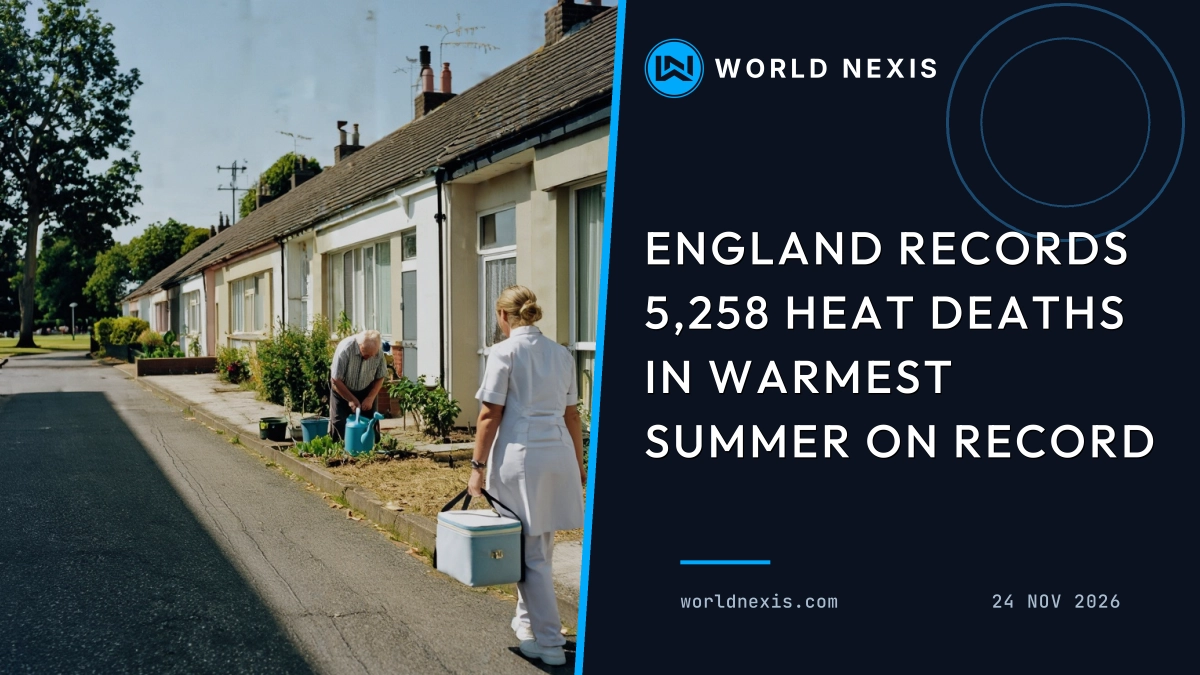
Record heat deaths in England passed 5,000 this year, new UKHSA data shows, after the UK's warmest summer on record brought repeated heatwaves.
Updated 24 Nov 2026, 13:16 (UK time): Health Secretary Yvette Cooper told the Commons she has asked the NHS to prepare for summer and offered condolences to families, giving the record heat deaths figure its first ministerial response and a planning instruction.
Heat deaths in England have now drawn a response from government. Health Secretary Yvette Cooper told the Commons she wanted to offer her “deepest condolences to all those who lost a loved one this summer”, and said she had asked the NHS to prepare for summer, describing the numbers as a stark reminder of the human impact of climate change.
That is the first indication that the UK Health Security Agency’s assessment will feed into planning rather than remain a published report, which is precisely the gap our earlier coverage flagged ahead of 2027. Until now the agency’s central recommendation was that individuals, communities and care services prepare across the whole season; a cabinet minister picking it up is a different order of commitment.
The figures also drew criticism from campaigners. Greenpeace climate campaigner Maja Darlington called thousands of deaths from a heatwave “a policy choice” rather than a freak accident, and argued that protections for schools, hospitals and care homes have not kept pace with the heat.
An instruction to the NHS matters more than another round of warnings, but the test is timing and money. If summer planning is not funded and staffed from spring, the 2,401 estimated deaths recorded in the last week of June will be repeated, whatever the guidance says.
Heat deaths in England passed 5,000 for the first time this year, with an estimated 5,258 people dying in conditions linked to hot weather, more than double the previous record of 2,985 set in 2022. The UK Health Security Agency (UKHSA) said Summer 2026 produced the highest mortality it has observed since it began publishing annual heat mortality reports in 2016.
The annual heat deaths total dwarfs recent years. It stood at 2,295 in 2023, 1,311 in 2024 and 1,504 in 2025, which means this summer’s figure is more than three times last year’s.
Key points
- An estimated 5,258 heat deaths were recorded in England this year, against 2,985 in 2022.
- The deadliest spell ran from 21 to 28 June, when an estimated 2,401 deaths were linked to extreme heat.
- More than 3,000 estimated heat-associated deaths occurred across the May and June episodes, before high summer.
- The UK recorded its warmest summer, with 38.2C at Hartpury College in Gloucestershire the hottest day of the year.
Heat deaths more than double the previous record
The UKHSA heat mortality report gives statistical estimates of deaths associated with hot weather rather than a count of death certificates that name heat as a cause. On that measure, 2026 stands alone: the total comfortably beats the 2,985 recorded in 2022 and sits far above every year in the decade since the series began.
The heaviest loss came early in the season. An estimated 2,401 deaths were linked to the extreme heat between 21 and 28 June, the period that also triggered a red warning for extreme heat.
Across the May and June heat episodes combined, more than 3,000 estimated heat-associated deaths were recorded. The report said intense heat early in the season can pose particular risks because unusually hot weather may arrive before people, communities and services are ready to respond.
“These findings therefore reinforce the importance of heat-health preparedness measures being in place from the start of the season, rather than focusing solely on the warmest periods of mid-summer.”
Dr Ross Thompson, principal environmental health scientist at the UKHSA, said older adults, young children, pregnant women and people with underlying health conditions are at greater risk from heat. He added that climate change is already affecting people’s health in England.
“As the climate continues to warm we can expect periods of extreme heat to become longer, more frequent and more intense.”
A summer of broken temperature records
The heat deaths followed a summer in which records fell repeatedly. The UK experienced its warmest summer on record, with parts of the country enduring multiple heatwaves over several months.
The season started early. Temperatures peaked at 35.1C at Kew Gardens in London in late May, an all-time high for the month. The heatwave at the end of June prompted a rare Met Office red alert for extreme heat and brought 38.0C at Lingwood in Norfolk on 26 June, another new monthly record.
Dry conditions followed the heat. England saw its driest July since data began, with only 7mm of rain measured, roughly 10% of the long-term average. The hottest day of the year arrived in mid-August, when temperatures reached 38.2C at Hartpury College in Gloucestershire.
Why it matters
For most households, the practical lesson is that danger arrives well before the hottest weeks. Older people, pregnant women, very young children and anyone living with a health condition carry the greatest risk, although the UKHSA stresses that heat can affect anyone.
The heat deaths data also matters for public services. Councils, care homes, hospitals and community groups rely on warnings to plan their response, and this year’s pattern suggests that measures which switch on in July are already too late after the UK’s warmest summer on record.
Analysis
Having covered extreme weather and its health consequences for World Nexis News, I look first at the timing of heat deaths rather than the annual total. The number that should stop ministers and council leaders is 3,000: the estimated toll that fell before July, when much of the country had barely adjusted to summer.
In my view the evidence supports the UKHSA’s position rather than the assumption, still common in local planning, that the danger sits in the peak weeks of August. Dr Thompson’s argument that heat-health measures must be in place from the start of the season is the better reading of a year in which the deadliest eight days came in June. Warning systems, checks on vulnerable neighbours and care home protocols all take weeks to activate properly.
The strongest counter-argument is that these are modelled estimates rather than death certificates naming heat, and that the agency itself points to people with underlying conditions as most at risk, which complicates any simple claim about cause. Even allowing for that, a rise in heat deaths from 1,504 to 5,258 in a single year is too large to dismiss as statistical noise.
What happens next
The UKHSA report is a public assessment rather than a set of new rules. Its central recommendation is that individuals, communities, health and care services and local organisations prepare for heat across the whole season, not only during a heatwave.
What we don’t know yet
The report sets out no new funding or statutory obligations, so it is unclear whether councils and care providers will change their summer planning for 2027. It is also too early to say how the 2026 heat deaths total will shape the way annual heat mortality reporting is presented in future.
Related coverage
- ATEEZ Billboard 200: fourth No. 1 and a record top 10 run
- Andrew £750,000 bribe claim heard at High Court trial
- Poundland rescue talks: 11,000 jobs at risk before deadline
Further reading
- Deaths linked to heat pass a record 5,000 in England this year, data shows
- Deaths linked to heat pass a record 5,000 in England this year, data shows
About the author: Hannah Lindqvist is the Climate & Environment Reporter at World Nexis News (WNN), covering climate & environment. The analysis section reflects the writer’s view.

Hannah Lindqvist
Hannah Lindqvist is Climate & Environment Reporter at World Nexis News, based in London. She covers climate policy, extreme weather, the energy transition, conservation and climate finance, grounding stories in scientific research, official data and documented commitments rather than slogans. She is interested in how…