Central Park rain record broken as 900,000 lose power
Central Park rain record: 1.82in made it the wettest Thanksgiving since 1870, while the nor'easter cut power to 900,000 and moved Macy's parade.
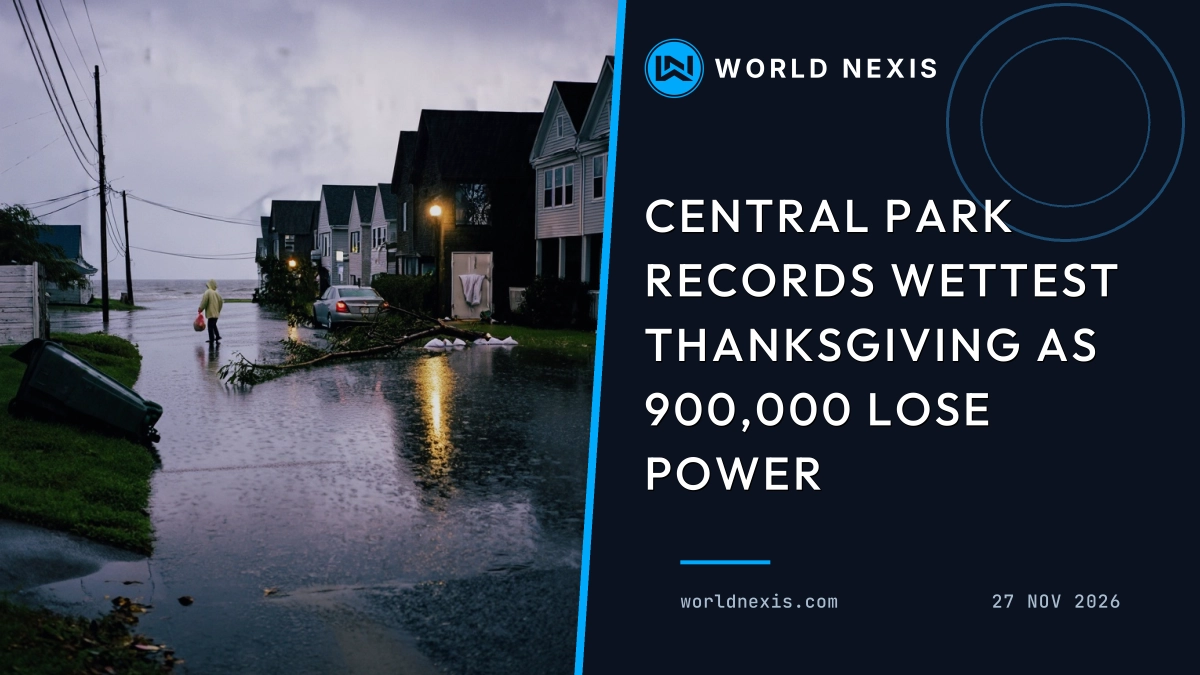
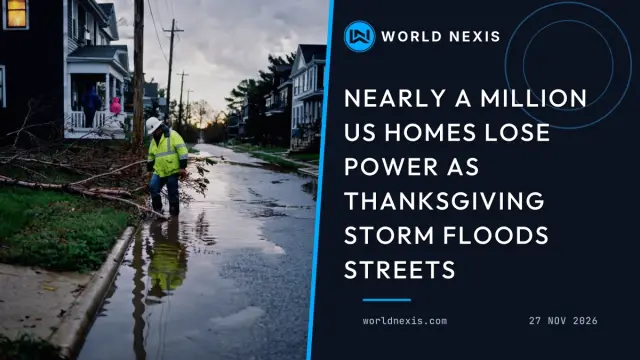
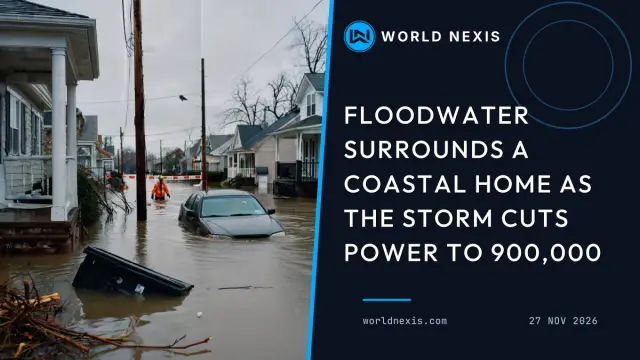
The Central Park rain record was broken on Thursday, with 1.82in (46mm) of rain making it the wettest Thanksgiving in the park since 2006 and the wettest the holiday has been there since records began in 1870, according to National Weather Service figures. By Thursday evening, more than 900,000 homes and businesses from West Virginia to New Jersey had lost power as the same Thanksgiving nor’easter brought flooding, wind damage and travel disruption to the East Coast.
Key points
- The Central Park rain record now stands at 1.82in, the most on a Thanksgiving since 2006 and the wettest since records began in 1870, NWS figures show.
- More than 900,000 utility customers in nine states had no power on Thursday night, with Pennsylvania worst hit at more than 200,000.
- New York Governor Kathy Hochul declared a state of emergency for the New York City region on Wednesday night, citing damaging winds, heavy rain and coastal flooding.
- The Macy’s Thanksgiving Day Parade was pushed back to Saturday for the first time in its history.
Central Park rain record sets the tone for a two-coast storm
The storm deepened off the mid-Atlantic on Wednesday and tracked north-east through Thanksgiving Day. The National Weather Service warned of gusty, possibly damaging winds, heavy rain and major coastal and marine impacts along the eastern seaboard, with gusts of about 65mph recorded in places.
Manhattan’s total edged past the 1.72in logged on Thanksgiving in 2006, a mark that had stood for two decades. Because the park’s gauge has kept continuous records since 1870, the Central Park rain record works as a benchmark rather than a curiosity.
Hochul’s office said the system was expected to bring severe impacts statewide, including damaging winds and heavy rainfall that could lead to travel disruption and power outages. The emergency covered New York City and Long Island, where locally major coastal flooding was possible on the South Shore back bays.
Power cuts, a postponed parade and a holiday travel crunch
Outages climbed through the day across nine states from West Virginia to New Jersey. Pennsylvania was the worst affected, with more than 200,000 customers without power by Thursday evening, while Maryland, New Jersey and Virginia each reported well over 100,000.
In New York City, the holiday’s signature event fell victim to the forecast. Macy’s, the NYPD and city officials agreed on Wednesday to move the 100th Thanksgiving Day Parade from Thursday to Saturday, the first postponement in the parade’s history.
Holiday travel was disrupted in the air and on the ground. FlightAware data showed more than 2,200 flights to or from the United States delayed and more than 400 cancelled, while AAA expected 81.5 million Americans to travel at least 50 miles from home between 24 and 30 November.
King tides in California push the coast towards record levels
On the other side of the country, attention turned to the Pacific, where king tides in California were forecast to push water levels above 8ft (2.4m) in some areas on Wednesday and Thursday. The National Weather Service warned of major coastal flooding likely in low-lying places, and flooding was already reported around San Francisco Bay.
Preliminary readings suggested several long-standing marks had gone. San Diego recorded a high tide of 8ft 11in on Wednesday morning, and Los Angeles reached 8.19ft, above the record set only on 27 October. Santa Barbara and La Jolla were also reported to have passed records set weeks earlier.
King tides are the highest predicted tides of the year and normally arrive once or twice annually in most coastal areas. Beachgoers were advised to stay away from the water’s edge, because large waves can form suddenly, damage piers and jetties, and capsize small vessels.
Why it matters
For millions of Americans, this was the holiday weekend when the risk arrived with the turkey. A night without power, a flooded road or a cancelled flight is not an abstraction when the travel window is only a few days wide and the return journey is still to come.
The bigger cost sits in the same places twice in a month. Tide records in San Diego, Los Angeles and Santa Barbara were set in late October and challenged again this week, while the eastern grid and coastal drainage were tested at the worst possible moment for holiday travel. Repeated hits are harder to absorb than single ones.
Analysis
Having covered extreme weather for World Nexis News, I look first at the tide gauges rather than the rainfall totals, because gauges show whether a storm is an outlier or part of a pattern. On that test, the Central Park rain record is the least interesting number in this story. The more telling figure is a set of Pacific tide readings that broke marks set only weeks earlier.
I think the evidence supports the view that the East Coast’s exposure is now a design problem rather than purely a weather problem. A nor’easter at Thanksgiving is ordinary; 900,000 customers losing power and a century-old parade moving to Saturday is not. The strongest counter-argument is that one holiday storm proves little on its own and that attributing any single event is genuinely hard. That is fair, but it does not explain why the same coastal communities have been tested twice in a month.
So I side with those who argue the money should follow the pattern: drainage, tide gauges, back-bay flood defences and grid hardening, judged by how they perform over a holiday weekend rather than in a press release. If the same places flood again in December, the argument will make itself.
What happens next
The Macy’s parade is now scheduled for Saturday, with the route and timings in the hands of organisers and city agencies. Utilities across the mid-Atlantic face a holiday weekend of restoration work, and New York’s state of emergency remains in force for the city and Long Island.
The highest tides on the Pacific coast were forecast for Wednesday and Thursday, so gauge readings will be checked before any record is confirmed. The AAA travel window runs to Monday 30 November, which means airports and highways will carry the bulk of return traffic over the next three days.
What we don’t know yet
Final outage totals, the extent of coastal damage in California, and whether the San Diego, Santa Barbara and La Jolla readings are ratified as official records. I expect the Central Park figure to be confirmed as the official daily total once NWS records are finalised, but the scale of the recovery bill will take longer to establish.
Related coverage
- Thanksgiving storm knocks out power to 900,000 on East Coast
- Thanksgiving storm cuts power to hundreds of thousands in US
- UK net migration falls to 77,000, lowest level since 1997
Further reading
- California warns of flooding as King Tides peak over Thanksgiving
- Central Park breaks 20-year Thanksgiving rain record as NYC slammed with extreme storms
About the author: Hannah Lindqvist is the Climate & Environment Reporter at World Nexis News (WNN), covering climate & environment. The analysis section reflects the writer’s view.

Hannah Lindqvist
Hannah Lindqvist is Climate & Environment Reporter at World Nexis News, based in London. She covers climate policy, extreme weather, the energy transition, conservation and climate finance, grounding stories in scientific research, official data and documented commitments rather than slogans. She is interested in how…