Andrew £750,000 bribe claim heard at High Court trial
Andrew £750,000 bribe claim: the High Court hears the former Duke of York was paid to help a Turkish woman's passport, and he gives evidence next month.
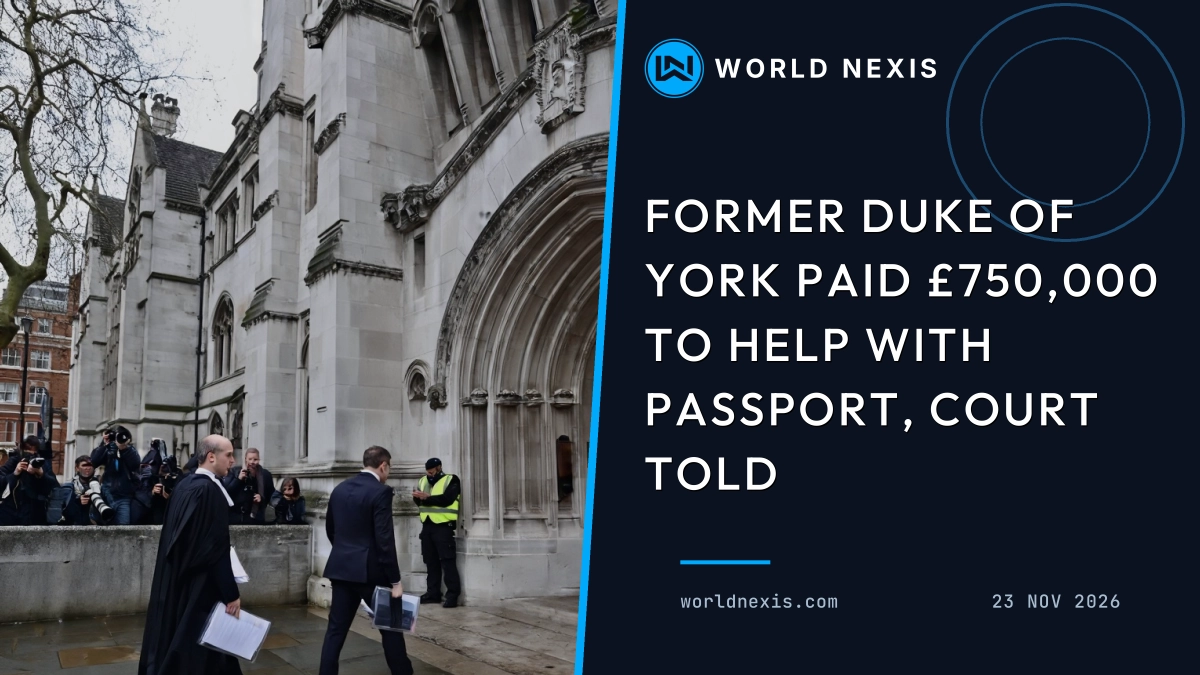
The Andrew £750,000 bribe claim reached the High Court on Monday, where lawyers alleged that Andrew Mountbatten-Windsor was paid the sum to help a Turkish woman with her passport. The former Duke of York, who is not accused of any wrongdoing, is due to give evidence in person on 14 December. The allegation sits inside a civil fraud trial brought by Nebahat Isbilen against her former adviser, businessman Selman Turk.
Mrs Isbilen, 81, says Mr Turk misappropriated tens of millions of pounds of her funds and never properly explained where the money went. Her case is that he misled her about the £750,000 paid to Andrew in 2019, which was later repaid, describing it dishonestly as a gift for help with her Turkish passport. Mr Turk denies dishonesty and is defending the claim.
Key points
- The Andrew £750,000 bribe claim centres on a payment made in 2019 and later returned.
- Mrs Isbilen says Mr Turk lied to her about why the money was needed.
- Mr Turk argues she knew the payment was made in the hope Andrew could help her imprisoned husband.
- Andrew is not accused of any wrongdoing and must appear under a witness summons.
How the Andrew £750,000 bribe claim reached court
Simon Colton KC, for Mrs Isbilen, said in written submissions that she is part of the Evyap family, which owns a major soap and cosmetics business in Turkey. Her husband, a former member of the Turkish parliament, has been imprisoned there since 2015 on terrorism charges her lawyers describe as politically motivated. In 2017, Mr Colton said, she was facing political persecution.
She met Mr Turk that January and gave him control of most of her financial assets. Her barrister said Mr Turk persuaded her that her assets were at risk and that he was able to transfer them to a safe place. Instead, Mr Colton told the court, Mr Turk “deliberately and systematically abused” her trust and moved money into companies he owned or controlled, leaving her the victim of a “major, cynical fraud”.
Mrs Isbilen left Turkey for Greece in 2017 and moved to London in 2018. Documents obtained during the proceedings, Mr Colton said, show that Mr Turk sent about £2 million to a company called Alphabet Capital, some of which was passed on to Andrew. That chain of transfers is central to the Andrew £750,000 bribe claim.
One bank payment of about 275,000 US dollars (£210,000) was made on Mr Turk’s instruction, and most of it then went to Sarah, the former Duchess of York. The Andrew £750,000 bribe claim turns on her approval of that payment: Mr Colton said she signed it off, but that Mr Turk “lied to her” about its purpose, which he called “a further example of his dishonesty”.
Payments linked to a birthday party and a wedding
The court heard that Mr Turk also instructed separate payments to Sarah, including £15,000 said to be for her 60th birthday party in 2019 and an unquantified wedding gift for Princess Beatrice. The High Court was told in 2023 that Mrs Isbilen had reached a settlement with the former duke and duchess.
Selman Turk denies dishonesty as the trial opens
As the Selman Turk trial opened, Joshua Hitchens, for the businessman, said in written submissions that the claim is “a mess” and should be dismissed because the allegations “cannot withstand scrutiny”. He argued that Mrs Isbilen understood and directed the management of her own affairs.
His team told the court: “Her own case is that she understood that the payment to the Duke of York was a bribe, either for assistance with her passport or her UK residency.” Mr Hitchens also said: “Paying public figures for preferential treatment was well within the claimant’s modus operandi.”
He added that in December 2019 Mrs Isbilen dined for five or six hours at Mr Turk’s flat with the Duke and Duchess of York.
Why it matters
The Andrew £750,000 bribe claim gives ordinary readers a rare window into how large sums move from wealthy overseas clients through London advisers towards famous names. It also tests how far a former working royal can be compelled to answer questions in a civil court about money received while he still held a title.
Whatever the judge decides, the evidence will sharpen scrutiny of the informal gift culture around access to public figures. It will also focus attention on the checks that advisers and households apply before large payments are accepted.
Analysis
Having reported on the royal household’s public role for World Nexis News, I look first at the paper trail rather than the headlines. On the documents described in court, Mrs Isbilen’s account holds together better: her money left her control, passed through a company she did not run, and reached people she never dealt with directly. That pattern supports her case that she was kept in the dark about why the £750,000 was needed.
I side with her lawyers on the central question of deception, and not because of anything Andrew is said to have done, since he faces no allegation of wrongdoing. The defence’s strongest material concerns her sophistication as a client, not what she was actually told. Mr Hitchens is right that paying public figures was, on his account, familiar practice for her, and if the judge accepts that the claim collapses. Even so, experience of high-level dealing is not the same as knowing where your own money has gone.
The political consequence is uncomfortable for the palace. A title that once eased introductions has now produced a witness summons, and no communications strategy can control what is said under oath. My worry is that the case will be consumed as a morality tale about one man when it is really about accountability for the intermediaries who move other people’s money.
What happens next
The Andrew £750,000 bribe claim continues in London, with Andrew Mountbatten-Windsor due to give evidence on 14 December. The date was fixed after a judge allowed Mr Turk earlier this year to issue him with a witness summons compelling him to attend. The judge will then decide whether the Nebahat Isbilen claim succeeds.
What we don’t know yet
It is not yet clear what Andrew will tell the court about the purpose of the £750,000 payment, or whether he will say he understood it as a gift. The terms of the 2023 settlement between Mrs Isbilen and the former duke and duchess have not been set out in court.
Related coverage
- Merchant cash advance leaves owner in 7-year $750,000 fight
- Peter Murrell loan: SNP cancels £60,000 debt after jail
- Poundland rescue talks: 11,000 jobs at risk before deadline
Further reading
- Andrew received £750,000 ‘bribe’ to help Turkish woman, High Court told
- Andrew received £750,000 ‘bribe’ to help Turkish woman, High Court told
About the author: Liam O’Connor is the UK Politics Reporter at World Nexis News (WNN), covering uk politics. The analysis section reflects the writer’s view.

Liam O'Connor
Liam O'Connor is UK Politics Reporter at World Nexis News, covering Westminster, devolved politics and the issues that matter to voters across England, Scotland, Wales and Northern Ireland. Based in London, he reports from primary sources — Hansard, official statements, published data — and explains…



