Energy price cap: Ofgem writes to suppliers as 26% January rise confirmed
The energy price cap is expected to rise 26% to £2,166 from January, adding £443 to a typical household bill. Ofgem confirms the figure on Wednesday.
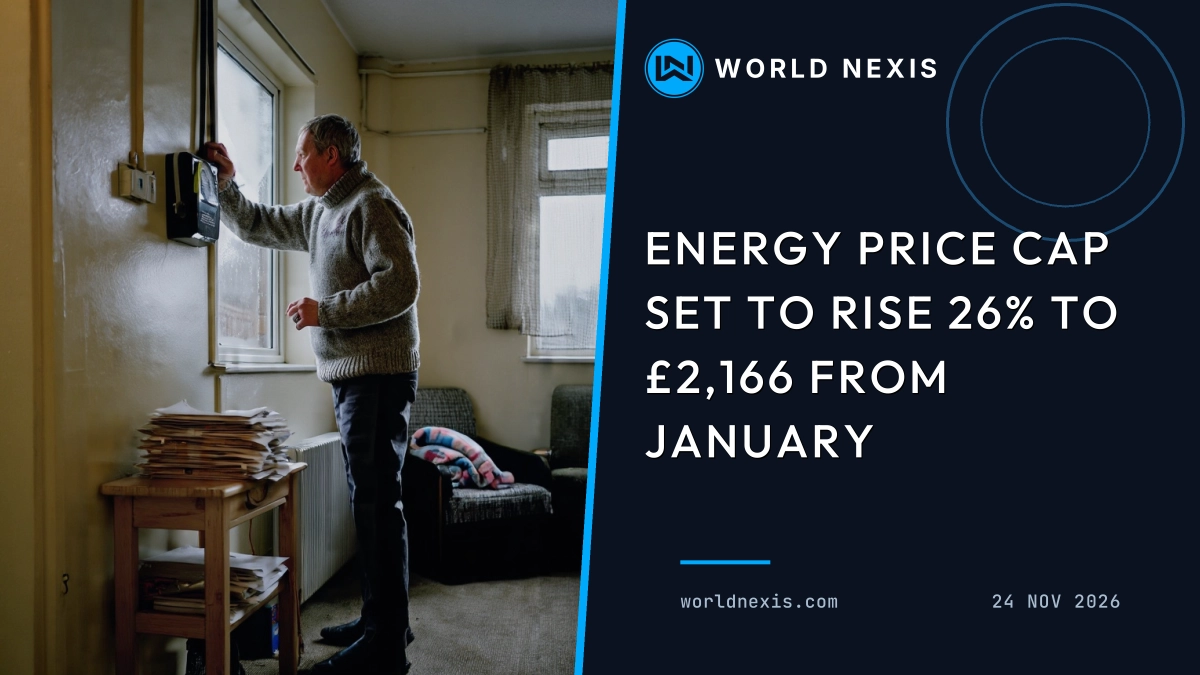
Updated 25 Nov 2026, 08:36 (UK time): Ofgem has written formally to energy suppliers, networks and brokers reminding them of their obligations to support customers this winter, as ministers respond to the confirmed 26% cap rise and its roughly £36.91-a-month cost for a typical household.
Ofgem has moved beyond publishing the number. Alongside confirming that the energy price cap rises 26% to £2,166 on 1 January, the regulator said it had written to energy suppliers, networks and brokers on Wednesday to remind them of their responsibilities to customers, including making sure help is easy to find this winter. Its director general for markets, Neil Kenward, said conflict in the Middle East continues to drive costs higher and urged anyone struggling to contact their supplier, who must offer appropriate support and advice.
The scale of the monthly hit is now clearer: the £443 annual increase works out at about £36.91 a month for a typical dual-fuel household, and the new cap is the highest since the second quarter of 2023. Energy Secretary Miatta Fahnbulleh said she knows people are deeply concerned by another rise and that families have for too long paid the price for conflicts overseas and volatile fossil fuel markets, pointing to the £100 payment most households will receive from January.
That is the political argument now being tested. A letter restating existing obligations costs the regulator nothing and changes no direct debit, and the £100 still leaves most capped households paying more in the coldest months than they do today.
Writing to suppliers is the right nudge, but it is a nudge. What matters in January is whether a household that runs out of credit gets discretionary help without a fight, and on the evidence so far that still depends on the supplier rather than the cap.
Updated 25 Nov 2026, 07:21 (UK time): Ofgem has confirmed the energy price cap will rise 26% to £2,166 a year for a typical household from 1 January, up from £1,723, adding £443 to a typical dual-fuel bill.
Ofgem has confirmed the energy price cap will rise by 26% from 1 January, setting it at £2,166 a year for a typical household, up from £1,723 under the current quarterly limit. That is the £443 increase analysts had projected, and it leaves the cap at its highest level in four years.
The regulator’s decision covers the January-to-March period in England, Scotland and Wales and follows a 4% increase at the start of October. The confirmation comes as gas prices across Europe sit at levels not seen since the first winter after Russia’s invasion of Ukraine, with the increase in wholesale costs cited as the driver of the new cap.
The Government is again pointing to the £100 payment for up to 20 million households in council tax bands A to D, the £150 Warm Home Discount for around six million means-tested households and the temporary 5% cut to VAT on electricity bills. Ministers say the measures give families breathing space and reach the vast majority of low-income households.
The number is no longer a projection, so the caveat that hung over the earlier reporting is gone: the £443 is real, and it lands in January. My view has not shifted — a one-off £100 against a rise of that size is a gesture, and it does nothing about the wholesale exposure that caused the spike. The fair counter is that the public finances are tight, but help that leaves the underlying bill higher tends to return as arrears and emergency credit.
The energy price cap is expected to climb 26% to £2,166 a year from 1 January, a rise that would add £443 to a typical household’s dual-fuel bill. Ofgem will publish its decision for the January-to-March period on Wednesday.
Key points
- Analysts at Cornwall Insight project a 26% rise in the energy price cap, taking it to £2,166 from 1 January.
- A typical dual-fuel customer would pay £443 more a year than under the current limit.
- The cap would sit at its highest level in four years, after a 4% increase at the start of last month.
- Ministers point to a £100 payment for up to 20 million households and a temporary VAT cut on electricity.
Energy price cap expected to reach four-year high
Ofgem reviews the energy price cap every three months, and Wednesday’s figure will govern bills in England, Scotland and Wales from January to March. The cap limits what suppliers can charge for each unit of gas and electricity, plus standing charges, for households on default tariffs.
Analysts at Cornwall Insight expect a 26% increase to £2,166 for a typical household, which would leave the cap £443 higher than today. That would mark its highest point in four years, following a 4% rise at the start of last month.
The projected jump traces back to October, when escalating violence in the Middle East pushed oil and gas prices sharply higher. Deepening concerns about gas supply levels in Europe added to the pressure during the same period.
Wholesale prices eased, but too late
Wholesale costs have since fallen back, helping to support a reduction in petrol prices at the pumps. However, the movement came too late to affect the calculation for the new energy price cap, so households will not feel that relief until a later review.
What help households will get
The Chancellor used the autumn Budget to announce that gas standing charges will be scrapped in England, Scotland and Wales. From January, up to 20 million households will also receive £100 towards their energy costs, alongside a temporary 5% cut to VAT on electricity bills until June next year.
Around six million of those households will receive the £150 Warm Home Discount as well. A spokeswoman for the Department for Energy Security and Net Zero said ministers had taken “immediate action to give people breathing space, with extra support for those who are struggling the most”.
Even so, the £100 payment covers less than a quarter of the £443 increase projected for a typical dual-fuel bill. The energy price cap set on Wednesday will therefore still leave millions of households paying considerably more than they do now, once the change lands in the depths of winter.
Simon Francis, coordinator of the End Fuel Poverty Coalition, said households are set to pay more for gas than ever before.
“For millions of people that equals cold homes, mounting debt and having to make impossible choices,” he said. “It means parents going without so their children can stay warm, people who rely on medical equipment rationing their electricity and households on prepayment meters left with no heat at all once their credit runs out.”
He urged the Government to invest more in helping households get off gas for good and to end exposure to volatile prices, adding that it is “not too late for Ministers to also take action that would make a difference this winter”.
Why it matters
For anyone on a default tariff, this is the single biggest household bill decision of the year. A rise of more than a quarter means money that would have gone on food, travel or children’s clothes is redirected to gas and electricity, and it arrives in the coldest months.
The timing matters as much as the size. Prepayment customers who run out of credit lose heat immediately, and households already in arrears face higher direct debits from the first payment of the new year. The energy price cap decision therefore shapes debt advice caseloads, council hardship funds and hospital admissions as much as it shapes bills.
Analysis
Having covered public services and devolution for World Nexis News, I look first at what £443 a year does to a household already behind on payments. On the numbers available, the campaigners’ case is stronger than the government’s. A £100 payment against an increase of that scale is a gesture rather than insulation, and it lands in January, when prepayment meters run dry fastest.
I side with Simon Francis on direction of travel too. Scrapping gas standing charges and cutting VAT are structural changes, but they trim the bill rather than reduce the exposure to the volatile wholesale market that caused this spike. The strongest counter-argument is that the public finances are tight and ministers cannot subsidise every swing in global prices. That is fair, yet help that leaves the underlying bill higher tends to return later as arrears, emergency credit and debt advice, which costs the state more.
There is a devolution angle worth watching. Standing charges are being scrapped across England, Scotland and Wales, but advice services and hardship support are delivered differently in each nation, so the same energy price cap will be felt unevenly. If the 26% rise is confirmed, I expect pressure on ministers in Edinburgh and Cardiff to top up support, and a sharper argument at Westminster about who ultimately pays.
What happens next
Ofgem publishes its decision on Wednesday, and any new cap takes effect on 1 January. The £100 payment for up to 20 million households and the 5% VAT cut on electricity bills run until June next year, while the Warm Home Discount reaches around six million households.
What we don’t know yet
Nobody outside Ofgem knows the exact level of the energy price cap until Wednesday, because the 26% figure is an analyst projection rather than a confirmed number. It is also unclear whether ministers will bring forward further support this winter, with the department pointing only to measures already announced.
Related coverage
- Troubles official history gets £3.6m in major archives study
- Burnham TikTok row sparks major backlash over No 10 stunt
- PIP review: 4.09m claimants face major welfare overhaul
Further reading
- Energy price shock for millions of households to be revealed
- Energy price shock for millions of households to be revealed
About the author: Liam O’Connor is the UK Politics Reporter at World Nexis News (WNN), covering uk politics. The analysis section reflects the writer’s view.

Liam O'Connor
Liam O'Connor is UK Politics Reporter at World Nexis News, covering Westminster, devolved politics and the issues that matter to voters across England, Scotland, Wales and Northern Ireland. Based in London, he reports from primary sources — Hansard, official statements, published data — and explains…



