Viagogo hidden fees: CMA warns over drip pricing on 3 sites
Viagogo hidden fees may have broken consumer law, the CMA has provisionally found, saying taxes and booking fees appeared late in checkout on three sites.
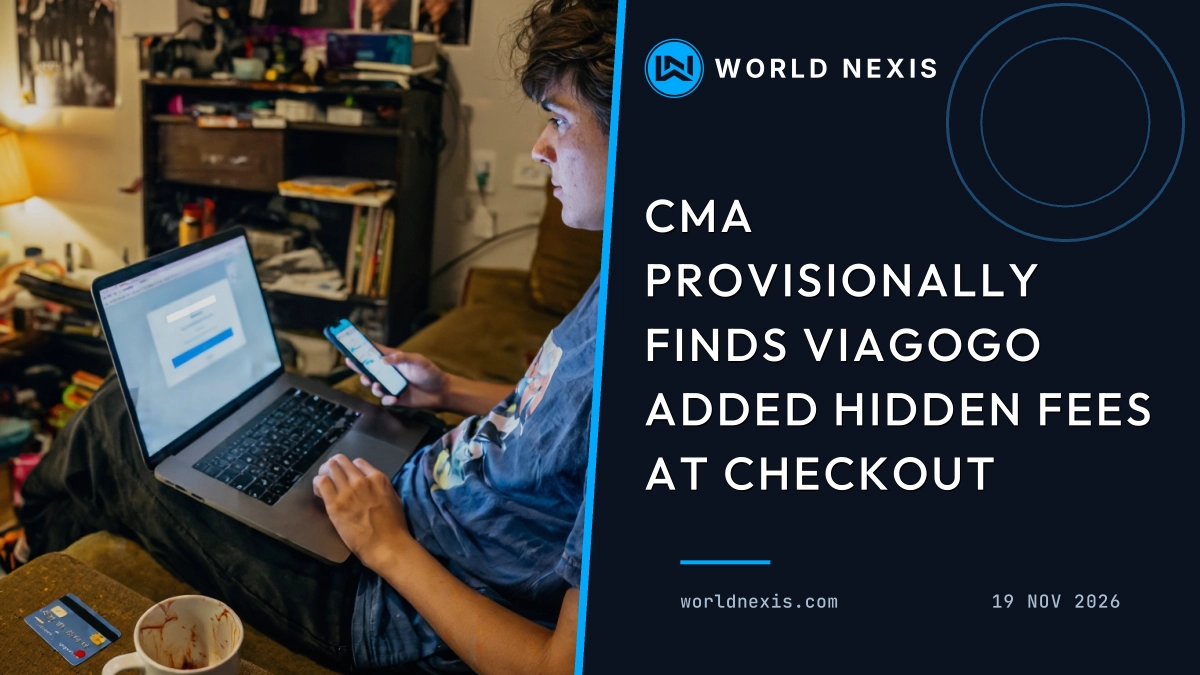
Viagogo hidden fees may have broken consumer law, the Competition and Markets Authority said on Thursday, after a provisional investigation found the ticket-reselling platform used drip pricing across three websites. The regulator said fans buying tickets for concerts and sport were not shown the total price upfront, with compulsory costs such as taxes and booking fees appearing only later in the checkout process.
Key points
- The CMA provisionally found that Viagogo did not show customers the total price upfront on three websites trading under its brand.
- The regulator issued a provisional infringement notice on Thursday; the finding is not final and does not yet establish that the law was broken.
- Viagogo said no final findings have been made and that it continues to cooperate fully with the investigation.
- The case sits inside a wider CMA crackdown on drip pricing, with probes into three firms announced this week.
What the CMA alleges about Viagogo hidden fees
The watchdog examined how UK fans buy tickets for events including concerts on three sites operated under the Viagogo brand. It concluded that costs a buyer cannot avoid, such as taxes and booking fees, surfaced only at later stages of the purchase.
“The CMA believes that mandatory costs such as taxes and booking fees were added at later stages of the checkout process and not included in the total price from the start,” the regulator said.
Drip pricing describes the practice of advertising a headline figure and revealing compulsory charges late in the buying process. The CMA argues this stops shoppers comparing like with like, because a lower headline number can conceal a more expensive final bill.
“Drip pricing can cause fans to be caught out by extra charges and buy tickets they might not otherwise have selected, had they been able to compare prices accurately from the start,” it said.
The investigation focused on the buying journey rather than on the resale model itself. Officials looked at what UK fans saw as they moved through checkout, and at which charges appeared only once a purchase was already under way.
The regulator stressed that its conclusion is provisional. It said it should “not be assumed that Viagogo has broken the law”, and that the company will have the chance to respond before any final decision is taken.
Viagogo says the investigation is ongoing
Viagogo said it had worked with the regulator throughout the process. A spokeswoman said: “This is an ongoing investigation and no final findings have been made.” She added: “We have engaged constructively with the CMA and continue to cooperate fully with its investigation.”
The CMA issued a provisional infringement notice, the formal step that sets out its concerns and opens a window for the company to reply. If the watchdog remains satisfied after that exchange, it can issue a final infringement notice.
The regulator’s powers have changed in recent years, and it can now decide whether consumer law has been broken without first going through the courts. That gives findings such as Thursday’s more bite, because enforcement no longer depends on a lengthy legal action.
Pressure builds on the secondary market
The announcement lands amid broader scrutiny of how tickets are bought and resold in the UK. Earlier this week the CMA said it was investigating three companies over their online pricing practices, part of a wider crackdown on drip pricing across the economy.
Ministers have also promised new rules for the secondary ticketing market, with plans announced late last year to make it illegal to resell tickets for live events above their original cost. Those plans would need legislation, while the CMA’s action rests on consumer law that already applies.
Resale platforms have become a fixture of big tours and major sporting fixtures, because they let fans pass on seats they can no longer use. The regulator’s concern is not that the market exists, but how the price is presented to the person paying.
Why it matters
For anyone who has tried to buy a concert or match ticket, the checkout screen is where budgets break. Hidden charges make it hard to judge whether a seat is worth the money, and they make rivals look dearer than they really are.
If the CMA’s provisional view holds, buyers should eventually see the full price before they commit, which makes comparison meaningful again. The case also signals how far the regulator will go in policing pricing right across online retail, not just ticketing.
Analysis
Having covered consumer credit and pricing for World Nexis News, I look first at where the money is actually decided: not in the advert, but on the last screen before payment. That is why I think the CMA’s provisional case is sound. A fee revealed after a fan has chosen a seat and started a countdown is not really a price at all; it is a pressure tactic, and the watchdog is right to treat the moment of commitment as the place where the harm happens.
The strongest counter-argument is that Viagogo has not yet had its full say, and that provisional findings can be narrowed or dropped once a company responds. That is fair, and the firm is entitled to that process. But it does not weaken the underlying point about transparency: a business can be well run and still have a checkout that hides compulsory costs until the final click.
What I watch next is the remedy, not the rhetoric. If the fix is a single all-in figure shown from the first page, fans gain real bargaining power and can walk away early. If it is a footnote and a promise of clearer labelling, the same trick returns under a different name.
What happens next
Viagogo now has the opportunity to consider the CMA’s findings and respond. The regulator will then decide whether to issue a final infringement notice, which would confirm its view that the company broke consumer law.
What we don’t know yet
No timetable has been given for a final decision, and the shape of any remedy is unclear. It is also not yet established whether the provisional finding will survive the company’s response.
Related coverage
- Food bank donations critically low at 43% of Trussell sites
- CMA Awards 2026: Ella Langley ties record as Swift returns
- EV mandate: Flynn warns watering down 2030 plan unacceptable
Further reading
- Viagogo may have broken law on hidden fees, watchdog provisionally finds
- Viagogo may have broken hidden fees rules, says provisional CMA finding
About the author: Zara Hussain is the Crypto & Personal Finance Writer at World Nexis News (WNN), covering crypto & personal finance. The analysis section reflects the writer’s view.

Zara Hussain
Zara Hussain is Crypto & Personal Finance Writer at World Nexis News, covering digital assets, saving, investing, consumer credit and the money decisions that affect households. Based in Birmingham, she explains risk plainly, distinguishes speculation from verified fact and does not give individual financial advice.