North Korea nuclear: Kim tours 2 plants, vows major buildup
North Korea nuclear: Kim Jong Un toured two plants and ordered a wider tactical nuclear roll-out, days after ignoring Trump's offer to meet.
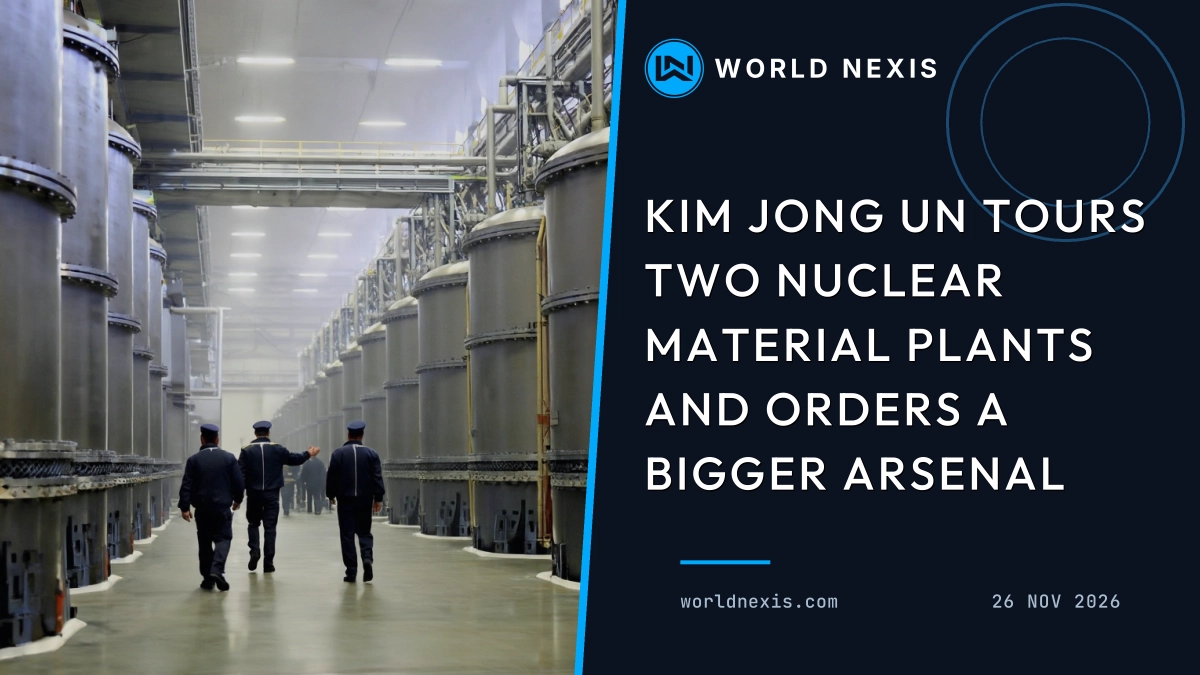
North Korea nuclear planning has moved from summits to production lines, after Kim Jong Un toured two facilities that make nuclear material and called for a larger arsenal and a wider battlefield deployment. State media reported on Thursday that he had inspected the two plants, one newly inaugurated and the other being expanded, plus a nuclear-powered equipment production base and a nuclear research institute during visits on Wednesday. The tour came days after he ignored President Donald Trump’s offer to meet during his recent trip to Asia.
Key points
- Kim Jong Un inspected two nuclear materials production factories, one new and one under expansion, according to a state media report published on Thursday.
- Photographs showed him walking between dense rows of what appeared to be centrifuges for weapons-grade uranium, and touring halls of what were believed to be warheads. Some images were blurred.
- He said deploying low-yield battlefield nuclear weapons across multiple domains was crucial and urgent.
- South Korea said it takes the comments on battlefield nuclear weapons seriously and keeps a firm readiness posture alongside the United States.
What the North Korea nuclear tour revealed
Pyongyang did not disclose where either facility stands, and it has shown its enrichment work to outsiders only a handful of times in two decades. The photographs released with the report showed Kim and senior military officials moving between long rows of equipment that appeared to be centrifuges used to produce weapons-grade uranium. Other images showed halls of what were believed to be warheads, and some of the pictures were deliberately blurred.
North Korea nuclear disclosures have followed a pattern since 2010, when the country showed an enrichment plant at its main Yongbyon complex to visiting American scholars. In June, when it published parts of a uranium enrichment site during a Kim inspection, outside experts assessed the facility was likely an additional enrichment plant at Yongbyon.
Kim presented the tour as a direct answer to pressure from Washington and Seoul. He spoke of “variable nuclear threats approaching the Korean Peninsula moment by moment,” and said that deploying low-yield battlefield nuclear weapons across multiple domains, for a range of missions, was crucial and urgent given the “inevitable reality facing the border with the most dangerous enemy state,” a reference to South Korea.
“The validity and substantiality of our possession of nuclear weapons and the trend of bolstering up its nuclear capability in quality and quantity are an irreversible reality.” — Kim Jong Un
Seoul’s response and Kim’s submarine complaint
South Korea’s Defense Ministry said it takes Kim’s comments on battlefield nuclear weapons seriously. Seoul maintains a firm military readiness posture against the North’s nuclear threats under its alliance with the United States, the ministry said. The South’s Joint Chiefs of Staff declined to share an analysis of the facilities, describing it as confidential information for South Korea and the US.
Kim also accused Washington of inciting regional allies to acquire nuclear-powered submarines and of committing to share its nuclear weapons with them. He has spent recent years reorienting his foreign policy toward Moscow and Beijing, seeking economic cover and diplomatic backing while pressing his claim to permanent nuclear status. His military has concentrated on short-range tactical weapons aimed at South Korea rather than only the long-range missiles designed to reach the American mainland.
The expansion has accelerated since Kim’s high-stakes diplomacy with Trump collapsed in 2019. That history explains the timing of this week’s disclosure: the offer of a meeting went unanswered, and the reply arrived as a photograph of centrifuges.
Why it matters
For ordinary readers, the consequence is a security environment in which a nuclear-armed state is openly adding warheads and fissile material with no inspection regime in sight. Each new plant raises the cost of deterrence for Washington and Seoul, and it narrows the space for any deal that would freeze the North Korea nuclear program rather than accept it.
The images also serve a domestic purpose. The program is the backbone of Kim’s authoritarian rule, so the tour is aimed as much at his own military elite as at Washington, reinforcing his standing as the leader who delivered great-power weapons status.
Analysis
Having spent four years on World Nexis News covering sanctions and arms-control files, I look first at whether a statement changes capability or only rhetoric. This one changes capability. A newly inaugurated plant plus an expanded one, photographed with rows of centrifuges, is a claim about output rather than intent, and Kim attached his own verdict to it: an irreversible reality.
In my view the facts support the hawkish reading better than the engagement one. Kim was offered a meeting and let it pass. He disclosed only what he chose to disclose. He cited American nuclear-sharing with allies as the reason he needs more weapons, not fewer. That is not a negotiating position built to be traded away, it is a North Korea nuclear buildup being industrialized. The strongest counter-argument, that refusing talks raises the risk of miscalculation on one of the world’s most heavily armed borders, is serious, but it argues for crisis management rather than for expecting the arsenal to shrink.
What worries me most is the verification gap. We have blurred photographs, unnamed locations and no inspectors, so outsiders are pricing risk off propaganda. I would rather see Washington and Seoul invest in intelligence, missile defense and hotline discipline than in another summit that produces a communiqué and no access to the North Korea nuclear complex.
What happens next
No negotiating date has been announced on either side, and the report gave no timeline for when the expanded facility will reach full production. Seoul’s stated position is to hold its readiness posture with US forces, and its Joint Chiefs of Staff will keep their assessment of the facilities confidential rather than publish it.
Kim’s declared goal is recognition as a permanent nuclear power, backed by closer ties with Moscow and Beijing. The pattern since 2019 suggests further disclosures of production sites, each timed for political effect rather than transparency.
What we don’t know yet
Where the two plants are, whether the newly inaugurated site sits at Yongbyon, how much weapons-grade material they can produce, and whether Washington will answer this disclosure with pressure or another offer of talks. The report also gave no figure for the size of the arsenal, which no outside body can currently verify.
Related coverage
- Nuclear test veterans win major truth panel by 2027
- Cairo fire kills 31 as fuel tanker overturns on major road
- Trump tariffs: major duties hit 14 US trading partners
Further reading
- North Korea’s Kim vows to build more nuclear weapons after ignoring Trump’s overture
- North Korea’s Kim vows to build more nuclear weapons after ignoring Trump’s overture
About the author: Marcus Ellington is the International Correspondent at World Nexis News (WNN), covering world affairs. The analysis section reflects the writer’s view.

Marcus Ellington
Marcus Ellington is International Correspondent at World Nexis News, reporting on diplomacy, conflict and the political forces reshaping Europe, the Middle East, Asia and the Americas. Based in London, he focuses on explaining why events unfold as they do, using official statements, diplomatic documents and…



