Rikers Island closure plan sets 2032 target and $146m boost
New York City's Rikers Island closure plan sets a 2032 target and $146m for jail alternatives, but the city will miss its legal 2027 deadline.
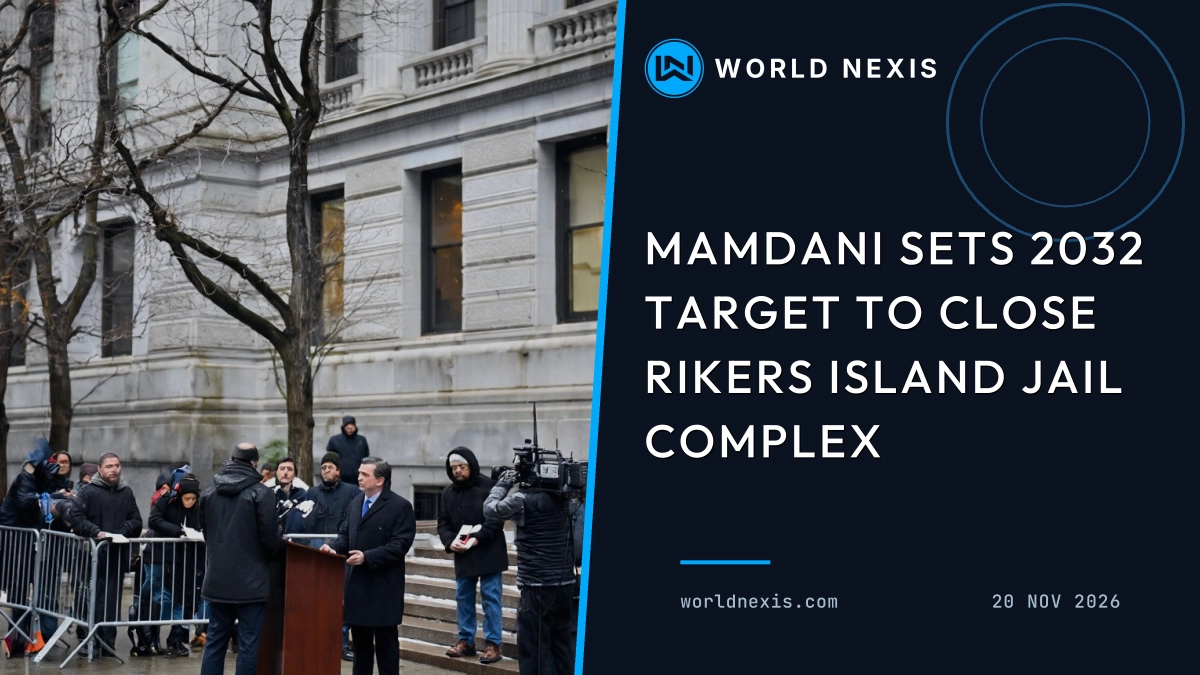
New York City Mayor Zohran Mamdani has set out a Rikers Island closure plan that would end all incarceration at the complex by the end of 2032 and move the people still held there into four smaller jails across the boroughs.
The mayor’s office described the roadmap, published on Friday, as the city’s first comprehensive plan to close the jail. It arrives five years after a legal deadline the city now accepts it will miss.
Key points
- The Rikers Island closure plan would stop housing detainees at the complex by the end of 2032, with the jail population cut to no more than 4,100.
- Four borough-based jails hold about 4,500 beds and are due to open between 2029 and 2032.
- The city pledged $146m next fiscal year for mental health care, substance use treatment, education, vocational training and victim services.
- Changing the closure date in law requires City Council legislation, which the plan commits the administration to pursue.
Inside the Rikers Island closure plan
The document sets out a sequence of openings. The Brooklyn facility is on track for 2029, followed by the Bronx and Queens in 2031 and Manhattan in 2032.
Capacity is the hard constraint. The plan puts the population held on Rikers at roughly 6,600 as of early November, well above the 4,500 beds the four replacement jails are expected to provide. The mayor’s answer is to shrink demand rather than build bigger: the target is no more than 5,500 people in custody when Brooklyn opens in 2029, falling to 4,100 by the end of 2032.
Alongside that, the mayor’s office promised hundreds of therapeutic beds for New Yorkers with serious mental health conditions and complex medical needs. The $146m is aimed at mental health care, substance use treatment, education and vocational programming inside jails and in communities, plus services for victims of crime.
The plan also commits the city to reducing pretrial detention and the case delays that leave people waiting for trial, to modernizing the Department of Correction, and to planning the future reuse of the island. It says the administration will work closely with the City Council on legislation to bring the plan into law, and with the remediation manager, the federal monitor and the Board of Correction.
“It is time to finally close Rikers Island,” Mamdani said. “For decades, New Yorkers have demanded a correctional system that is safe and humane. This plan puts us on a path to deliver just that: closing Rikers, reducing pretrial detention, tackling the case delays that deprive people of their right to a speedy trial and investing $146m in the evidence-based supports that helps break the cycles of incarceration.”
He added that the city has “a legal and moral obligation to close Rikers” and would meet it alongside the City Council, courts and nonprofit partners, “for the people in our custody, the staff who serve them, victims of crime, and every New Yorker.”
In a separate interview, the mayor said the city could not “simply accept the old approaches to public safety just because they’ve always been done that way,” and argued his administration would be the first to deliver what earlier ones only discussed.
A deadline that is already slipping
The legal duty to close Rikers dates from 2019, when the City Council passed legislation, signed by then-mayor Bill de Blasio, ordering the complex shut by August 2027 and replaced by four smaller, modern jails in Brooklyn, the Bronx, Queens and Manhattan.
That timetable has not held. Construction is behind schedule, and city officials acknowledge they will not meet the 2027 date. The gap between ambition and delivery is the central problem the new plan has to solve.
The site carries its own history: a former garbage dump in the East River, out of sight for most New Yorkers and awkward for families, lawyers and service providers to reach. The borough jails will sit closer to courts and public transit. A federal judge has described the level of violence inside the complex as an “unconstitutional danger” to both the people held there and the staff who guard them.
Reactions and the national stakes
Reform groups are watching whether the model travels. Insha Rahman, president of the Vera Institute of Justice, said that if New York City can carry this through at scale, “it is encouragement for places like LA, like Chicago, like Philadelphia, like Houston to do the same.”
That framing puts the Rikers Island closure plan at the centre of a wider argument about how American cities shrink their jails: by building smaller, or by arresting and detaining fewer people.
Why it matters
For families in the Bronx, Brooklyn, Queens and Manhattan, the practical change is distance. Visits that now mean a bus and a bridge across the East River become trips across town, closer to courts and transit. For the people inside, conditions and access to treatment are the stake.
For everyone else in the city, this is a test of whether public safety and a smaller jail population can move together. If the numbers do not fall, the most sweeping reform of New York City jails in a generation simply fills four new buildings and leaves Rikers open in practice.
Analysis
Having spent five years covering accountability and constitutional litigation for World Nexis News, I read this plan as less about a date and more about arithmetic. The 2032 target only works if the number of people held falls by roughly 2,500 over six years, and that depends on prosecutors, courts and judges, none of whom the mayor controls.
I think the mayor’s side has the better argument. The 2019 law set a deadline without a mechanism to reach it, and the previous administration treated that failure as tolerable. Publishing a sequence, tying it to population targets and naming the courts and the council as partners is a more honest route than another round of promises. Rahman of the Vera Institute is right that a model which works here becomes a template elsewhere.
The strongest counter-argument is that a plan conceding the legal deadline and asking the council to move it five years effectively rewards delay, and that no city can legislate its way out of a case backlog. That warning is fair. But the alternative on the table is a complex a federal monitor is still trying to stabilize, so I would rather see delay paired with a shrinking population than delay on its own.
What happens next
The first step is legislative. The mayor’s office cannot change the closure date alone, so the City Council must pass a new law, and the plan commits the administration to working with members on drafting it.
Then comes delivery: Brooklyn in 2029, the Bronx and Queens in 2031, Manhattan in 2032, with Correction Commissioner Stanley Richards running the department through the transition while the federal monitor keeps watch.
What we don’t know yet
Whether the council will vote to extend the deadline, and whether pretrial detention and case delays can fall fast enough to fill the new jails without overcrowding. No vote date has been published.
Related coverage
- Florida execution sets record as 20th inmate dies in 2026
- Anthropic IPO closes up 17% as protests target record debut
- EV mandate: Flynn warns watering down 2030 plan unacceptable
Further reading
- Zohran Mamdani unveils plan to close Rikers Island jail complex
- New York City unveils a bold plan to move its jails off Rikers Island
About the author: Ayesha Rahman is the Senior Political Correspondent & Columnist at World Nexis News (WNN), covering politics & opinion. The analysis section reflects the writer’s view.

Ayesha Rahman
Ayesha Rahman covers politics and opinion for World Nexis News from London, focusing on elections, legislatures and the policy choices that shape everyday life in the US and UK. She writes analysis and columns that separate what is confirmed from what is claimed, working from…



