Democratic majorities vow major corruption crackdown
Democratic majorities are promising corruption probes into the Trump family and corporate conduct, while a bipartisan stock trading ban gains ground.
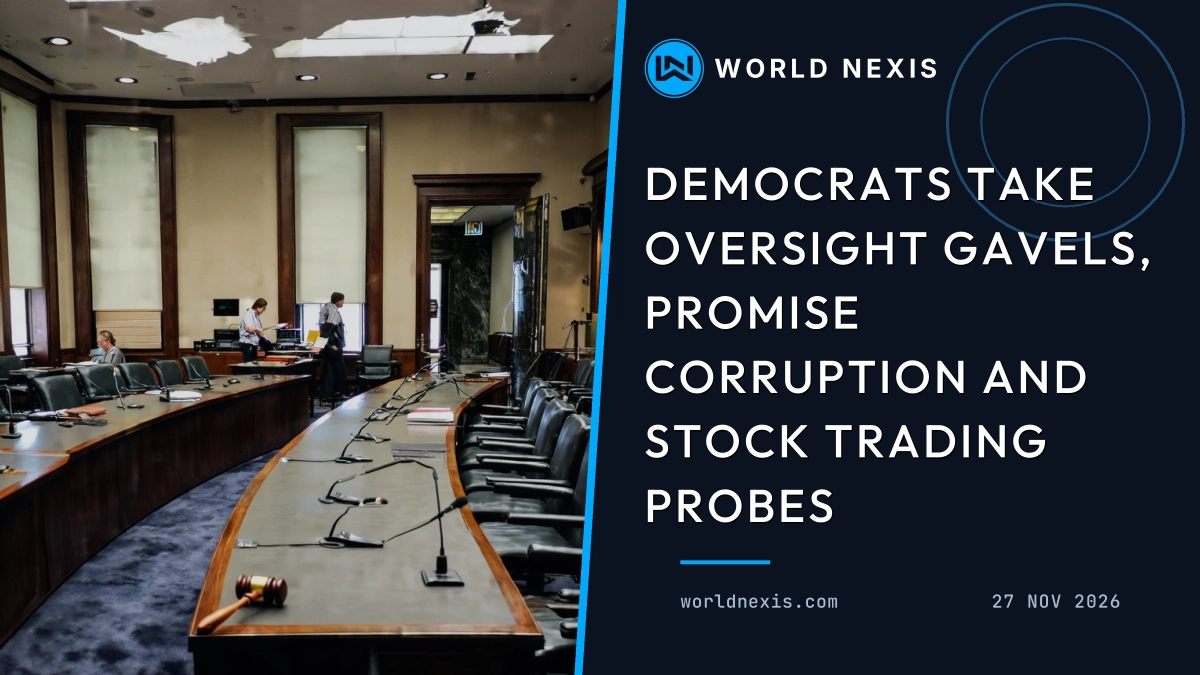
Democratic majorities are preparing to open a wide front of corruption probes when the next Congress convenes, after exit polling found that nine in 10 voters treated government corruption as a major factor in their midterm vote.
The investigations will run alongside a bipartisan push for a stock trading ban on members of Congress. House Minority Leader Hakeem Jeffries has called that ban the single most important step lawmakers can take to rebuild trust in political institutions.
Key points
- Democratic majorities will hold the Oversight and Banking committee gavels when the new Congress convenes.
- Nine in 10 voters said government corruption was a major factor in their vote, according to exit polling.
- Robert Garcia has named the Trump family, ICE conduct, corporate corruption and the Epstein files as Oversight priorities.
- At least 100 incoming members have pledged to reject corporate PAC money, up from fewer than 10 in 2017.
What Democratic majorities plan to investigate
Robert Garcia, a California Democrat who is set to chair the House Committee on Oversight and Government Reform, set the tone within hours of the result. He called President Donald Trump “the most corrupt person to ever be president of the United States” and told his followers to “LAWYER UP.”
Garcia has since said the committee’s investigative priorities are the president’s family, alleged abuses by Immigration and Customs Enforcement, corporate corruption and what he calls a cover-up of the Epstein files.
Trump rejects the suggestion that he has benefited from holding office. Asked about public perception in a post-election interview, he said: “I have a company. My sons run the company. It’s very hard to say to them, don’t do anything anymore for four years because I’m president.” He says he has no knowledge of how his wealth is managed while he is in the White House.
Some current and former senior Trump aides are also in scope. Calley Means, a former White House senior adviser, has publicly accused members of the administration of being beholden to corporate special interests who treated the president “like a baby”.
Means alleged that former lobbyists serving the vaping, ultra-processed food, pharmaceutical and pesticide industries were “doing their bidding” and used midterm fundraising needs as cover. Garcia has confirmed the committee is examining those allegations.
Warren turns to corporate conduct
In the Senate, Elizabeth Warren of Massachusetts is set to chair the Banking, Housing and Urban Affairs Committee, and she has made clear that companies, not only officials, will be central to her agenda.
“I do want to be clear, if you’ve been making your profits by cheating American families and scamming your investors, you better get ready for some investigations. Serious ones.”
The agenda follows two years of controversy over insiders cashing in on prediction markets and lawmakers trading shares connected to their own committee work.
Stock trading ban gains bipartisan ground
Jeffries has argued that barring members from trading individual stocks matters more than any single hearing, and for Democratic majorities it is the clearest early deliverable on the table.
Jon Ossoff of Georgia, recently re-elected, is expected to renew his push for a ban in the Senate. Josh Hawley is among the Republicans likely to press the issue as well.
The incoming class arrives with unusually firm commitments on money in politics. End Citizens United, an advocacy group, counts at least 100 new members who pledged to reject corporate PAC money, compared with fewer than 10 in 2017.
Why it matters
A stock trading ban would change the financial incentives of the people who write the rules on health care, energy and defense. Investigations into ICE and corporate conduct could produce subpoenas, public hearings and legislation that reach into workplaces, consumer markets and immigration enforcement.
Democratic majorities will be judged on whether Washington produces laws instead of spectacle. If the only visible output is a stream of probes, the nine in 10 voters who put corruption first may conclude that nothing changed.
Analysis
Having covered election data and accountability for World Nexis News, I look first at the one promise Democratic majorities can measure in a single vote. In my view, the stock trading ban is the test of whether any of this is real, because it is the only item on the agenda that binds lawmakers to the same rules they write for everyone else.
The case for moving on it first is strong. It has Republican sponsors, at least 100 new members have already campaigned on cleaner money, and Jeffries has framed it as the most important thing Congress can do. Democratic majorities should pass it before the first witness is sworn, so that the corruption probes look like lawmaking rather than messaging.
On oversight, the record supports scrutiny of the president’s business interests and of agency conduct, and I side with those who think the hearings should go ahead. The strongest counter-argument is that a committee built around one family will be fought in the courts for years and read by half the country as partisan rather than investigative. That is a real cost, but it is an argument for sequencing the work, not for abandoning it.
What happens next
Once Democratic majorities take the gavels, Garcia is expected to chair Oversight and Warren to chair Banking, giving both immediate power to request documents and schedule hearings. Ossoff is expected to reintroduce stock trading legislation in the Senate, with Hawley among the Republicans likely to back a version of it.
The pledge by at least 100 new members to refuse corporate PAC money will be tested quickly, as both parties build fundraising operations for the next election cycle.
What we don’t know yet
- Whether a stock trading ban can pass both chambers, and which exemptions it would carry.
- How far Oversight will pursue the Epstein files and the allegations raised by Calley Means.
- Whether the White House cooperates with document requests or fights them in court.
Related coverage
- Trump Putin talks: he urges major pull-back in Europe
- Trump tariff proposal: 14 economies face major hikes in 2027
- Pentagon drone talks: GM and Ford face major conversion test
Further reading
- Democratic majorities vow to take on political corruption. How will they do it?
- Democratic majorities vow to take on political corruption. How will they do it?
About the author: Ayesha Rahman is the Senior Political Correspondent & Columnist at World Nexis News (WNN), covering politics & opinion. The analysis section reflects the writer’s view.

Ayesha Rahman
Ayesha Rahman covers politics and opinion for World Nexis News from London, focusing on elections, legislatures and the policy choices that shape everyday life in the US and UK. She writes analysis and columns that separate what is confirmed from what is claimed, working from…



