Vape spiking: one in eight school vapes held illicit drugs
Vape spiking has reached London classrooms: Met Police testing found one in eight vapes seized from pupils contained THC or spice, with 200 reports in a year.
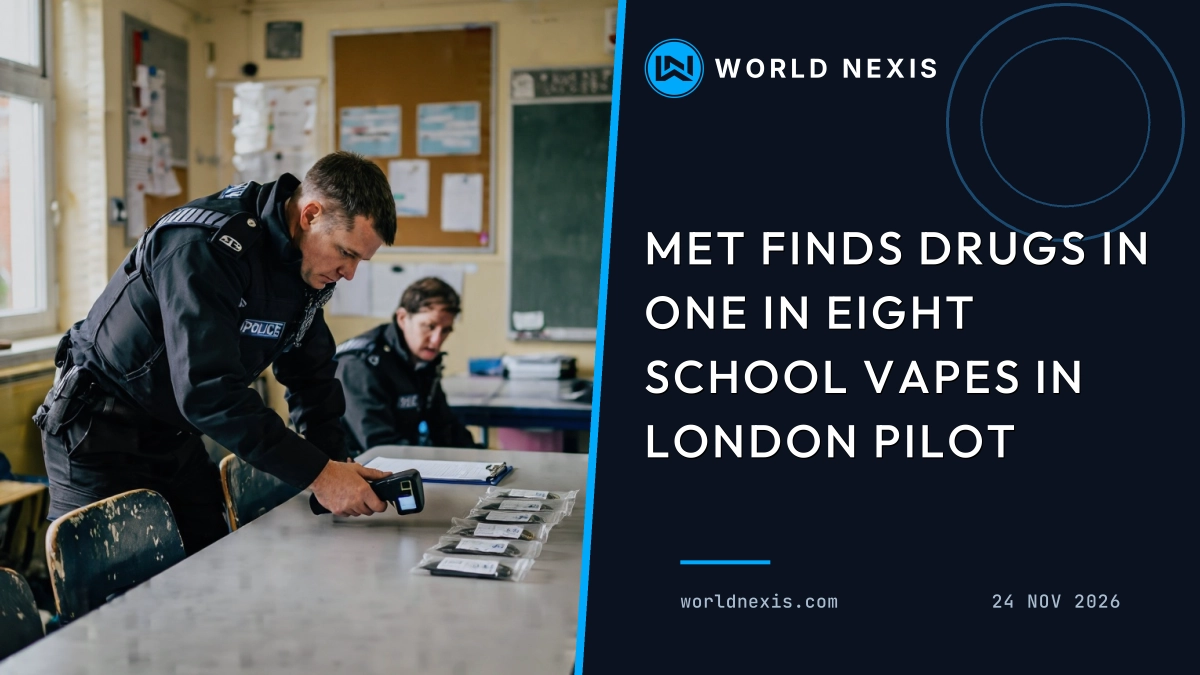
One in eight vapes seized from pupils during a Metropolitan Police pilot contained illicit drugs, the force has said, in an operation it believes is the first of its kind. Officers tested 32 vapes taken from students at schools across south-west London and found that one in eight held substances including THC and spice. The disclosure comes as the force steps up work in schools on vape spiking, which has left children collapsing and needing hospital treatment.
Key points
- The Met tested 32 vapes seized from pupils at schools in south-west London using a specialist detection device it commissioned.
- One in eight contained illicit substances, with THC and spice among those identified.
- About 200 reports linked to vape spiking involving children were made to the force over the past year.
- Deputy Assistant Commissioner Ben Russell said the pilot shows “evidence of an emerging threat to children”.
How the Met Police vape testing pilot worked
Each of the 32 devices was checked with specialist equipment commissioned by the force rather than treated as a routine school matter. The Met says the operation is believed to be the first of its kind, and the results have now been made public.
THC, the psychoactive compound in cannabis, and spice, a synthetic drug, were among the substances identified in the tested devices. The findings put drugs in school vapes at the centre of a widening safeguarding debate about how easily children can carry a controlled substance into a classroom without realising it.
The pilot follows repeated reports of pupils collapsing and needing hospital care after inhaling substances they did not know were inside the products they were using. Russell said the pattern is what prompted the force to act. “Whether knowingly or unknowingly, children carrying dangerous substances in schools is concerning,” he said.
Vape spiking reports reach about 200 in a year
Over the past year the Met has received about 200 reports linked to vape spiking incidents involving children. That volume, rather than any single case, is what sits behind the decision to commission detection equipment and send officers into schools.
Russell said the force treats every report seriously, wherever it happens, and urged victims to come forward quickly. “While reports of spiking remain most common in the night-time economy, we take every report seriously regardless of where it happens,” he said. He added that the first 12 to 24 hours are crucial in securing evidence and identifying offenders.
Officers are also running sessions with students directly, answering questions and explaining the risks attached to vaping and spiking. The force argues that prevention work in classrooms is as important as enforcement against the people supplying the devices.
The Kingston incident that led to the testing
In April, officers were called to a college in Kingston after a 17-year-old student lost consciousness following the alleged use of a vape believed to be laced with drugs. A later search led to the seizure of cannabis, a vape device and a bottle containing a pink liquid labelled “PEACHSILK, 5000MG THC”.
Forensic analysis subsequently confirmed that two vaping products contained a Class B controlled drug. The case illustrates the central difficulty for schools: the packaging gives little away, and a pupil may have no idea what a device actually contains until it is tested.
Why it matters
For parents, the practical question is no longer whether children are vaping but what they are vaping. A device that looks ordinary can carry a Class B drug, and a pupil caught with one at school faces safeguarding action and potentially the criminal justice system.
For schools, the pilot exposes a gap in capability. Teachers have no reliable way to test what is inside a confiscated vape, which means the burden falls on police equipment and police time rather than on routine classroom management.
Analysis
Having covered policing and public services for World Nexis News, I look first at what a pilot of this size can and cannot prove. Thirty-two devices from one corner of London is a small sample, and anyone using it to claim that one in eight vapes across the country contains drugs is overreaching. That is the strongest counter-argument here, and it deserves to be taken seriously.
Even so, I think the force is right that this is an emerging threat rather than a statistical blip. The direction of travel matters: a dedicated detection device, forensic confirmation of a Class B drug in the Kingston case, and about 200 reports involving children in a single year all point the same way. Where the evidence supports the Met’s reading, it is because independent strands of it converge, not because of one headline number.
My reservation is about reach. A pilot that stops at 32 devices protects the pupils in those schools and tells us little about the rest of the capital. The test now is whether the force commits to wider testing and publishes what it finds, or lets a striking statistic stand in for a sustained programme.
What happens next
The Met says it will continue working with schools, colleges, local authorities and safeguarding partners to identify risks to young people. Further engagement sessions with students are expected, with officers saying that speaking directly to pupils helps prevent harm before it occurs.
Russell said: “By working closely with schools, colleges, local authorities, and safeguarding partners, we can identify risks to protect young people.” No timetable has been set out for expanding the testing programme beyond the schools already involved.
What we don’t know yet
It is not yet clear whether the detection device will be deployed across London or stay limited to the pilot schools. The force has not set out how the devices reached pupils in the first place, and has not said whether anyone has been arrested or charged over the Kingston incident.
Related coverage
- Carnaval de Luz: U2 album scores record 12th UK number one
- Met Police knife crackdown: 266 arrests, 500 knives seized
- Tate extradition: brothers say accusers’ anonymity leaves ‘hands tied’
Further reading
- One in eight vapes seized in schools during Met pilot contained illicit drugs
- One in eight vapes seized in schools during Met pilot contained illicit drugs
About the author: Liam O’Connor is the UK Politics Reporter at World Nexis News (WNN), covering uk politics. The analysis section reflects the writer’s view.

Liam O'Connor
Liam O'Connor is UK Politics Reporter at World Nexis News, covering Westminster, devolved politics and the issues that matter to voters across England, Scotland, Wales and Northern Ireland. Based in London, he reports from primary sources — Hansard, official statements, published data — and explains…



