Carnaval de Luz: U2 album scores record 12th UK number one
Carnaval de Luz debuts at number one on the UK Official Albums Chart, giving U2 a 12th UK chart-topper and matching Bruce Springsteen's tally.
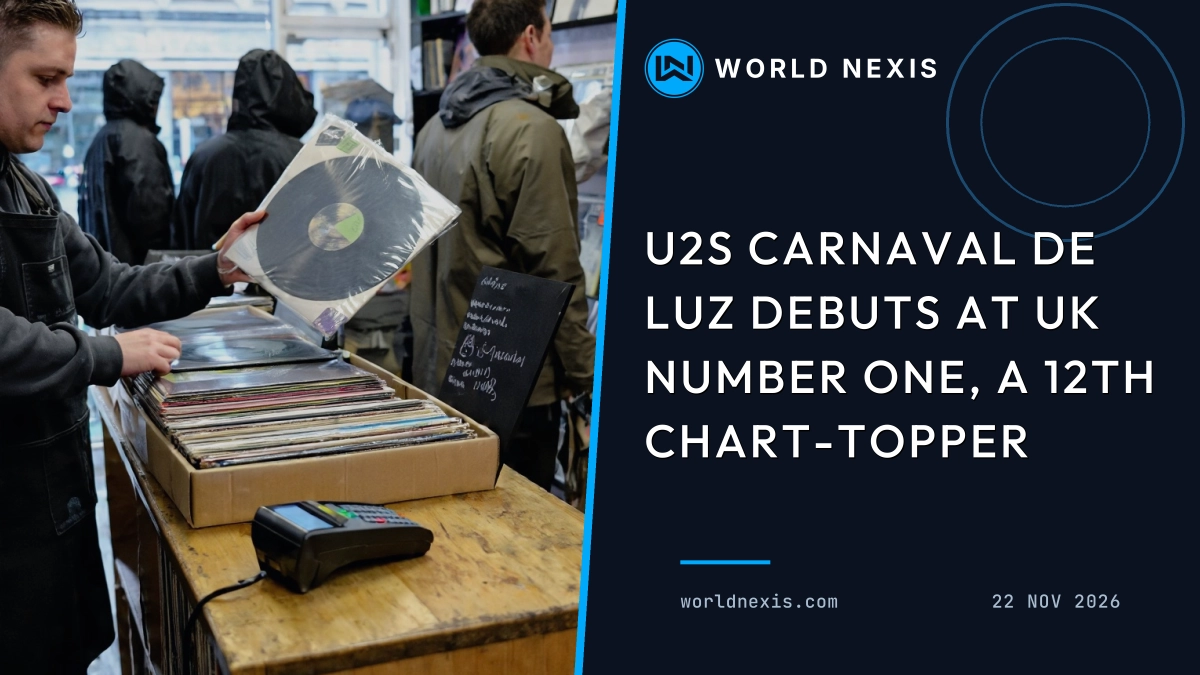
Carnaval de Luz has debuted at number one on the UK Official Albums Chart, giving U2 a 12th UK chart-topping album and drawing the Dublin band level with Bruce Springsteen. The record was released on 13 November and went straight to the top of the weekly albums table in its opening week, half a century after the group formed.
The debut rests on an unusually strong week of physical sales, with vinyl and other tangible formats accounting for nearly 90 per cent of the total. It also lands in the band’s 50th anniversary year, which makes the milestone feel less like a comeback and more like a consolidation of an audience built over five decades.
Key points
- Carnaval de Luz entered the UK Official Albums Chart at number one, a 12th UK chart-topping album for U2.
- The debut puts the band on the same tally as Bruce Springsteen, who also has 12 UK number one albums.
- Vinyl and other physical formats made up nearly 90 per cent of first-week sales.
- The album outsold the other four titles in the UK Top 5 combined.
How Carnaval de Luz became a U2 number one album
Carnaval de Luz is U2’s first studio album of new material in nine years. Nine years is a long gap in a market that resets every seven days, and the opening week suggests the wait did not blunt the audience’s appetite for new songs.
The result also marks the band’s first UK number one with an album of original material since No Line on the Horizon in 2009. That detail separates this release from the broader run of chart-toppers that has carried the group’s total to 12.
What stands out most is the shape of the demand. The Carnaval de Luz vinyl figure sits at the heart of the week: physical formats, vinyl included, made up nearly 90 per cent of sales, a share that would have been ordinary in the 1980s and is now the signature of a particular kind of release. This is music sold as an object to people who want to keep it.
The scale is just as striking. The album outsold the other four records in the UK Top 5 combined during its first week, a clean sweep that speaks to the concentration of the campaign as much as to the songs themselves.
A Springsteen parallel in a 50th anniversary year
The 12th UK number one places U2 alongside Bruce Springsteen, and the Bruce Springsteen UK number one tally of 12 is now matched exactly. Both artists built their audiences in the 1970s and 1980s, and both have kept a following that remains unusually loyal to the album as a format.
U2’s story began in Dublin in 1976, and this chart result arrives in the group’s 50th anniversary year. Seen that way, the milestone is a reminder of how few acts from that era still reach the top of a weekly chart at all, let alone with a set of new songs.
There is a wider pattern worth noting. Established artists with deep catalogues now compete on different terms from new acts: their listening is spread across a large but fragmented audience, while their core fans remain far more willing to spend on something they can hold.
Why it matters
For listeners, a physical-led debut is a story about cost and access. Vinyl pressings and deluxe editions carry premium prices, so chart success of this kind reflects deliberate spending by committed fans rather than casual listening on the way to work.
For the wider industry, the week shows the albums chart still carries commercial weight for heritage acts, even as streaming pulls attention towards playlists and singles. A number one remains an asset that can be sold to retailers, promoters and, eventually, the people who book tours.
The first-week figures for Carnaval de Luz also underline how much of a modern album campaign is aimed at the core rather than the crowd. That is not a criticism of the band; it is a description of how the top of the chart is now reached.
Analysis
I think this 12th UK number one is a genuine achievement, but it is a story about buying rather than listening. Having covered music culture for World Nexis News, I look first at how much of a first week is physical, because that figure tells you who is actually in the room. Nearly 90 per cent is not a mass audience; it is a devoted one, spending on purpose.
On that basis I side with the reading that Carnaval de Luz has converted its existing following rather than reached far beyond it. A chart-topper driven by vinyl and other formats measures the enthusiasm of people who already own the band’s records and who want this one in a form they can keep. The counter-argument is fair enough: the chart has always been a sales table, physical product was its original currency, and dismissing it now can look like snobbery dressed up as analysis.
I still think the distinction matters, because these totals get repeated as proof of cultural reach. They are proof of something narrower and, in its own way, more impressive: a loyal base big enough to beat the rest of the top five combined in a single week. That is a real commercial fact, but it is not the same thing as an album that has captured the country.
What happens next
The immediate test is longevity. A physical-led opening week tends to front-load demand, so the second week will show how much appetite remains once the core audience has already bought its copies.
Nothing in the material available sets out tour dates, follow-up singles or further releases tied to the anniversary year, so for now the chart run is the measure to watch.
What we don’t know yet
- How much of the first-week total came from fans buying across more than one format.
- Whether the album’s streaming performance matches its sales performance.
- Whether the milestone leads to live dates or further releases during the anniversary year.
Related coverage
- Jolene billion streams: Dolly Parton classic sets record
- GTA 6 sales hit record $3.79 billion on launch day
- James Blunt name change: Queen greets record-hit Ryan Air
Further reading
- U2 Scores 12th UK No. 1 Album With Carnaval de Luz, Matching Bruce Springsteen
- U2 Scores 12th UK No. 1 Album With Carnaval de Luz, Matching Bruce Springsteen
About the author: Emily Carver is the Culture & Entertainment Writer at World Nexis News (WNN), covering culture & entertainment. The analysis section reflects the writer’s view.

Emily Carver
Emily Carver is Culture & Entertainment Writer at World Nexis News, covering film, television, music, gaming, books and the creative industries from Los Angeles. She writes about the business and craft behind the work — streaming economics, production decisions, criticism and the way culture travels…