Tate extradition: brothers say accusers’ anonymity leaves ‘hands tied’
Tate extradition fight returns to court as lawyers tell a Miami judge anonymous, unsworn allegations leave Andrew and Tristan Tate unable to defend…
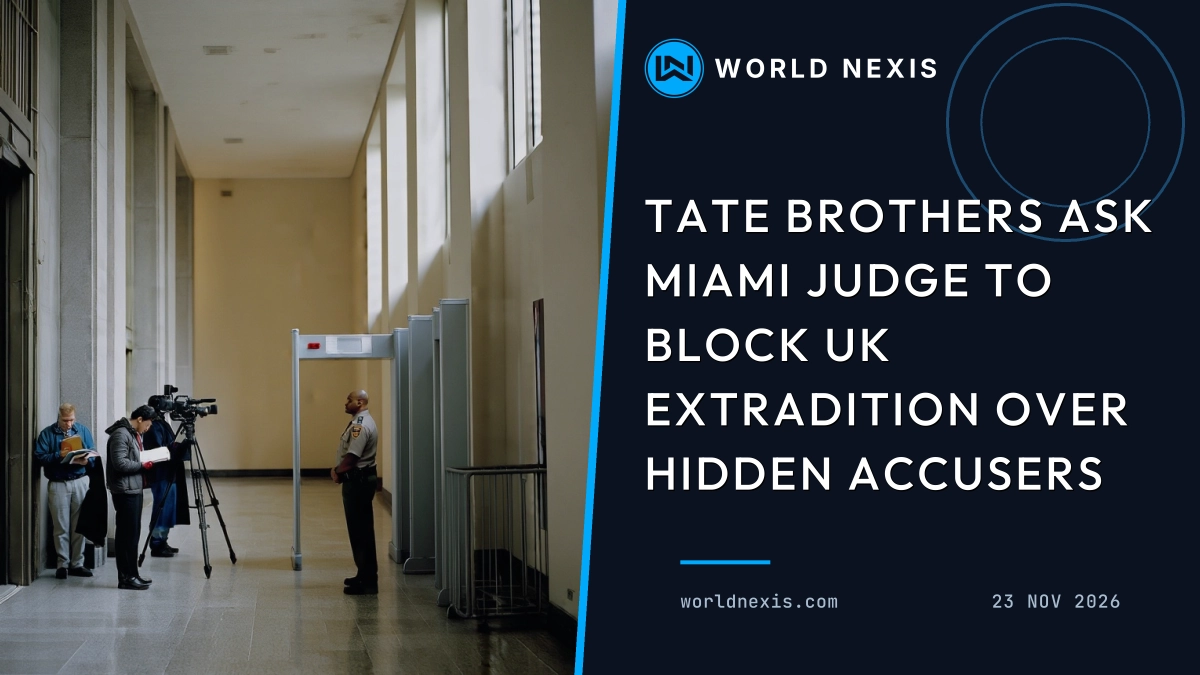
The Tate extradition battle moved back into the courts on Sunday as lawyers for Andrew and Tristan Tate urged a US judge to block their removal to Britain, arguing that the anonymity of their accusers and the absence of dates for the alleged offences mean they cannot mount a defence. The filings were lodged with the US District Court for the Southern District of Florida in Miami, where hearings are now set for 14 and 15 January.
Key points
- Lawyers say no sworn statement has been provided by any complainant, leaving only a “summary of evidence” from a Bedfordshire Police detective.
- Andrew Tate, 39, faces 10 rape counts among UK charges; Tristan Tate, 38, faces five rape counts and three sex trafficking counts.
- Hearings were pushed to January after the brothers won more time to file their opposition; a bid to merge the two cases was refused.
- The pair, held in custody since their arrest in July, are also challenging their continued detention.
What the Tate extradition filings argue
The submissions claim neither the UK nor the US “identifies a single person” who has accused Andrew Tate of a crime. They state that the only account of what any complainant said before the court is a detective’s summary of the evidence.
According to the filings, each complainant first made her allegations several years after the conduct she describes. The documents say this sometimes happened only after police sought her out, and only after the brothers became internationally famous internet personalities.
“Without their identities or the dates of the alleged offences, his hands are tied,” the filing states, adding that the court cannot assess the reliability of the source as the probable cause standard requires.
The legal team concludes that certifying extradition on anonymous, unsworn allegations would deny Andrew Tate the due process he needs to defend against the charges. The pair are former professional kickboxers who hold dual US and British citizenship.
Charges the brothers deny and the case against them
Court documents published last month set out the prosecution case prepared by Bedfordshire Police. A detective alleged the brothers groomed vulnerable women using a “lover boy” model of exploitation, then forced them into creating online pornography through threats and violence.
Andrew Tate
Andrew Tate, 39, faces 10 counts of rape, three counts of arranging or facilitating trafficking for sexual exploitation and three counts of assault occasioning actual bodily harm. He is also accused of making and distributing indecent images of a child and possessing extreme pornography.
Tristan Tate
Tristan Tate, 38, faces five counts of rape, six counts of assault occasioning actual bodily harm, three counts of sex trafficking and a sexual assault. The allegations relate to alleged offences between July 2010 and August 2017.
The brothers were detained in July after UK prosecutors brought further charges against them. A judge has already rejected a request to combine the two proceedings, meaning each man’s case will be heard separately in Miami.
Why it matters
This is a test of how far British prosecutors can reach into the US to pursue allegations that date back more than a decade, against defendants who say the evidence behind them is untested. The outcome will shape how quickly, if at all, the brothers can be brought before a UK court.
For the women named only in sealed material, the case turns on whether anonymity survives a foreign extradition fight. For readers following the pair online, the practical question is whether a US judge treats a detective’s summary as enough.
Analysis
Having covered extradition and court process for World Nexis News, I look first at what a US judge can actually weigh. Extradition hearings are not trials: the bar is probable cause, and British authorities routinely rely on summaries rather than sworn complainant statements. That is normal practice, not a shortcut invented for this case.
Even so, the defence has a real point about fairness. A man asked to answer 10 rape counts without knowing who accuses him or when cannot prepare a proper account, and the passage of years between alleged conduct and complaint genuinely weakens recollection on all sides. I side with the argument that the judge should press for more detail, dates and some tested account, before certifying removal.
The counter-argument is serious, though. Naming complainants at this stage would deter others and expose women to the kind of online harassment that follows this pair everywhere, and British police say anonymity is what allowed them to come forward at all.
What happens next
Andrew Tate’s hearing takes place on 14 January and Tristan Tate’s on 15 January at the Southern District of Florida in Miami. Both men continue to contest their detention while the extradition request is litigated.
What we don’t know yet
It is not clear whether the court will order further disclosure from the UK, or how quickly any certification decision would be followed by a political sign-off in Washington.
Related coverage
- Merchant cash advance leaves owner in 7-year $750,000 fight
- Medicare for All is back with a 2033 funding warning
- Economic revolution needed, Badenoch warns CBI chiefs
Further reading
- Andrew and Tristan Tate’s ‘hands tied’ in UK extradition fight, say lawyers
- Andrew and Tristan Tate’s ‘hands tied’ in UK extradition fight, say lawyers
About the author: Tariq Al-Mansoori is the Breaking News Reporter at World Nexis News (WNN), covering breaking news. The analysis section reflects the writer’s view.
Tariq Al-Mansoori
Tariq Al-Mansoori is a Breaking News Reporter at World Nexis News, covering major incidents, official statements and developing stories across the UK, US and internationally. Based in London, he works to confirm details before publication, attributes information to named sources where possible and updates stories…



