Mandelson files: major release of 1,500 pages due to MPs
Fresh Mandelson files are due to be published after the Met Police cleared release, with Dan Jarvis updating MPs on vetting of the peer before Washington.
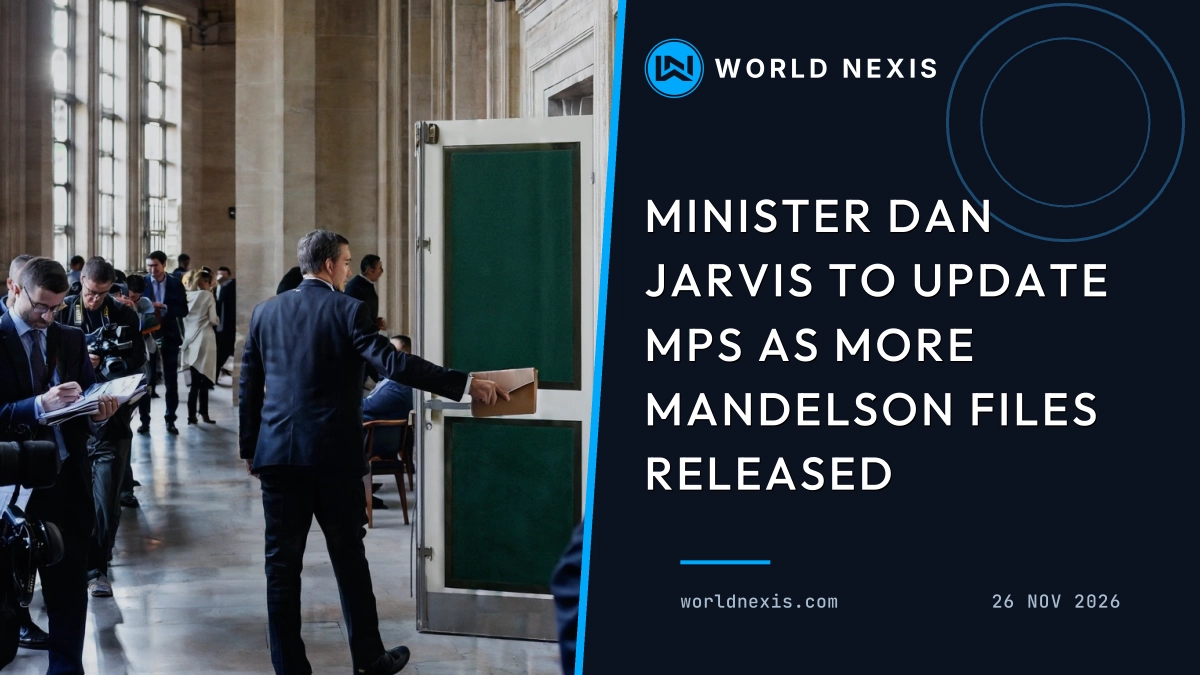
Fresh Mandelson files are expected to be published by the Government, with minister Dan Jarvis due to give a statement to the Commons on the newest batch of papers covering the vetting of Lord Peter Mandelson before he was sent to Washington as US ambassador.
The release follows more than 1,500 pages of documents already made public this year and a Commons vote in February that obliged ministers to hand the material over.
Key points
- Dan Jarvis will update MPs on the latest tranche of Mandelson files, which Parliament’s Intelligence and Security Committee has already seen.
- The papers cover the Peter Mandelson vetting process applied before his posting to Washington.
- Some documents were held back at the request of the Metropolitan Police, which has now told the Government they can be published without affecting its investigation.
- Lord Mandelson was arrested in February on suspicion of misconduct in public office. He has not been charged, denies all allegations and is co-operating with police.
Why the Mandelson files are being published now
Lord Mandelson was sacked as US ambassador last year after further details emerged about his close links to paedophile financier Jeffrey Epstein. The row became one of the defining controversies of Sir Keir Starmer’s time in Downing Street, with questions raised about how much the then prime minister knew when he made the appointment.
It played a significant role in his eventual resignation. Ministers then published more than 1,500 pages earlier this year, including messages exchanged between Lord Mandelson and serving cabinet ministers.
Part of the archive was withheld after the Metropolitan Police said release could interfere with its investigation into the former Labour minister and spin doctor. The force has since informed the Government that the remaining documents can be made public without damaging that inquiry, and the Mandelson documents release now moves to the floor of the Commons.
What earlier Mandelson files revealed
The first tranche offered a rare view of how senior Labour figures dealt with the peer as his position collapsed. Darren Jones, the former chief secretary to the prime minister, messaged Lord Mandelson on the day of his sacking to tell him he had done a “great job”.
Work and Pensions Secretary Pat McFadden complained to the peer that Labour backbenchers were asking “who can we tax in order to pay benefits to others”. Lord Mandelson, for his part, described Downing Street as “beleaguered and bereft”.
Each new batch of Mandelson files has landed in a political environment still shaped by that period. The messages show ministers corresponding directly with a figure under intense scrutiny, which is why the paperwork attracts more attention than a routine departmental return.
A return to the political fray
On Thursday, Lord Mandelson published a lengthy article on the difficulties Andy Burnham will face in his attempts to build closer ties with the European Union. It made no reference to his removal as ambassador or to his links with Epstein.
How Parliament prised the Mandelson files loose
In February, MPs used a parliamentary mechanism known as a humble address to demand the papers. Under the arrangement agreed at the time, unredacted files are viewed first by the Intelligence and Security Committee before anything reaches the public.
The latest Mandelson files have now been through that process and are expected to be put before MPs. That sequencing explains the timing of Mr Jarvis’s statement: the committee’s scrutiny had to be finished before the Commons could see the material.
Why it matters
For voters, the value of these documents is not gossip. They show how a senior diplomatic appointment was vetted, who inside government raised concerns, and whether Downing Street put political loyalty ahead of institutional risk. That speaks directly to how future ambassadors, envoys and public appointees will be chosen.
The papers also keep the British end of the Epstein affair alive at a time when campaigners argue that scrutiny of powerful men’s associations should not fade. Every release of Mandelson files renews pressure on a system that spent months resisting disclosure.
Analysis
Having covered this disclosure fight at Westminster for World Nexis News, I think the record now supports full and rapid publication. The Government did not volunteer these papers. MPs had to vote to compel them, and the police had to be satisfied before anything moved. That is accountability extracted rather than accountability offered.
The strongest counter-argument is genuine. A criminal investigation is live, Lord Mandelson has been arrested but not charged, and material put into the public domain can prejudice a fair process or damage people who appear in a message but face no allegation at all. Ministers should therefore publish with clear signposting of what is evidence, what is opinion and what is routine chatter.
Even so, the balance favours transparency. A vetting failure is a systemic question, not a private one, and the public interest in knowing how a former minister reached Washington outweighs the embarrassment of a few advisers. I side with the MPs who forced the release: the mechanism worked, and it should never have been needed.
What happens next
Mr Jarvis’s statement will be followed by the papers being placed before MPs, at which point the contents become public and open to scrutiny by committees and the press. The Metropolitan Police investigation into Lord Mandelson continues, and no charging decision has been announced.
What we don’t know yet
The Government has not said precisely what the latest tranche contains, how heavily it has been redacted, or whether further Mandelson files remain held back. There is also no timetable for the police inquiry to conclude.
Related coverage
- Defence spending: major £8bn boost for UK ‘cuts war risk’
- Babcock submarine deal: major £8bn boost for 3,000 jobs
- Tube strike: major 24-hour RMT walkout begins across London
Further reading
- Expect fewer frosts and more hot days as UK seasons shift, says Met Office
- More Peter Mandelson files expected to be published by Government
About the author: Liam O’Connor is the UK Politics Reporter at World Nexis News (WNN), covering uk politics. The analysis section reflects the writer’s view.

Liam O'Connor
Liam O'Connor is UK Politics Reporter at World Nexis News, covering Westminster, devolved politics and the issues that matter to voters across England, Scotland, Wales and Northern Ireland. Based in London, he reports from primary sources — Hansard, official statements, published data — and explains…



