DWP cyber attack: urgent payment pledge as systems stay down
DWP cyber attack keeps pension and benefits services offline, but ministers pledge payments will continue. Claimants are warned to watch for scams.
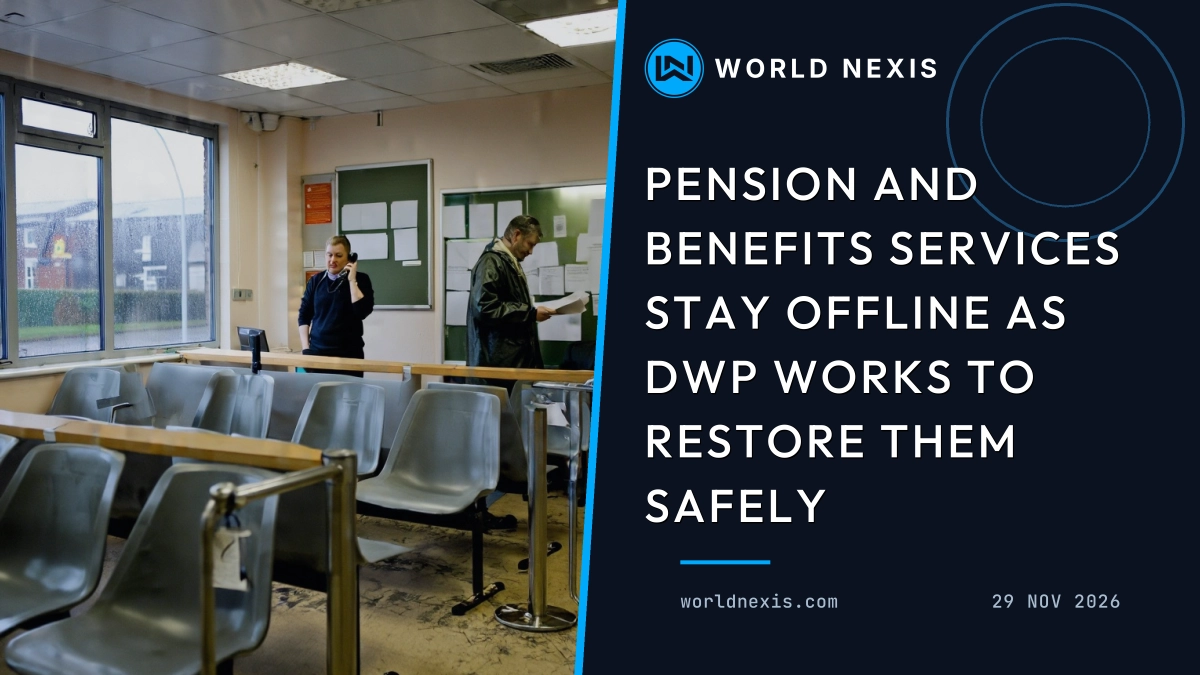
The DWP cyber attack has left pension and benefits services offline into the weekend, with ministers insisting that payments will still be made but unable to say when the department’s online systems will be safe to switch back on. Work and Pensions Secretary Pat McFadden said there had been an “unauthorised attempt to gain access to DWP systems”, and that services would be restored “as soon as possible”.
He was alerted to the incident overnight between Thursday and Friday. The department took its online services down as a precaution, and they were still unavailable on Saturday. For claimants who normally manage a claim through an online account, the effect has been a return to the telephone queue.
Key points
- Online pension and benefits services were taken offline after the DWP cyber attack was detected at the end of last week, and remain unavailable.
- Regular benefit and pension payments are said to be unaffected and are continuing on the normal schedule.
- The National Cyber Security Centre and the Government Cyber Co-ordination Centre are working to find the cause.
- Claimants are being warned to watch for scams that pose as official DWP messages.
McFadden said there was no evidence that personal details had been compromised, and that the first step had been to protect the public and their data. The department said it had “well-rehearsed plans for these scenarios, which were immediately implemented”.
What the DWP cyber attack means for payments
Money is the part of this the government most wants to settle. A DWP spokesperson said: “We want to reassure customers that regular benefit and pension payments will continue to be paid as normal, while our teams work at pace to safely restore online services for the public.”
McFadden set out the mechanics on Saturday. Payments are cleared several days in advance, so anyone who did not receive money on Friday is not thought to be affected, and should contact the department during operating hours to discuss it.
Education Secretary Lucy Powell, asked about the DWP cyber attack, said the department had a grip on the situation and that “payments will continue to be made – it doesn’t affect the payments system”.
On timing, McFadden was deliberately cautious. “We will not put services back online until we have made sure that it’s safe to do so,” he said. “It would be a mistake to rush to do that if we weren’t sure that those systems were safe.”
Scam warnings as the DWP hack drags on
The department has told customers to “remain vigilant to scams”, stressing that it will never ask for personal or financial information by text message or email, or ask people to click on links. Disruption from the DWP hack creates openings for fraudsters, because claimants are waiting for news and may not check a sender’s details closely.
Lisa Webb, a legal expert at the consumer magazine Which?, said people should be wary of unexpected messages in the coming days and weeks, especially those claiming to come from the DWP or their bank. “If you’re ever unsure who you’re speaking with, end the conversation immediately and contact the company directly,” she said. “You can dial 159 to speak to your bank’s fraud team or use the number on the back of your card.”
The UK’s data protection watchdog said it is in contact with the DWP about the incident, which puts the question of personal data formally on the record. No evidence of compromise is not the same as a finding that nothing was accessed.
Ministers warn cyber attacks could happen more frequently
Ministers have warned that cyber attacks on government could happen more frequently, presenting the DWP cyber attack as a warning about the pressure on state systems rather than a one-off. That framing does two jobs at once: it prepares the public for repeat disruption and it moves the argument towards spending on defences.
Specialists from the National Cyber Security Centre and the Government Cyber Co-ordination Centre are working to establish what happened. Their findings will shape whether other departments isolate systems of their own.
The DWP is an unusually exposed target. It holds records on pensions, disability benefits and Universal Credit, and it is the main point of contact between the state and people with no savings buffer. A week of downtime at a retailer is an irritation; here it reaches straight into household budgets.
Why it matters
For anyone on benefits or a pension, the question is not whether the government’s cyber defences look adequate on paper, but whether benefits payments arrive and whether a change of circumstances can be reported in time. Payments appear safe. The reporting side is where delay bites, because a claim that cannot be updated online has to be handled by phone, and backlogs build quickly.
There is a wider cost as well. Every outage of this kind chips away at confidence in digital public services, and the people most affected are those least able to sit on hold. The DWP cyber attack also lands on a benefits system already under strain, which makes the recovery as important as the breach.
Analysis
Having covered public services for World Nexis News, I look first at the phone lines rather than the firewall. How intruders got near the department’s systems matters, but what decides whether this becomes a political problem is how quickly a claimant who needs to report a hospital stay or a new address can reach a human being.
On the central judgement, I think McFadden has the better of the argument. Taking systems offline and refusing to restore them until they are proven safe is the right call, and his warning that it “would be a mistake to rush” is what a minister should say when the alternative is exposing pension records. The counter-argument deserves respect: an offline system is its own kind of failure, and to a claimant who cannot submit a form, a cautious minister and a reckless one can look identical.
Where I part company with the department over the DWP cyber attack is on communication. “As soon as possible” is not a plan. I would expect a published timetable within days, and I would expect ministers to say plainly whether any data was accessed, rather than that there is no evidence of it yet.
What happens next
Benefits payments are expected to run on the normal schedule, and the department will be under pressure to show in the coming week that the outage has not touched anyone’s money. Claimants who believe a payment has been missed are being asked to call during operating hours.
Services will return only when the investigation allows, and no date has been given. Investigators will continue their work on the cause, while the Information Commissioner’s Office pursues its own questions about personal data.
What we don’t know yet
- When pension and benefits services will be back online.
- Whether any personal data was accessed at all.
- Who was behind the attempt and what they were after.
- Whether other departments will take systems offline as a precaution.
Related coverage
- DWP Christmas Bonus 2026: 25 benefits that qualify for £10
- Mohamed Yusuf death: brother heard the attack on the phone, filings say
- Cloud One breach: Air Force hack spared critical systems
Further reading
- DWP confirms cyber attack forced it to take pension and benefits systems offline
- Royal Mail warns of 4 common Christmas gifts that cannot be delivered
About the author: Liam O’Connor is the UK Politics Reporter at World Nexis News (WNN), covering uk politics. The analysis section reflects the writer’s view.

Liam O'Connor
Liam O'Connor is UK Politics Reporter at World Nexis News, covering Westminster, devolved politics and the issues that matter to voters across England, Scotland, Wales and Northern Ireland. Based in London, he reports from primary sources — Hansard, official statements, published data — and explains…