Curriculum overhaul to teach pupils to disagree agreeably
England's curriculum overhaul will add compulsory citizenship, media and financial literacy, a new computing GCSE and an oracy test, Lucy Powell says.
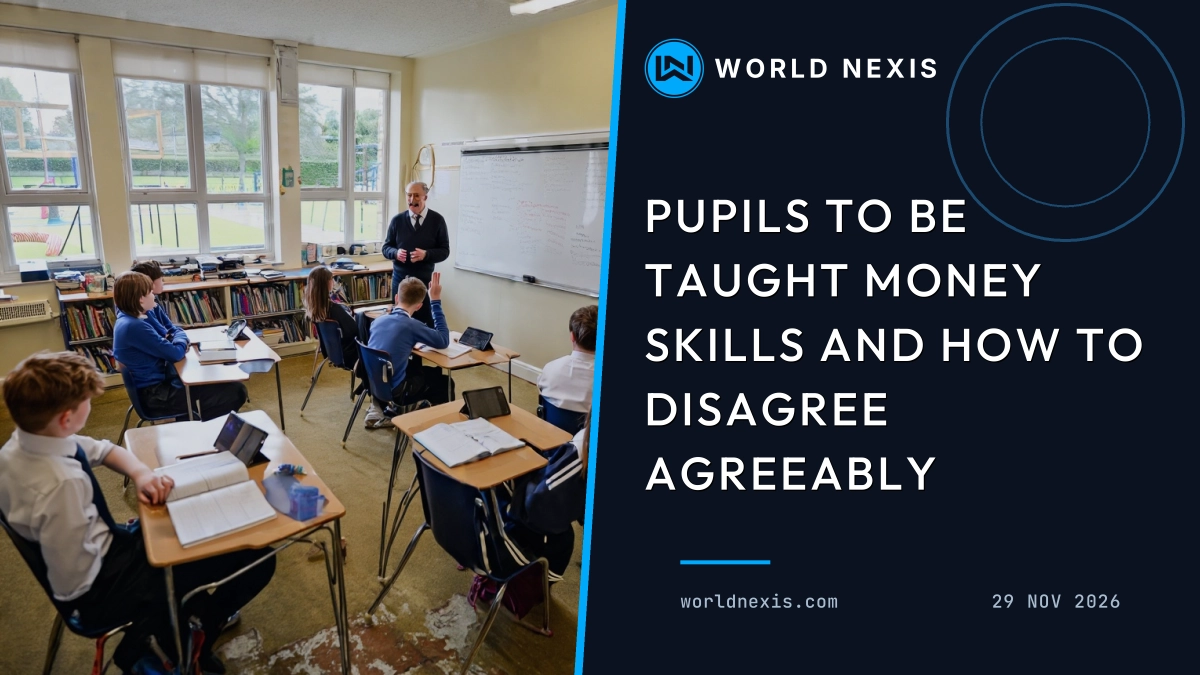
England’s curriculum overhaul will teach pupils how to spot misinformation, manage their money and disagree agreeably, with Lucy Powell due to confirm the changes in Parliament on Monday. The Education Secretary will set out compulsory citizenship lessons from primary school, digital and media literacy, expanded financial education and a new oracy assessment at the end of primary. Officials said the reforms rest on stronger reading and communication skills.
Key points
- Citizenship lessons become compulsory in primary schools, alongside teaching on bias, misinformation and AI-generated content.
- Pupils will receive more financial literacy teaching, and a new computing GCSE will cover programming, data and artificial intelligence.
- An oracy assessment will test speaking and listening at the end of primary school.
- Schools will be expected to set aside regular reading time, daily in primary and weekly in secondary.
What the curriculum overhaul will change
Citizenship will begin in primary school rather than waiting until secondary, with digital and media literacy built into it. Children will be taught to recognise bias in what they read and watch, and to understand how AI-generated material shapes the information they see. The curriculum comes after ministers had already said financial and digital literacy would be strengthened, with today’s briefings supplying the detail.
Financial literacy teaching will be expanded, and the new computing GCSE will combine programming and computer science with practical skills, including work on data and artificial intelligence. The biggest structural change is the oracy assessment at the end of primary, which will formally test speaking and listening.
Schools will also be expected to protect time for reading for pleasure, daily in primary and with more flexibility in secondary, in response to a decline in daily reading levels as screens compete for children’s attention.
Powell argues the curriculum has failed to keep pace with the wider world since it was last reformed. In her words:
“We are modernising the curriculum, to equip young people for their fast-changing future, not some bygone past. Every child will build strong foundations in maths, reading, writing and speaking enabling them to access the full breadth of the curriculum, develop their talents, expand their horizons and become resilient, confident and adaptable life-long learners.”
Reactions to the curriculum overhaul
Geoff Barton, chairman of the Oracy Education Commission, said the assessment would help children learn to explain, analyse and justify their views, and to know how to disagree agreeably. He said the work was not a technocratic exercise, adding: “It’s a mission for social justice on behalf of every child from every background.”
Consumer campaigner Martin Lewis welcomed the financial element, calling it “a chance to stop young people being sent out into a world of scams, dodgy deals and debt without the tools to cope”.
Opposition to the curriculum overhaul was immediate. Shadow education secretary Laura Trott called it “a shopping list of things that sound nice but erodes the core knowledge that has put English pupils in the world’s top 10 for reading, maths and science”. She added: “Oracy has been tried and tested before and it failed,” and warned that “core subjects will lose out as more citizenship at primary will become a dumping ground for nonsense”.
The Association of School and College Leaders backed the focus on citizenship but doubted that added requirements alone would achieve the government’s aims. General secretary Pepe Di’Iasio said: “Many schools do not have trained citizenship teachers, and timetables are overcrowded with existing expectations.” He also questioned the oracy assessment, saying school leaders needed to understand what value it would bring, how it would be assessed and what extra pressure it would place on children and schools.
Liberal Democrat education spokeswoman Munira Wilson said ministers were demanding sweeping changes “without the staff or funding to back them up”, pointing to existing SEND reforms, unfunded pay rises and underfunded breakfast clubs. Overstretched teachers, she said, were being handed a longer to-do list without the training or breathing space to deliver it.
Why it matters
The national curriculum shapes what millions of children in England are taught, so these changes will reach classrooms and stay for a decade. For families, the practical effect is a child taught to check a claim before sharing it, to understand a loan or a scam, and to hold a conversation with someone they disagree with.
For the economy and public life, the stakes are larger. Financial literacy and media literacy are two of the skills most obviously missing when adults fall for fraud or share false information, and ministers are betting that teaching them early is cheaper than clearing up the damage later.
Analysis
Covering school funding for World Nexis News, I read this curriculum overhaul in two halves, and they deserve different verdicts. On substance, Powell and Barton have the stronger case. A pupil who leaves school unable to judge a source, read a payslip or argue without shouting has not been properly educated, and England’s strong reading, maths and science results do not answer that gap.
On delivery, the critics are right, and I side with Di’Iasio and Wilson. His warning that many schools have no trained citizenship teachers is the heart of it: a new primary entitlement and a new assessment are being added while budgets and timetables stay where they are. Nothing in the announcement suggests the training or funding needed to make the promise real.
The fairest counter-argument, and Trott makes it, is that curriculum time is finite and England does rank highly in core subjects, so piling on requirements risks diluting what already works. That is a genuine risk. But dismissing the plan as policy “based on vibes” is no answer to a curriculum that leaves children exposed to scams, misinformation and AI-generated content, and the burden now sits with ministers to pay for what they have announced.
What happens next
Powell will present the full package to MPs on Monday, setting out how the new citizenship, literacy, computing and oracy elements will be introduced. Schools will then wait for the detail of how and when the changes take effect, and for confirmation of what support follows the new duties.
What we don’t know yet
Three questions remain open: when the first pupils will be taught the new content, how much extra money will accompany the new requirements, and how the oracy assessment will be scored without becoming another accountability pressure on primary schools.
Related coverage
Further reading
- Pupils to learn financial literacy and how to spot misinformation
- Pupils will learn how to ‘disagree agreeably’ in curriculum overhaul
About the author: Isabella Rossi is the Education & Social Affairs Reporter at World Nexis News (WNN), covering education & social affairs. The analysis section reflects the writer’s view.

Isabella Rossi
Isabella Rossi is Education & Social Affairs Reporter at World Nexis News, based in Manchester. She covers schools, universities, family policy, immigration and the social issues that shape opportunity, working from official statistics, institutional data and direct accounts, and giving institutions a fair opportunity to…