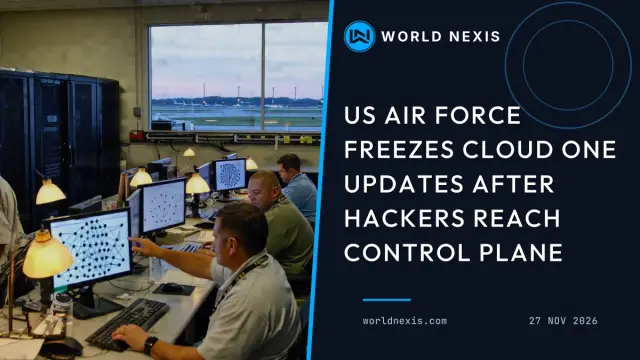
Cloud One breach: Air Force hack spared critical systems
Cloud One breach: hackers reached the Air Force's cloud platform in early 2026. Critical and classified systems were not affected, a source says.
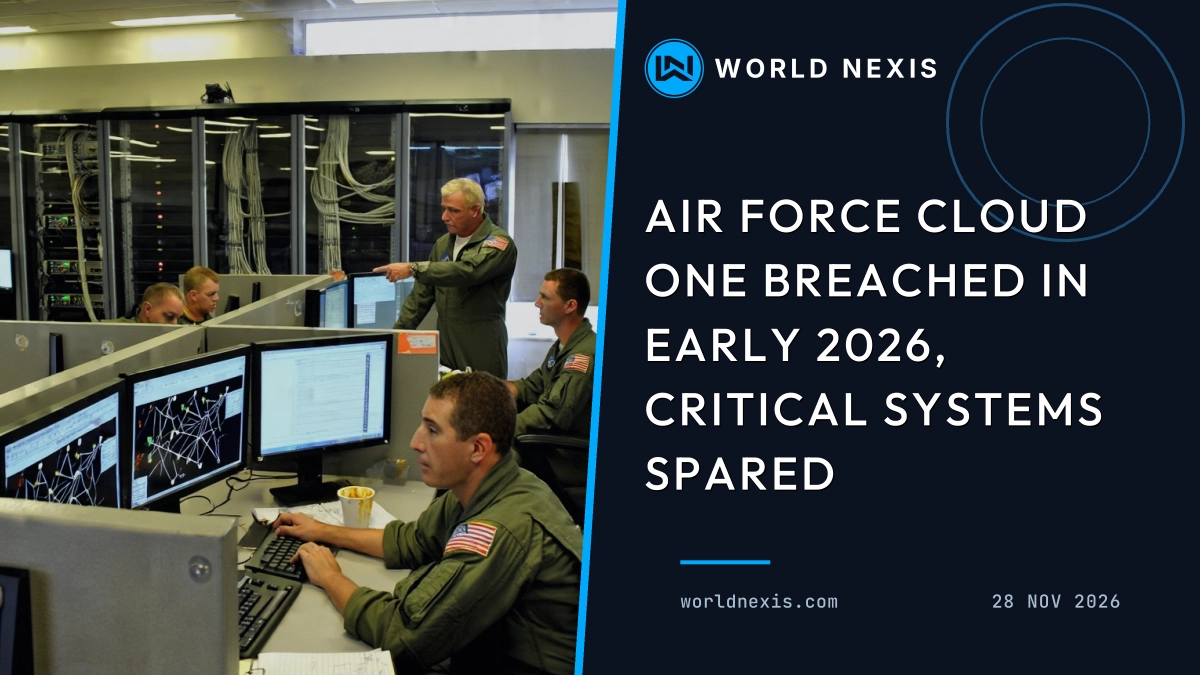
The Cloud One breach reached the Air Force’s flagship cloud computing platform in early 2026, but no mission-critical or classified system was affected, a person familiar with the incident said. The White House’s National Security Council and Homeland Security Council are now investigating. The platform carries operations, logistics, maintenance records, weapons tracking and personnel data across the Air Force’s global footprint.
Details surfaced publicly on Friday. The Air Force declined to comment on the operational status of specific networks and systems. It says it continuously updates its cloud computing capabilities to meet changing military and defensive needs.
Key points
- The Cloud One breach reached the Air Force’s cloud platform in early 2026 and became public on Friday.
- A person familiar with the incident described a minor nuisance, with no classified or mission-critical system hit.
- The White House’s National Security Council and Homeland Security Council are investigating alongside the Pentagon.
- The Air Force cloud hack has not been publicly attributed to any group or government.
What the Cloud One breach exposed, and what it did not
Cloud One is the environment the Air Force uses to coordinate work across its global footprint. It handles operational planning, logistics, maintenance records, weapons tracking and personnel data. That reach is why any intrusion is examined closely, even one described as limited.
The person familiar with the incident, who was not authorized to speak publicly, characterized the episode as a minor nuisance rather than an operational wound. Nothing classified was reached, the person said. The Pentagon’s Cyber Defense Command has since mitigated the threat to the Cloud One platform and improved the military’s cybersecurity.
Air Force officials would not confirm the status of individual networks. Their public position is that cloud capabilities are refreshed continually to keep pace with military and defensive demands. The Pentagon has said separately that its mission-critical operations and applications are safe and secure.
A year of AI-accelerated hacking and outages
The Cloud One breach landed inside a wider squeeze on American digital infrastructure. Artificial intelligence, improving quickly, can now hunt for weaknesses inside software code faster than human reviewers. The exposure runs through national security systems, the electrical grid, water utilities and financial institutions.
Shared cloud environments also concentrate data, and concentrated data concentrates risk. Moving work off scattered local servers saves money and speeds coordination between commands. It equally means that one entry point can sit close to a great deal of sensitive material.
Related incidents have accumulated. Hackers have struck an unclassified CIA system and the FBI’s national law enforcement database. Outages have hit Microsoft and JPMorgan Chase, and third-party vendors serving financial institutions have been compromised.
Government officials have also identified patches to the Federal Aviation Administration’s communications network, made in response to AI-identified problems, as a likely reason for this month’s grounding of airplanes. Each case points at the same gap between how fast machines find flaws and how fast people close them.
Why it matters
Cloud One holds personnel data alongside maintenance and weapons-tracking records. For the people whose names sit in those files, the Cloud One breach raises questions that a cleared-systems guarantee does not answer.
The wider lesson is about accumulated fragility. A military cloud, an aviation network, a bank’s vendors and a national crime database have all been tested in the same stretch of months. Every incident trims the margin for error the next time something breaks.
There is a commercial dimension too. Defense cloud contracts are among the largest in the technology industry, and each public intrusion becomes ammunition in procurement fights over who can be trusted to hold military data.
Analysis
Having covered AI policy and cybercrime for World Nexis News, I read this as a warning shot rather than a catastrophe. The Cloud One breach has been framed as a narrow escape, and in one sense it was. On the narrow question, the Pentagon’s case looks strong: no classified material, no mission-critical application, and a threat that has been mitigated.
Where I part company with the reassurance is the framing. Calling an intrusion into a platform that tracks weapons and personnel a minor nuisance invites the public to stop paying attention at the worst possible moment. The AI tools now scanning code for weaknesses do not care which side they work for, and a defender must close every hole while an attacker needs just one. I side with those who argue for continuous, AI-assisted vulnerability hunting across military cloud infrastructure, not a press line about what was not hit.
The strongest counter-argument deserves airing. There is no evidence so far of stolen data or lasting access, and the assessment comes from someone with direct knowledge of the incident. But one anonymous account cannot carry the entire reassurance, and the councils now investigating know that better than anyone.
What happens next
The two White House councils will keep working to identify and address cyber threats as they develop. The Pentagon’s Cyber Defense Command has said it mitigated the threat and improved military cybersecurity; that work is presented as ongoing. The Air Force says its cloud capabilities will continue to be updated.
Lawmakers have not announced hearings on the Cloud One breach. The Air Force has not published a timeline for closing out its review, and the investigating councils have given no date for reporting conclusions.
What we don’t know yet
- Who carried out the intrusion, and whether the group was state-linked or criminal.
- Whether any data was copied, and how long the intruders held access.
- Which parts of Cloud One were actually reached inside the platform.
- Whether the minor nuisance assessment survives a fuller investigation.
Related coverage
- Cloud One hack: Cyber Command called in over major breach
- BAE Systems CV90 deal: major £4.5bn order for 400 vehicles
- DWP cyber incident: department confirms attack as services stay offline
Further reading
- Hackers got into the Air Force cloud computing system but critical parts not impacted
- Hackers got into the Air Force cloud computing system but critical parts not impacted
About the author: Priya Nair is the Technology Correspondent at World Nexis News (WNN), covering technology. The analysis section reflects the writer’s view.

Priya Nair
Priya Nair is Technology Correspondent at World Nexis News, covering artificial intelligence, cybersecurity, consumer devices and the companies building them. Based in London, she explains how new technology works, who it affects and what the evidence actually shows, with attention to privacy, competition and the…