Drug consumption room plan faces 44% neighbour opposition
Edinburgh's drug consumption room consultation found 44% of Old Town residents opposed and 42% in favour, even as most city-wide responses backed it.
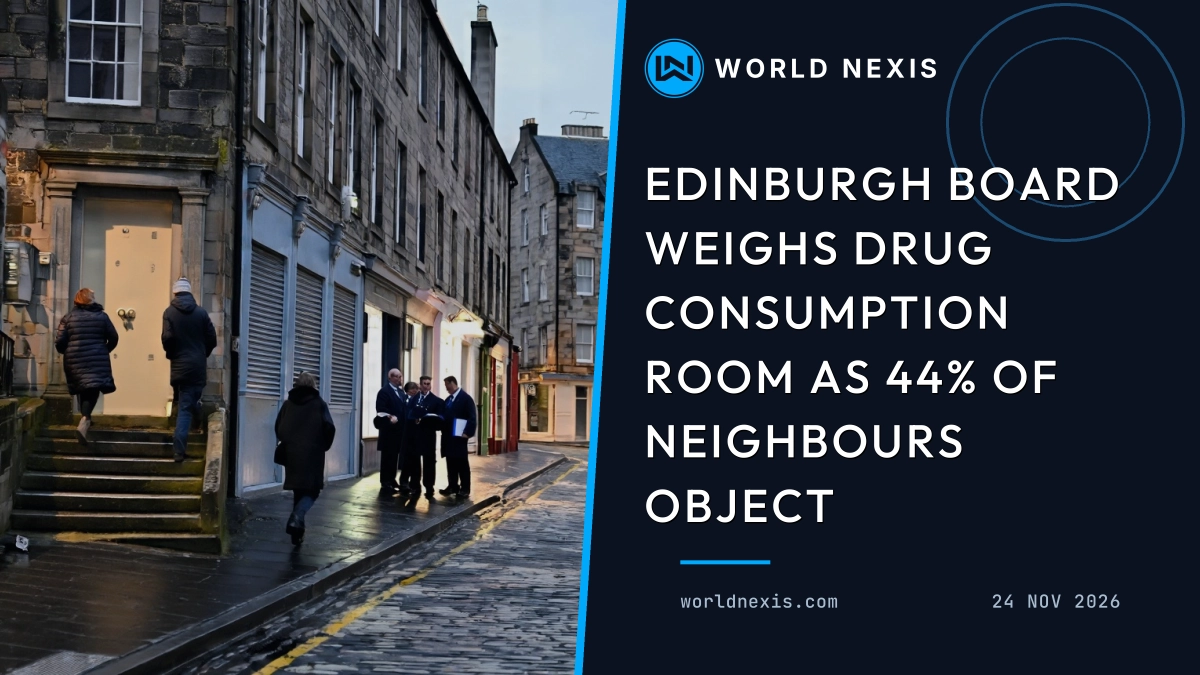
Plans for a drug consumption room in Edinburgh have broad support across the city, but the people who would live closest to it are narrowly against the proposal, a consultation has found, with 44% of Old Town respondents opposed and 42% in favour. The Edinburgh Integration Joint Board (IJB) considered the findings at the city chambers on Tuesday.
If approved, the facility would allow drug users to inject heroin or cocaine under medical supervision. It would be the UK’s second drug consumption room, following the Thistle centre in Glasgow, which opened in 2025.
Key points
- The consultation drew 1,089 responses from individuals and organisations, most of them supportive, though the sample was not representative of the city.
- Old Town residents were split almost evenly, with 44% against the plans and 42% in favour.
- Opponents cited anti-social behaviour and risks to the area’s reputation, tourism and heritage status.
- Supporters focused on saving lives, reducing drug-related deaths and creating a stigma-free space for safer injections.
What the drug consumption room consultation found
Analysis of the responses showed that backing was strongest among people who do not live beside the proposed site. Among residents of the Old Town, where the drug consumption room could be established, opinion was finely balanced and slightly negative.
The recorded reasons for opposition centred on concern about anti-social behaviour and about harm to the area’s reputation, tourism and heritage status. The main reasons given for support were saving lives, reducing drug-related deaths, and providing a space free of stigma where injections can happen more safely.
Neighbours report ‘difficult and distressing’ experiences
David Williams, joint commissioning manager at the city’s alcohol and drugs partnership, presented the results to board members. He said there was “broad support for next phase of development of the SDCF (safer drugs consumption facility)”, but that the least supportive group were “people who would be the neighbours”.
Those residents, he said, “expressed some difficult and distressing experiences around what is happening in the area around them now” in relation to drugs.
Mr Williams added that while the Old Town is a logistically difficult area, it is also the part of the city where the most “problem injecting” takes place.
First-year figures from Glasgow’s Thistle centre
Glasgow’s pilot provides the only UK evidence base for the model. In its first year, the Thistle centre recorded 11,348 visits by 575 registered people, with 7,827 injections carried out at the facility.
Those figures have been central to the argument for a second site, with supporters pointing to the potential to save lives and cut drug-related deaths rather than to moral arguments about drug use.
Why it matters
For people living in the Old Town, the decision is local and immediate: a new health service on their street, alongside genuine anxiety about anti-social behaviour, litter and the area’s standing as a visitor destination. That trade-off is being asked of the households least able to avoid it.
For the city, the question is whether the harm-reduction model pioneered in Glasgow can be extended to the streets where injecting is most concentrated. For readers across the UK, Edinburgh will help set the terms on which any future drug consumption room is judged, including what host communities are offered in return.
Analysis
Having covered devolution and public services for World Nexis News, I read consultations like this one for the gap between the headline and the geography. At city level the picture is warm, with most responses supportive. At street level it is a 44-42 split among the people who actually live with the consequences, which is not a rounding error and should not be treated as one.
In my view the case for pressing ahead is stronger than the case for delay, and I side with those who argue the facility belongs where problem injecting already happens rather than where it is politically easier. Mr Williams’ point is decisive: the Old Town is awkward to manage logistically, but it is where the injecting is. A drug consumption room sited for the board’s convenience rather than the users’ would fail on its own terms.
The strongest counter-argument is that a 44-42 split among those most affected is no mandate, and that residents describing distressing conditions are giving evidence about the status quo rather than airing prejudice. That deserves a binding answer, with enforceable commitments on street management and a review neighbours can hold the board to, not warm words about saving lives.
What happens next
The consultation now feeds into the next phase of development of the safer drugs consumption facility, the stage Mr Williams described as attracting broad support. No site has been confirmed, and the meeting did not settle how the board will balance the city-wide response against the narrower view of Old Town residents.
What we don’t know yet
The address, the operating model and any package offered to neighbours have not been published. It is also unclear how much weight the IJB will give to a consultation it accepts was not a representative sample of Edinburgh.
Related coverage
- Troubles official history gets £3.6m in major archives study
- Burnham TikTok row sparks major backlash over No 10 stunt
- Irish-medium education bill blocked 43-30 by unionist veto
Further reading
- Neighbours tend to be opposed to new drug consumption room plans – consultation
- Neighbours tend to be opposed to new drug consumption room plans – consultation
About the author: Liam O’Connor is the UK Politics Reporter at World Nexis News (WNN), covering uk politics. The analysis section reflects the writer’s view.

Liam O'Connor
Liam O'Connor is UK Politics Reporter at World Nexis News, covering Westminster, devolved politics and the issues that matter to voters across England, Scotland, Wales and Northern Ireland. Based in London, he reports from primary sources — Hansard, official statements, published data — and explains…



