Norse Atlantic bankruptcy: all 5 Gatwick routes cancelled
Norse Atlantic bankruptcy: all flights cancelled, including five Gatwick routes and Manchester services. Here is what UK passengers should do now.
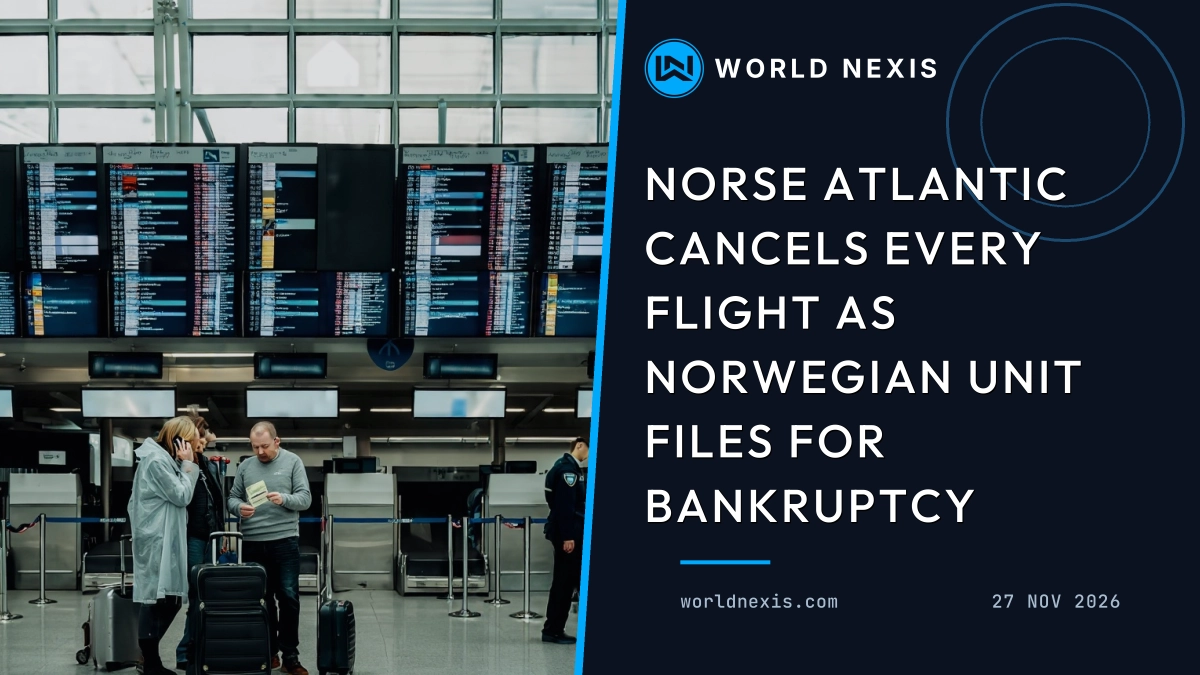
Norse Atlantic bankruptcy has turned into an abrupt grounding for British travellers: the group’s Norwegian operating company, Norse Atlantic Airways AS, has filed for bankruptcy and every Norse flight has been cancelled, including long-haul services from London Gatwick and Manchester. A trustee will now be appointed to manage the process, while the airline’s UK arm has stopped flying with immediate effect.
Key points
- Norse Atlantic Airways AS, the Norwegian operating company, has filed for bankruptcy and a trustee is to be appointed.
- Norse Atlantic UK Ltd suspended operations at once, ending Gatwick routes to New York, Bangkok, Cape Town, Orlando and Phuket, plus its Manchester services.
- All Norse flights are cancelled and tickets discontinued; the Civil Aviation Authority says passengers should not travel to the airport.
- The collapse comes as fuel costs linked to the Iran war hammer airline budgets across the industry.
Norse Atlantic bankruptcy: how the collapse unfolded
The UK subsidiary ran scheduled long-haul flights from Gatwick to Bangkok, Cape Town, New York, Orlando and Phuket, and also flew from Manchester to destinations including New York and Bangkok. Those services stopped the moment the suspension was announced. The listed parent, Norse Atlantic ASA, had been searching for a way to keep the British arm in the air.
Eivind Roald, chief executive of Norse Atlantic, said the decision followed extensive efforts by the company and the wider group to find a solution.
“The Board of Norse Atlantic Airways AS has made the difficult decision to file for bankruptcy despite extensive efforts from the Company and the Group to find a solution. We are deeply sorry for the impact this has on our passengers, employees and partners.”
Roald added that the board, management and advisers of Norse Atlantic ASA and the UK subsidiary are working to find a solution for the remaining part of the business. No such solution has been announced. For now, the Norse Atlantic bankruptcy has left ticket holders without a flight to board.
What passengers should do about refunds
Andrew McConnell, a spokesperson for the UK Civil Aviation Authority, said the cancellations were causing concern and disruption for many passengers. He urged anyone booked with the airline to stay away from the airport.
“We urge passengers who were planning to fly with this airline not to go to the airport as all Norse flights are cancelled. Norse customers should visit the Norse website or the Civil Aviation Authority’s website for the latest information.”
The regulator’s guidance routes claims through the firms that handled the payment or the booking, rather than through the airline alone.
Where the money can come from
- Passengers who paid Norse directly by credit card should ask their card issuer about protection under Section 75 of the Consumer Credit Act 1974.
- Anyone who paid by debit card should approach their bank about a chargeback claim.
- Travellers with insurance that includes Scheduled Airline Failure Insurance should contact their insurer.
- People who booked through a travel agent or another third party should go to the agent first, because some policies include SAFI cover.
Passengers holding tickets issued by another airline or agent should contact whoever issued them. Because the Norse Atlantic bankruptcy affects tickets sold through several channels, Norse Atlantic refunds depend on how each booking was made.
The fuel shock behind the filing
The Norse Atlantic bankruptcy coincides with a cost crisis across aviation. Fuel prices have soared because of the Iran war, and the increase has landed hardest on carriers that fly long-haul routes on thin margins.
Cheap transatlantic seats depend on filling aircraft and keeping costs predictable, and the Norse Atlantic UK routes were built on exactly that arithmetic. When fuel moves sharply, the model has little room to absorb it. Other airlines are under strain from the same price shock.
Why it matters
The Norse Atlantic bankruptcy matters first to travellers, whose holidays are now grounded and whose money must be chased. Anyone who booked a long-haul trip from Gatwick or Manchester with Norse now deals with card issuers, insurers or agents rather than an airline desk.
For the UK, the loss of a budget long-haul operator narrows choice on routes where fare competition has been fierce. With one fewer carrier, the pressure that keeps long-haul fares down weakens.
Analysis
Having covered corporate strategy and market structure for World Nexis News, I read the Norse Atlantic bankruptcy as a business-model failure that an external shock exposed rather than created. Low-cost long haul works only while costs stay tame and planes stay full. A fuel spike tied to a war is precisely the scenario such a model cannot absorb, because there is no spare margin to draw on.
So I side with the argument that this was structural, not simply bad luck. The strongest counter-argument is that fuel spikes are cyclical and a better-capitalised rival could ride one out. That is fair, but it proves the point: the difference between survival and a trustee is the cushion a company built before the shock arrived.
What most coverage will miss is the consumer side. The airline has gone; the claim now sits with card schemes, insurers and agents, each on its own timetable. My view is that anyone affected should start every claim this week, in writing, and keep the reference numbers.
What happens next
A bankruptcy trustee will be appointed to manage the process, and the group says it is still working on a way to keep the rest of the business running. The Civil Aviation Authority is directing passengers to its website and the airline’s site for updates. Card issuers and insurers are the other routes to recovery.
What we don’t know yet
It is not clear whether any part of the UK operation can be revived. Nor has any figure been published for the number of passengers or staff affected. The trustee’s appointment should eventually clarify what assets exist and which creditors rank first.
Related coverage
- Imperial Brands takeover: Altria weighs major all-cash bid
- Huntingdon train attack: Anthony Williams guilty on all 14 counts
- Dan Carney dies at 95: Pizza Hut cofounder built empire
Further reading
- Airline with UK routes cancels all flights after filing for bankruptcy
- Airline with UK routes cancels all flights after filing for bankruptcy
About the author: Daniel Whitmore is the Business & Markets Editor at World Nexis News (WNN), covering business & markets. The analysis section reflects the writer’s view.

Daniel Whitmore
Daniel Whitmore is Business & Markets Editor at World Nexis News, based in New York. He leads coverage of companies, economies, markets and the forces that move them, from central bank decisions to corporate earnings and the cost-of-living pressures facing households on both sides of…



