Imperial Brands job cuts: major cull of 2,500 roles by 2030
Imperial Brands job cuts will see up to 2,500 more roles go by 2030 as the tobacco giant targets £320m in annual savings and leans harder on AI.
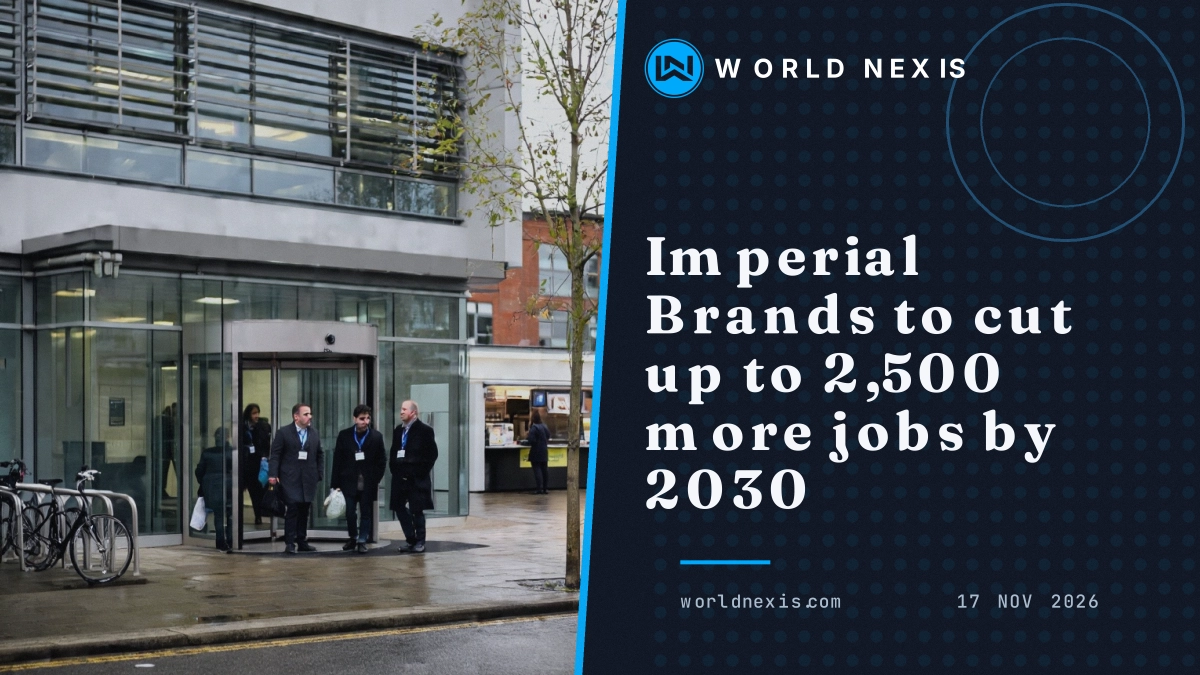
Updated 17 Nov 2026, 10:56 (UK time): The Guardian reported that Imperial Brands will outsource 400 finance and procurement roles to Capgemini from its Krakow and Warsaw operations, the first named locations in the job-cut programme, and confirmed the Langenhagen plant in Germany closes next year.
The Imperial Brands job cuts now have a named destination. The Guardian reported that the company intends to outsource 400 roles to Capgemini from its finance and procurement teams in Krakow, Poland, and from its global supply chain centre in Warsaw. Until now Imperial had declined to say which countries would absorb the reductions.
The same report said the Langenhagen factory in Germany will close next year, with that plant and the already-sold Taiwanese site accounting for 700 of the losses. Consultations on the remaining reductions are continuing across several countries, and only a small number of UK posts are caught up in the current round.
My take: sending 400 roles to a contractor shows the £320 million savings target is being met partly by moving work outside the company rather than simply deleting it, which is quicker to bank but leaves less of that expertise on Imperial’s own payroll.
Imperial Brands job cuts will remove up to 2,500 more roles worldwide by the end of 2030, the Bristol-based tobacco group said on Tuesday, as it chases at least £320 million in annual savings. The owner of JPS, Golden Virginia, Rizla and Blu vapes said the reduction sits on top of about 2,100 roles already cut in the year to September.
The Imperial Brands job cuts add up to between 2,100 and 2,500 positions over four years, on a global workforce of roughly 25,000 to 25,800 people. The company did not say which countries would be affected.
Key points
- Imperial Brands job cuts of between 2,100 and 2,500 roles are planned by the end of 2030.
- The group targets at least £320 million in annual savings, with £90 million already delivered.
- Revenue fell 1.5% to £31.7 billion; operating profit slipped 10.4% to £3.13 billion.
- Next-generation products such as vapes and nicotine pouches grew net revenues 11.4%.
Where the Imperial Brands job cuts will land
Imperial employed around 25,800 people at the end of last year, according to PA-sourced reports, while the Guardian put the global workforce at about 25,000. The group has bases in Bristol, London and Liverpool, but has not disclosed where the axe will fall.
Some of the ground has already been cleared. Imperial closed its Langenhagen factory in Germany and sold a plant in Taiwan, accounting for 700 job losses, and it is holding consultations on further reductions in several countries.
The Imperial Brands job cuts announced on Tuesday are the second phase of a programme that began with the 2,100 roles removed in the year to September. Only a small number of UK roles are caught up in the current round, the Guardian reported.
The Guardian, which reported the figures first, put the combined reduction at up to 4,600 roles, adding this year’s 2,100 to the planned 2,100 to 2,500. The wider programme follows Bloomberg reports earlier this year that the group was preparing to cut thousands of posts across the US and Europe.
Why savings and vaping now drive the strategy
The financial case rests on a squeeze. Group revenues fell 1.5% to £31.7 billion in the year to 30 September, and operating profit slipped 10.4% to £3.13 billion. Profit before tax dropped 12.1% to £2.7 billion.
Tobacco still pays the bills, but mainly through price. Net tobacco revenue in key markets grew 1.7% as Imperial pushed prices up 5.1%, offsetting a 3.4% fall in volumes. Reported tobacco revenues were down 5%.
The growth is elsewhere. Next-generation product net revenues rose 11.4%, helped by oral nicotine demand in the US, where the company runs the Zone pouch brand, and by market share gains for Blu in the UK.
For investors, the Imperial Brands job cuts matter less than the trajectory of that newer business. It is still far smaller than the cigarette operation it is meant to replace.
Technology takes on more of the workload
Lukas Paravicini, the chief executive, called the plan a “transformation” rather than a retrenchment. “We continue to perform and transform,” he said, adding that the aim is to become “more agile, more data-led, more consumer facing and more efficient”.
He said the company was “fusing the organisation with more technologies”, including new software and AI. On the Imperial Brands savings plan, he said: “We have delivered annualised savings of £90 million, with actions taken since the programme began supporting future annualised savings of £180 million – more than half of our target.”
Regulation is tightening at the same time. Imperial faces tax increases in Germany and a UK ban on advertising vaping and nicotine products from next June. Paravicini said he supported vape regulation because “it will put more clarity in the market”.
The playbook is industry-wide, and tobacco job losses are mounting across the sector. British American Tobacco said earlier this year it would cut 5,500 jobs by the end of the year and outsource 3,500 more, a combined 9,000 from a workforce of 47,000.
Analysis
Having covered corporate strategy and market structure for WNN, I look first at whether a savings target is funded by real change or by arithmetic. Here the maths is unusually transparent: £90 million already banked, £180 million of annualised savings identified, £320 million as the goal. That is a credible glide path, and it is why I think Paravicini’s case holds up better than the sceptics’ claim that the Imperial Brands job cuts are AI branding wrapped around an old-fashioned headcount reduction.
The evidence points to volume decline, not software, as the real driver. Imperial bought 1.7% of net tobacco growth by raising prices 5.1% while volumes fell 3.4%, a trade that cannot run indefinitely with German taxes rising and UK advertising restrictions approaching. That is the logic behind the Imperial Brands job cuts. Cutting up to 2,500 posts is what a company does when its core market shrinks structurally and its new categories, growing at 11.4%, are still too small to carry the group.
The strongest counter-argument is that shrinking the workforce by roughly a fifth while betting on vapes and pouches risks stripping out the commercial and regulatory expertise those businesses need, and BAT’s 9,000-role reduction shows the whole sector is doing this at once. I still side with management on direction. For readers who hold the shares or work in the sector, the number that matters is not the headline cut but whether next-generation revenue growth stays above 10% once the advertising ban bites.
What happens next
Consultations on the planned reductions will continue in several countries, with Imperial yet to confirm which markets or sites will absorb the Imperial Brands job cuts.
The company has committed to delivering at least £320 million of annual savings by 2030, with headcount falling by between 2,100 and 2,500 roles by the end of that year.
Two regulatory dates sit inside that window: tax increases in Germany and the UK ban on advertising vaping and nicotine products, which takes effect next June.
Related coverage
- L&G job cuts: 1,000 roles go in sweeping overhaul
- Bank outages hit 3 major US banks in Monday disruption
- Nvidia earnings loom as Asian shares fall in major AI test
Sources
- Tobacco group Imperial Brands to axe up to 4,600 jobs as it uses more AI (theguardian.com)
- Imperial Brands to cut up 2,500 jobs by 2030 in savings drive (echo-news.co.uk)
- Imperial Brands to cut up 2,500 jobs by 2030 in savings drive (dissexpress.co.uk)
- Imperial Brands to cut up 2,500 jobs by 2030 in savings drive (clactonandfrintongazette.co.uk)
- Imperial Brands to cut up 2,500 jobs by 2030 in savings drive (eastlothiancourier.com)
About the author: Daniel Whitmore is World Nexis News’s Business & Markets Editor, covering business & markets. The analysis section reflects the writer’s view.

Daniel Whitmore
Daniel Whitmore is Business & Markets Editor at World Nexis News, based in New York. He leads coverage of companies, economies, markets and the forces that move them, from central bank decisions to corporate earnings and the cost-of-living pressures facing households on both sides of…



