Applied Nutrition profits jump 44% on weight-loss jab demand
Applied Nutrition profits rose 44% to £41m as sales jumped 50.9%, helped by its GLP-1 Friendly Range, though higher whey prices cloud the outlook.
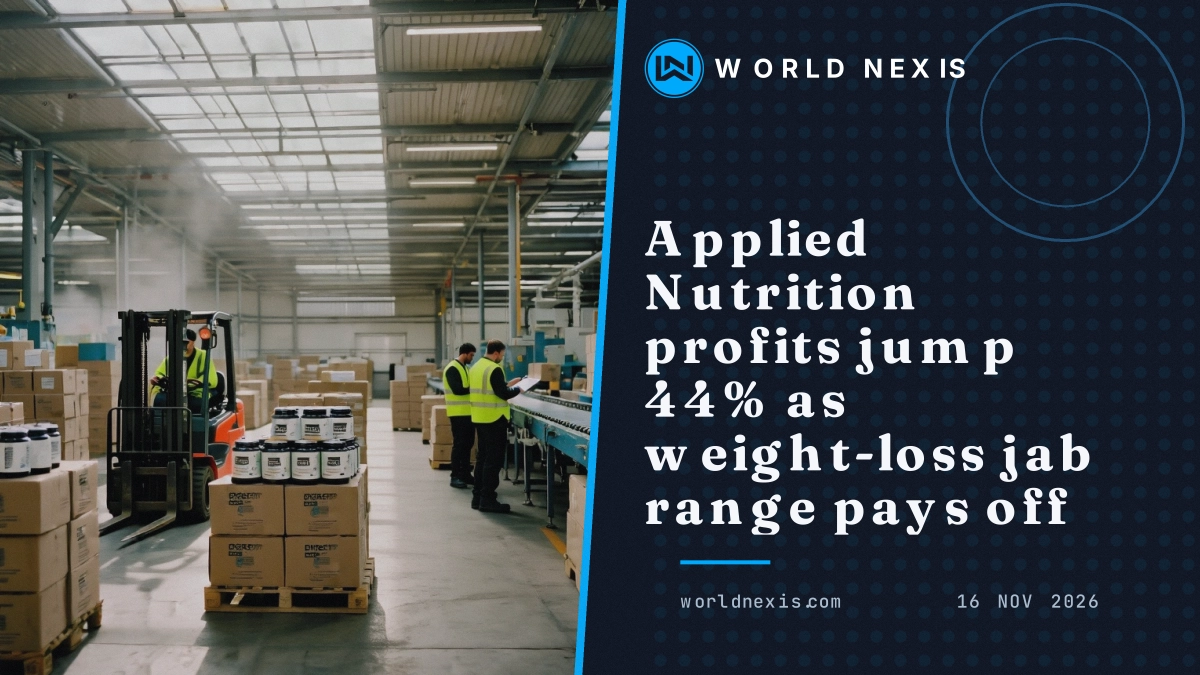
Applied Nutrition profits have jumped sharply, with the Liverpool-based wellness brand reporting a 43.9% rise in pre-tax profit to £41 million for the year to 31 July as sales climbed 50.9%. The London-listed group, backed by TV personality Coleen Rooney, pointed to demand for whey products and for its new range aimed at people using weight-loss medication. The figures were carried by outlets including The Independent.
Key points
- Applied Nutrition profits rose 43.9% to £41 million for the year to 31 July, on sales up 50.9%.
- The company launched a GLP-1 Friendly Range during the year to tap demand from people taking weight-loss medication.
- It expects underlying earnings of about £49 million and sales of about £205 million in 2026-27, up from £43.3 million and £161.6 million.
- Guidance was left unchanged because “significantly higher” whey prices are expected to weigh on profitability.
What the numbers show
The headline figures cover the 12 months to 31 July. Pre-tax profit rose 43.9% to £41 million, while sales grew 50.9% over the same period. For a business that listed in London, the pace of that growth is the central talking point.
Underlying earnings reached £43.3 million and sales £161.6 million in the past year, according to the company. Applied Nutrition expects those numbers to rise to around £49 million and £205 million respectively over 2026-27. Those are forecasts, not results, and the board has chosen not to lift them.
The group sells into more than 80 countries and also runs its own online shop. Most revenue still comes from selling to other businesses, including retailers, grocers, gyms and sports clubs. Its customers range from professional athletes to people wanting to lose weight or build muscle.
Coleen Rooney and a wider customer base
Applied Nutrition said its partnership with Rooney, the wife of former footballer Wayne Rooney, had helped broaden its appeal beyond traditional sports and nutrition shoppers. That matters commercially, because the brand’s growth now depends on people who would never previously have bought a tub of whey.
In short, the Applied Nutrition profits story is really two stories running at once. One is a sports nutrition business selling more protein. The other is a consumer brand reaching households whose interest in protein starts with a prescription rather than a gym membership.
How Applied Nutrition profits are being boosted by the GLP-1 Friendly Range
The group launched its GLP-1 Friendly Range during the year to cash in on the rising popularity of weight-loss medication. The range is aimed squarely at the weight-loss jab market, where users are often told to keep protein intake high while eating less.
Thomas Ryder, chief executive of Applied Nutrition, said demand was moving quickly. “Consumer demand for health, wellness and performance nutrition continues to grow and the market is moving quickly,” he said.
He said the group had kept up a “relentless focus on innovation” so that it brings “distinctive products to market at pace”, including the range aimed at those on weight-loss medication.
“These products are introducing Applied Nutrition to people who may not previously have considered traditional sports nutrition products, and strengthening our position in this attractive market.”
The whey side of the story is just as important. The relaunch of Critical Whey in the previous financial year targeted rising demand, and sales of that product soared 142% in 2025-26. Because more of the group’s sales now come from whey-based products, movements in raw material costs hit harder than they used to.
Whey prices and why the guidance stayed put
Applied Nutrition flagged ongoing pressure from higher whey prices. It said “very strong momentum within the business” had continued since the year-end, but that “significantly higher” whey prices would weigh on profitability. That is why it held off from raising its full-year expectations.
The firm also noted that the “recent trajectory of raw material prices for whey protein has been to decrease”. Even so, it is raising its own prices to help offset the cost increase it has already absorbed. There is a clear tension there for shoppers: cheaper inputs eventually, higher shelf prices now.
“Notwithstanding a strong first quarter of 2026-27, given that the financial year is still at an early stage, the board believes it is prudent to maintain current market expectations.”
That sentence is the crux of the update. A strong first quarter is not the same as a strong year, and the board is saying so plainly rather than chasing the mood.
Analysis
Having covered company results and market structure for WNN, I look first at what a board does with its guidance rather than what it says about momentum. Applied Nutrition could easily have nudged expectations higher on the back of a strong first quarter and softening whey prices. It chose not to, and I think that is the right call.
I side with the board here. The GLP-1 Friendly Range is smart product strategy because it sells to a group the sports nutrition aisle has historically ignored, and the 142% jump in Critical Whey sales shows the core range still has pull. On the weight-loss jab market, the company is following demand rather than guessing at it. The strongest counter-argument is that holding guidance looks needlessly cautious when raw material prices are already falling and the first quarter was strong, and investors who back the growth story will make exactly that point. Even so, a board that promises less and delivers more is a safer proposition than one that upgrades early and then has to explain itself.
For readers, the practical detail is the price rise being passed through to offset whey costs. Protein powder is now a household purchase for many families, not just a gym product, so the cost of a tub is a small but real line in the weekly budget.
What happens next
Applied Nutrition will keep its current market expectations in place while it works through the early months of 2026-27. It still expects underlying earnings of around £49 million and sales of about £205 million for the year.
The company will continue raising prices to offset higher whey costs, and it says the recent direction of whey protein raw material prices has been downward. Its GLP-1 Friendly Range and the wider Critical Whey line will be the products to watch when the next set of Applied Nutrition profits figures arrives.
Related coverage
Sources
- Applied Nutrition profits jump as it cashes in on weight-loss jab market (nwemail.co.uk)
- Applied Nutrition profits jump as it cashes in on weight-loss jab market – AOL (aol.co.uk)
- Applied Nutrition profits jump as it cashes in on weight-loss jab market (harwichandmanningtreestandard.co.uk)
- Applied Nutrition profits jump as it cashes in on weight-loss jab market (ludlowadvertiser.co.uk)
- Applied Nutrition profits jump as it cashes in on weight-loss jab market (bridportnews.co.uk)
About the author: Daniel Whitmore is World Nexis News’s Business & Markets Editor, covering business & markets. The analysis section reflects the writer’s view.

Daniel Whitmore
Daniel Whitmore is Business & Markets Editor at World Nexis News, based in New York. He leads coverage of companies, economies, markets and the forces that move them, from central bank decisions to corporate earnings and the cost-of-living pressures facing households on both sides of…



