Canary Islands migrants: 2,200 arrivals surge in two days
Nearly 2,200 Canary Islands migrants reached the Spanish archipelago in two days, prompting Spain to declare a migration emergency on the islands.
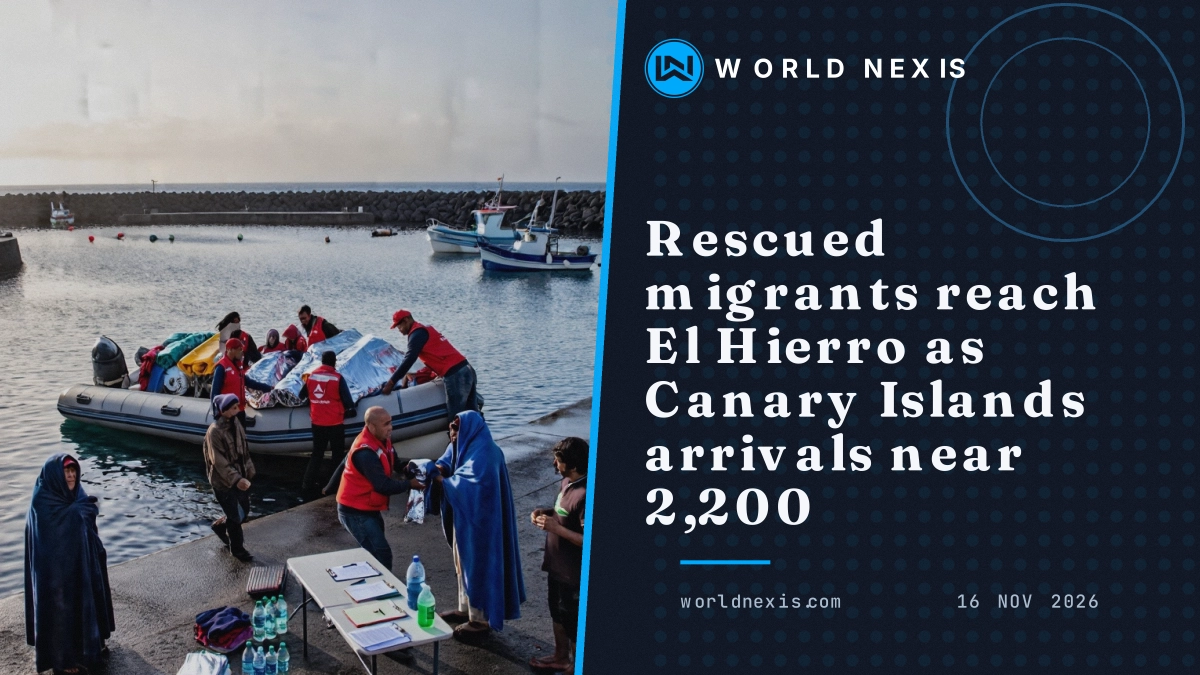
Nearly 2,200 Canary Islands migrants arrived by boat in the past two days, Spain’s maritime rescue service said, a surge that prompted Madrid to declare a migration emergency on the archipelago on Tuesday.
The islands lie off north-west Africa and are a major entry point for people, mainly from West Africa, attempting the dangerous Atlantic crossing in makeshift boats.
Key points
- Nearly 2,200 Canary Islands migrants reached the islands by boat over two days, the maritime rescue service said.
- Crews assisted 1,324 people aboard 14 dinghies, most of whom landed on El Hierro, an island of about 12,000 residents.
- More than 13,000 of the just over 28,000 people who reached Spain by sea between January and the end of October arrived in the Canary Islands, according to the interior ministry.
- Spain declared a migration emergency on the islands on Tuesday after arrivals rose in recent weeks, particularly from sub-Saharan Africa.
Canary Islands migrants arrive in near-record numbers
The rescue service said it had assisted 1,324 people aboard 14 dinghies, with most brought to El Hierro. That figure came close to the route’s daily rescue record of 1,461 people, set on 7 November 2020.
Across the two days, the service put the Canary Islands migrants total at nearly 2,200. Reports carried by ABC News and other outlets used the same two-day figure from the rescue service.
Dácil León, the Red Cross emergency coordinator in Tenerife, told public broadcaster RTVE that staff meet migrants at the port. They provide dry clothes, food and water and register each arrival.
Small islands absorb a large share
El Hierro, the westernmost island of the group, has a population of about 12,000. Landing most of a day’s rescues on one island that size means reception, medical checks and registration must scale up at very short notice.
Spain migration emergency follows weeks of rising arrivals
Spain declared a migration emergency on the islands on Tuesday after a rise in arrivals in recent weeks, particularly from sub-Saharan Africa. The declaration came as the western route continued to take the largest share of people reaching Spain by sea.
Interior ministry figures show more than 13,000 of the just over 28,000 people who arrived in Spain by sea between January and the end of October landed on the islands. That is close to half the national total, in a country with several other sea frontiers.
The report also noted that Spain is due to hold an early general election within two weeks, which places the islands’ emergency inside a national campaign rather than a purely regional one.
Ceuta showed how fast the politics moves
In July, tens of thousands of people crossed from Morocco into Spain’s North African territory of Ceuta in just two days, causing chaos and reigniting debate over immigration in Europe and beyond. Most left within days, but up to 15,000 remained.
Why the Atlantic migration route is so deadly for Canary Islands migrants
The Atlantic crossing between West Africa and the Canary Islands is one of the world’s deadliest migration routes. The islands lie about 65 miles from the nearest African coast, yet many people take far longer routes to evade security forces.
Those journeys can last days or weeks, and most boats depart from Mauritania. Small, crowded dinghies therefore stay at sea for long stretches, well out of reach of the patrols that watch the shortest crossing.
At the quayside, the Red Cross is the first point of contact for people stepping off the boats, León told RTVE, handing out dry clothes, food and water before registration begins.
Analysis
Having covered migration and foreign policy for WNN, I look first at where pressure actually lands, and these numbers point somewhere very specific: El Hierro, an island of about 12,000 people, taking 1,324 arrivals in a single set of rescues. The Canary Islands migrants total for the year, more than 13,000 of Spain’s 28,000 sea arrivals to the end of October, tells me this is structural rather than a freak week.
In my view the facts support the reading that this is a reception and capacity failure more than a border-control one. For Canary Islands migrants, the bottleneck is visible: a port, a queue, a registration desk and an island far too small to absorb a tenfold spike in daily need. Declaring an emergency is what a state does when the machinery at that port cannot keep pace.
The strongest counter-argument is that emergency declarations are political gestures, and the timing, two weeks before an early general election, invites exactly that suspicion. I do not dismiss it, because enforcement elsewhere has a record of redirecting boats rather than reducing them. Even so, a declaration should be judged by what happens at El Hierro’s port, not by what is said on the campaign trail.
What happens next
Red Cross teams will keep meeting Canary Islands migrants at the ports, providing dry clothes, food and water and registering new arrivals, according to León’s account to RTVE. Spain’s maritime rescue service continues to coordinate the response at sea.
With an early general election due within two weeks, according to the report, the emergency on the islands is set to sit inside the national argument over immigration rather than stay a local administrative matter.
Related coverage
- Isaac the cat found alive 4 days after Brooklyn collapse
- Helen Haines leaves hospital a month after alleged ramming
- Iran drone attack: Blinken warns of ‘absolute disaster’
Sources
- Nearly 2,200 migrants reach Canary Islands in two days (asianimage.co.uk)
- Nearly 2,200 migrants reach Canary Islands in two days (northwichguardian.co.uk)
- Nearly 2,200 migrants reach Canary Islands in two days (kilburntimes.co.uk)
- Nearly 2,200 migrants reach Canary Islands in two days (glasgowtimes.co.uk)
- Nearly 2,200 migrants reach Canary Islands in two days (westerntelegraph.co.uk)
About the author: Marcus Ellington is World Nexis News’s International Correspondent, covering world affairs. The analysis section reflects the writer’s view.

Marcus Ellington
Marcus Ellington is International Correspondent at World Nexis News, reporting on diplomacy, conflict and the political forces reshaping Europe, the Middle East, Asia and the Americas. Based in London, he focuses on explaining why events unfold as they do, using official statements, diplomatic documents and…



