Cartel indictment: 21 charged in major Texas trafficking case
Cartel indictment charges 21 alleged La Nueva Familia Michoacana members, naming two brothers as leaders and tying the network to Texas stash houses.
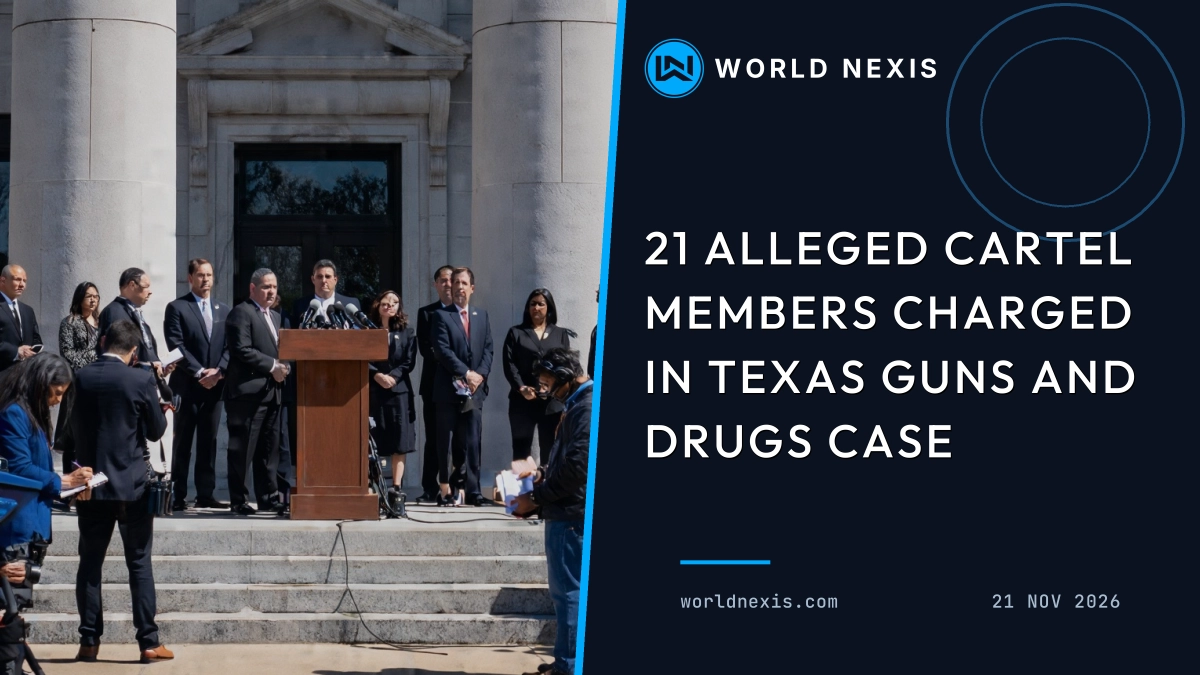
A cartel indictment unsealed in San Antonio has charged 21 alleged members and associates of La Nueva Familia Michoacana, including the two brothers named as its leaders, over a network that prosecutors say ran drugs, migrants and military-style weapons between Mexico and Texas. The charges were announced on Friday in the Western District of Texas, more than 18 months after the group was designated a foreign terrorist organization in February 2025. Johnny Hurtado Olascoaga and Jose Alfredo Hurtado Olascoaga are identified as the alleged leaders, who prosecutors say took control in 2011 and expanded the organization across several Mexican states.
Key points
- 21 alleged members and associates face charges after an investigation by the FBI, Homeland Security Investigations, the Drug Enforcement Administration and the Bureau of Alcohol, Tobacco, Firearms and Explosives.
- The cartel indictment names the Hurtado Olascoaga brothers as the organization’s alleged leaders.
- Prosecutors say the network moved thousands of kilograms of methamphetamine, cocaine and heroin into the United States.
- At least two stash houses, in Buda and Bastrop, were used to hold drugs, weapons and people.
Inside the cartel indictment: mines, chemicals and stash houses
Prosecutors describe an international operation covering drug trafficking, human smuggling, weapons trafficking, money laundering and extortion, with activity running from Mexico into communities across Texas. Federal officials say the organization moved thousands of kilograms of methamphetamine, cocaine and heroin north while keeping drugs, weapons and people in homes in ordinary American neighborhoods.
The cartel indictment also sets out an unusual trade route. U.S. Attorney Justin Simmons said the organization controlled mines in Mexico and traded minerals from them with Chinese individuals in exchange for precursor chemicals used to make drugs destined for the United States. The group is also accused of smuggling thousands of migrants across the border.
Two stash houses identified by investigators, in Buda and Bastrop, show how far the alleged operation reached into daily life. Simmons said such properties attract rival criminals and put surrounding streets at risk. “These houses are magnets for violent crime,” he said.
Guns bought in Texas and a crash at 100 mph
The cartel indictment gives unusual detail on the southbound flow of firearms. Prosecutors say the organization bought powerful weapons in the United States to protect its smuggling routes and hold territory in Mexico, including .50-caliber firearms, AR-15 rifles, weapons chambered in 7.62 mm and rocket-propelled grenades. Investigators also described vehicles fitted with mounts capable of carrying military-style machine guns.
Robert Topper, assistant special agent in charge of the ATF’s Houston Field Division, said the investigation targeted a network that acquired and moved firearms from the United States to criminal organizations in Mexico. “The illegal movement of firearms fuels violence, strengthens transnational criminal and terrorist organizations, and threatens public safety on both sides of the border,” he said.
Smuggling people carries separate risks for American road users. Simmons pointed to a March 2021 crash in which a Dodge Ram pickup carrying migrants fled law enforcement at more than 100 mph, crossed into oncoming traffic and hit a Ford F-150 head-on, killing eight migrants, including a child. “In the alien smuggling space, we see that these smugglers often drive at high rates of speed, whether they’re fleeing from law enforcement or just otherwise trying to avoid detection,” he said. “This endangers American drivers.”
Why it matters
For households in central and south Texas, the cartel indictment turns a foreign organization into a local one. A stash house on a residential street, a pickup weaving through traffic at triple the speed limit and a rifle sold in a Texas shop and carried south are presented by prosecutors as links in a single supply chain, with costs paid inside the United States.
The case also shows how the foreign terrorist designation, applied in February 2025, sits alongside conventional drug, smuggling and firearms charges rather than replacing them. That balance will shape how similar prosecutions are built in the same district.
Analysis
Having covered migration and emergency response for World Nexis News, I read files like this one from the roadside inward, and that is where the strongest evidence sits. Eight people killed in a 2021 smuggling crash on a Texas highway, and stash houses in towns like Buda and Bastrop, are concrete harms that no argument about distant cartel politics can wave away. On the facts set out so far, the government’s claim that this organization endangered Americans is better supported than the view that cartel violence stays on the Mexican side of the border.
I also think the sequencing tells its own story. The terrorist designation came first, in February 2025, and the cartel indictment followed 21 months later, which is a reminder that a label is a starting gun for investigators rather than a result. The strongest counter-argument deserves a hearing: charges against leaders who may never appear in a US courtroom can look like a press release with a docket number, and prosecutions of this kind rarely move the price or purity of drugs on a street corner.
What I will watch for is whether the firearms strand produces more than a list of recovered weapons. If the people who sold the .50-caliber rifles and the machine-gun mounts face charges of their own, this becomes a case about American supply as much as Mexican demand, and that would be the more useful precedent.
What happens next
The case now moves into the federal courts of the Western District of Texas, where the 21 defendants would answer the charges if they appear. No trial dates, plea hearings or custody details have been set out in the information released with the announcement. The investigation itself was joint, drawing on the FBI, Homeland Security Investigations, the DEA and the ATF, with the ATF’s Houston Field Division working the firearms strand.
What we don’t know yet
Several basic questions remain open. It is not clear whether any of the 21 accused are in custody, whether the two brothers will ever stand trial in the United States, or when any defendant will first appear before a judge. Prosecutors have also not said publicly how long the minerals-for-chemicals arrangement ran or how the proceeds were moved.
Related coverage
- Waverley station: man, 38, charged over major knife find
- Permitting reform bill passes Senate in major 62-33 vote
- RAF Fairford plot: two men face major security charges
Further reading
- 21 alleged cartel members indicted in massive federal investigation spanning Texas, Mexico
- 21 alleged cartel members indicted in massive federal investigation spanning Texas, Mexico
About the author: Tariq Al-Mansoori is the Breaking News Reporter at World Nexis News (WNN), covering breaking news. The analysis section reflects the writer’s view.
Tariq Al-Mansoori
Tariq Al-Mansoori is a Breaking News Reporter at World Nexis News, covering major incidents, official statements and developing stories across the UK, US and internationally. Based in London, he works to confirm details before publication, attributes information to named sources where possible and updates stories…



