Stormont budget: O’Neill seeks PM crisis talks on £1.5bn
Sinn Féin's Michelle O'Neill has urged Emma Little-Pengelly to join her call for a meeting with the Prime Minister over the Stormont budget crisis.
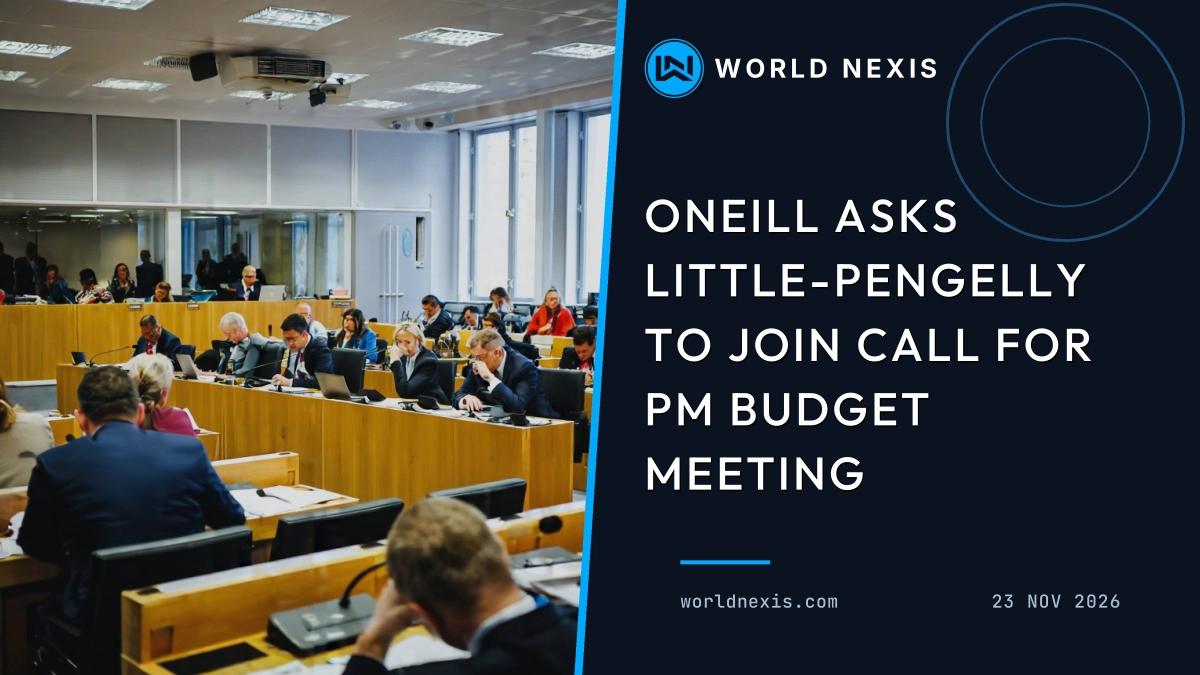
The Stormont budget stand-off moved onto the floor of the Assembly on Monday, when First Minister Michelle O’Neill urged DUP deputy First Minister Emma Little-Pengelly to join her call for direct talks with Prime Minister Andy Burnham. The Sinn Féin leader said she had already asked for face-to-face engagement and called a refusal by her power-sharing partner a “dereliction of responsibility”. Departments are running on contingency budgets of 95% of last year’s spending because no spending plan for 2026-27 has been agreed.
Key points
- Michelle O’Neill has asked Emma Little-Pengelly to join her in requesting a meeting with Prime Minister Andy Burnham on the Stormont budget.
- DUP leader Gavin Robinson indicated the deputy First Minister would not cooperate with the request.
- Stormont departments are operating on 95% contingency budgets, with no agreed budget for 2026-27.
- Secretary of State Sir Chris Bryant has warned of a “major crisis” unless ministers take “unpalatable, unpopular decisions”.
What O’Neill told the Assembly
Answering questions at Stormont on Monday, the First Minister argued that the Executive’s two largest parties should present a single front to the Treasury. She confirmed she had asked Little-Pengelly to join her in seeking direct engagement with the Prime Minister.
“It would be a dereliction of responsibility if she refuses to do so,” O’Neill said. “I want us to have that conversation because I want us to get a budget.”
Her message to Andy Burnham was direct.
“I have a very clear message for Andy Burnham, people here are not second-class citizens.”
She added that people in Northern Ireland pay their taxes and are entitled to good public services, and that every Executive minister needs an adequate budget to settle public sector pay and invest in services.
The First Minister also moved to close off the option of Westminster setting a spending plan. “If the British Government were to step in to do a budget over our heads, that would be a massive overreach,” she said, describing it as a constitutional overreach and a dangerous precedent. Instead, she accused Sir Chris of “megaphone diplomacy” and said the Government should demand fair funding for the region.
Why the Stormont budget remains unagreed
Power-sharing ministers say they cannot strike a budget for 2026-27 without additional support from the Treasury. The UK Government has offered about £1.5 billion in extra funding over three years, including £525 million delivered this year.
Last month’s UK Budget allocated a further £131 million in the current financial year and £270 million across three years. Stormont’s leaders have said the package is not enough, so departments are planning on contingency budgets worth 95% of last year’s spend while the Executive budget talks stay stalled.
The DUP’s withheld cooperation
The latest refusal extends a DUP campaign that began earlier this year, when party ministers withheld cooperation in protest at Sinn Féin ministers backing demonstrations on the Garvaghy Road against the Drumcree Orange parade being allowed along the route for the first time in almost 30 years.
Gavin Robinson described the financial position as “precarious” and put the immediate pressure on the Treasury rather than the Executive.
“In Northern Ireland we can only spend the money that is allocated to us from the Treasury.”
He warned that the region can “literally run out of the ability to spend money on public services early in the new year”, adding: “That’s not a threat, that’s a reality.” Whether the Executive passes a budget that “wouldn’t pass muster” or the UK Government intervenes, he said, the Treasury will still have to move.
Sir Chris said last week that Northern Ireland is heading for a “major crisis” if the Executive is unwilling to make “unpalatable, unpopular decisions”, and that it is “well past the time” for local ministers to set a budget.
Why it matters
A Stormont budget fixed at 95% of last year’s spend is not a neutral holding position. It leaves departments planning against last year’s numbers, with little room for the pay settlements and new investment the First Minister described.
For households across Northern Ireland, the risk is concrete rather than abstract. Robinson’s warning points to a moment early in the new year when the Executive could lose the ability to spend on public services at all, a point that would touch every devolved service. No Northern Ireland budget has been agreed, and no draft has been published.
Analysis
Having covered devolution and public services for World Nexis News, I look first at what a joint request would actually cost each party. For Sinn Féin, it is a test of whether O’Neill can make power-sharing deliver. For the DUP, it is cheaper than almost any other gesture: co-signing a letter to the Prime Minister concedes nothing on the Garvaghy Road, commits the party to no spending decision, and does not require it to abandon a protest it promised its voters.
That is why I think O’Neill has the better of this argument. Both parties agree the £1.5 billion on offer falls short, and Robinson says so plainly. When the Executive’s two leaders agree on the diagnosis, refusing to say it together looks like a tactic aimed at a rival rather than a strategy for funding hospitals and schools. The strongest counter-argument, and it is a serious one, is that a joint letter creates no money and that Sir Chris is right about ministers avoiding decisions only they can take. But a meeting request and a budget are not alternatives; the Executive can do both.
The more important question in the Stormont budget dispute is what happens if it runs into the new year. If the Treasury will not move and the Executive will not agree, pressure for Westminster to legislate will grow, and O’Neill’s warning about precedent stops being rhetorical. That is the outcome neither Stormont nor Whitehall should want.
What happens next
No meeting with the Prime Minister has been arranged, and the Executive has not published a draft Stormont budget for 2026-27. Robinson’s warning that the region could lose the ability to spend on public services early in the new year sets the practical deadline for both governments.
What we don’t know yet
- Whether the Prime Minister will meet the First Minister, and whether the deputy First Minister would attend.
- Whether the Treasury will improve on the £1.5 billion package before the new year.
- Whether the Secretary of State would move to set a budget from London, a step O’Neill has called a constitutional overreach.
Related coverage
- Stormont budget: Treasury must act or spending halts
- M&S franchise talks: major shift for 42 European stores
- Poundland rescue talks: 11,000 jobs at risk before deadline
Further reading
- O’Neill urges Little-Pengelly to join her call for meeting with PM over budget
- O’Neill urges Little-Pengelly to join her call for meeting with PM over budget
About the author: Liam O’Connor is the UK Politics Reporter at World Nexis News (WNN), covering uk politics. The analysis section reflects the writer’s view.

Liam O'Connor
Liam O'Connor is UK Politics Reporter at World Nexis News, covering Westminster, devolved politics and the issues that matter to voters across England, Scotland, Wales and Northern Ireland. Based in London, he reports from primary sources — Hansard, official statements, published data — and explains…



