FBI data breach: Trump says reported NCIC hack is ‘not good’
The FBI data breach probe centers on the National Crime Information Center, the warrants and background-check database used by police nationwide.
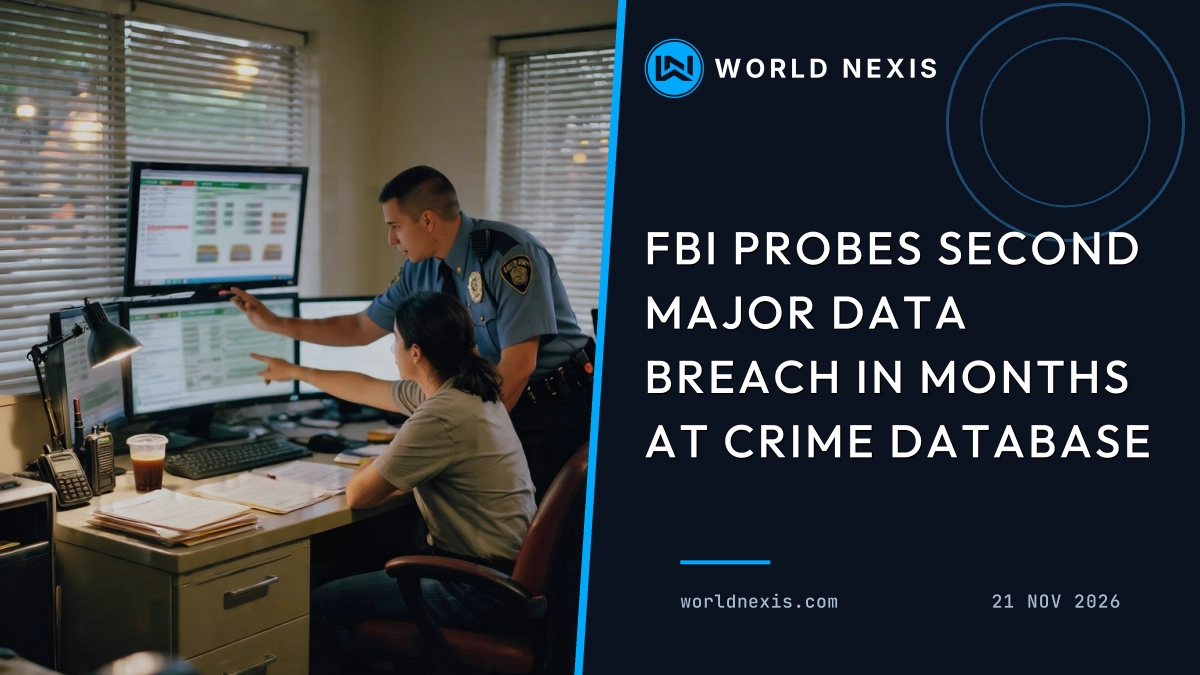
Updated 21 Nov 2026, 21:11 (UK time): President Donald Trump publicly commented on the reported FBI data breach for the first time on Saturday, saying the news was ‘not good’ and speculating without evidence that the intrusion could expose information about the Russia investigation and his voter fraud claims.
President Donald Trump has now addressed the FBI data breach directly. In an interview on Saturday he said he had only just heard about the reported intrusion into the National Crime Information Center, the database officers use to check warrants, missing people and criminal histories. “We just heard about it and I will say that it’s not good,” he said.
Trump went beyond the bureau’s own account, suggesting the incident could reveal information about matters involving him, including the Russia investigation, and about his claims of voter fraud. He offered no evidence for either suggestion. The FBI declined to comment publicly on Saturday, and no official has said whether any records were viewed, copied or altered inside the system.
That intervention matters because it moves the story out of the technical realm. Until now the FBI data breach was an internal inquiry described by people briefed on it; it is now a subject the president is being questioned about, and his speculation has travelled much further than any confirmed finding.
I still think the unanswered question is the one nobody in Washington is pressing: whether the answers officers get back from a record check can be trusted this week. A president saying a breach is serious is at least candour, and an active investigation does limit what officials can disclose. Jumping from an unconfirmed incident to his own grievances is something else again.
The FBI data breach under investigation centers on the National Crime Information Center (NCIC), the database that federal, state and local officers across the United States use every day to check warrants and run background checks. The bureau is examining an apparent intrusion discovered in recent days, two people briefed on the investigation said, making it the second suspected cyberattack on FBI systems in a matter of months.
Key points
- The FBI is investigating an apparent breach of the NCIC, the information-sharing network that links federal, state and local law enforcement.
- The FBI data breach was discovered in recent days and follows a September attack on an FBI jobs website.
- Officials have not said what data, if any, was accessed or altered, and no group has been identified.
- Director Kash Patel used a televised interview on Thursday to promote the bureau’s cybersecurity work.
FBI data breach: what the NCIC actually does
The NCIC is the plumbing of American policing. Officers query it to identify wanted people, confirm that a warrant is outstanding and pull criminal histories during background checks. Records move between agencies that would otherwise hold isolated files, and the answers come back in seconds.
That reach explains why the FBI data breach is being watched well beyond Washington. A former FBI official who led investigations into cybercriminal groups described the NCIC as one of the most critical information-sharing systems in law enforcement, and warned that the danger is not limited to stolen files. The deeper question, the official said, is whether an intruder could compromise the accuracy of records that officers act on.
Patel promotes cyber defenses as the inquiry opens
On Thursday, after bureau officials learned of the latest incident, Patel went on television to highlight the FBI’s cybersecurity efforts. He discussed Operation Winter Shield, a push completed months earlier that urged companies to update their systems, and referred to it as though it were still in the works.
“Other administrations could have made these updates, but they didn’t,” Patel said. “We are staying ahead of the curve and making up for lost time.”
The timing matters. The FBI data breach surfaced while the administration was already trying to calm public concern about the country’s digital defenses, after a run of high-profile outages affecting banks, the National Security Agency and the Federal Aviation Administration’s air traffic control system.
A second intrusion in months
In September, a group calling itself ShinyHunters claimed an attack on an FBI jobs website that exposed sensitive personal data belonging to employees and job applicants. A Canadian cybersecurity researcher and author has since been arrested and faces charges connected to that breach.
What made the September claim stand out was its target: not operational files, but the personal records of the people who work for the bureau and apply to join it. Some employees said afterwards that they had been left in the dark about whether their details were caught up in the theft, and that the support offered to victims fell short.
The pattern reaches back further. In 2023, hackers broke into a computer system used by the FBI’s New York field office in child sexual exploitation investigations, including a system that stored images tied to the Jeffrey Epstein inquiry. The FBI data breach is the third known episode in three years.
Why it matters
For ordinary Americans, the practical risk from the FBI data breach is less about spies reading files than about the reliability of a system that shapes daily decisions. A record that is wrong, missing or quietly edited can decide whether someone is cleared for a job or treated as a suspect in an investigation.
The NCIC database is different in kind from a stolen personnel file. Police departments will keep running queries while the inquiry continues, and if the bureau cannot yet say what was touched, officers have no way of knowing whether the answers they get back can be trusted.
Analysis
Having covered cybercrime and digital rights for World Nexis News, I read incidents like this in two parts: what was taken, and what an organization says while it is still finding out. The FBI data breach is firmly in the first part. The scope is unknown, no group has been named and the bureau has not confirmed that anything left the system. The messaging, though, has already run ahead of the evidence.
In my view, the facts here support the critics. Patel’s interview came after officials had learned of the incident, and it presented a finished operation as ongoing work while taking credit for updates meant to stop exactly this kind of intrusion. That does not prove the FBI was careless. It does suggest the public explanation is being written before the technical one.
The strongest counter-argument is that an active investigation limits what any director can say, and that projecting confidence while an incident is unconfirmed is a defensible choice. I accept the constraint; I do not accept the boast. A director can decline to claim progress without disclosing anything operational, and that silence would have cost the bureau less than this mismatch between message and moment.
What happens next
Investigators working on the FBI data breach are still trying to establish its scope, and no timeline has been set for a public update. Separately, the case against the Canadian researcher arrested over the ShinyHunters breach continues through the courts.
What we don’t know yet
Whether any records were read, copied or altered. Who carried out the intrusion, and whether they still have a way in. And how much time passed between the discovery of the incident and the director’s television appearance.
Related coverage
- USDA hack: major cyberthreat hits farmer payment systems
- YouTube settlement nears $3bn in major teen safety deal
- Data center tax: Trump threatens firms building AI abroad
Further reading
- Another suspected FBI hack, this time involving one of America’s most important crime databases
- The FBI was hacked again, this time the breach targeted its crime database
About the author: Priya Nair is the Technology Correspondent at World Nexis News (WNN), covering technology. The analysis section reflects the writer’s view.

Priya Nair
Priya Nair is Technology Correspondent at World Nexis News, covering artificial intelligence, cybersecurity, consumer devices and the companies building them. Based in London, she explains how new technology works, who it affects and what the evidence actually shows, with attention to privacy, competition and the…