YouTube settlement nears $3bn in major teen safety deal
YouTube settlement talks would see Alphabet pay about $3bn to US school districts, with teen safeguards attached and a judge still to approve.
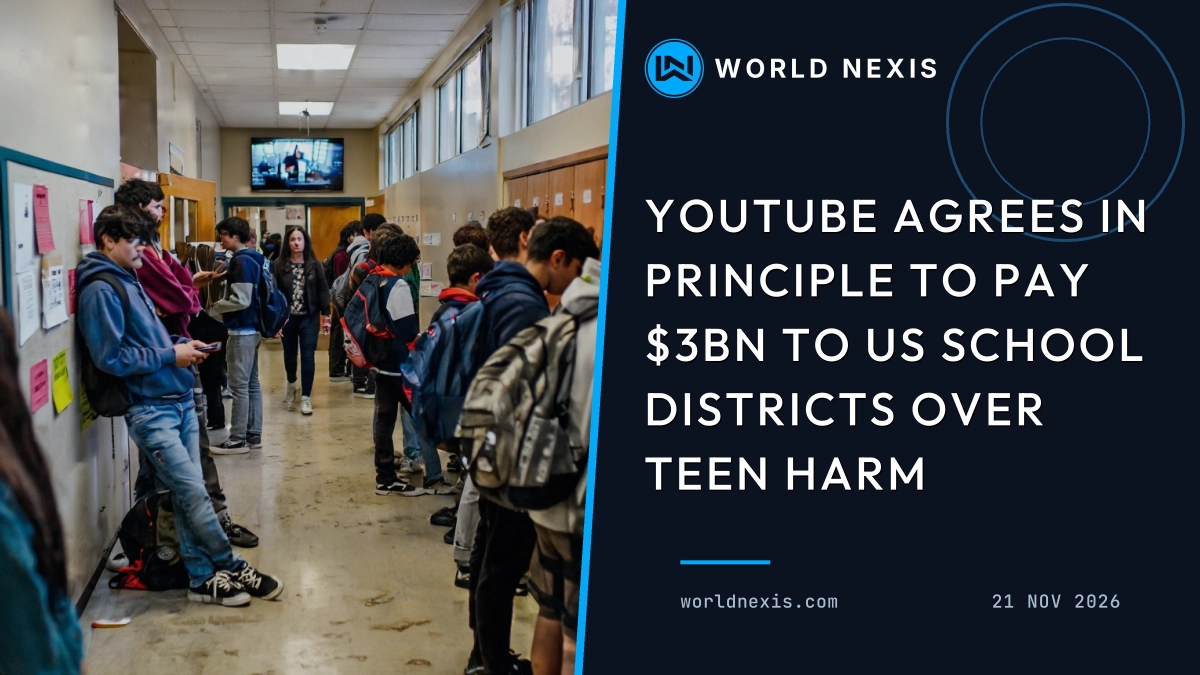
YouTube has reached an in-principle agreement to pay about $3 billion to thousands of US school districts, putting the largest YouTube settlement yet within reach and shifting the argument from cash to teen safeguards. The money would resolve claims that the platform’s recommendation systems, autoplay and infinite scroll were built to keep young viewers watching, and that the resulting compulsion contributed to depression, anxiety and eating disorders.
Key points
- YouTube has agreed in principle to pay roughly $3 billion to thousands of US school districts.
- The package includes product safeguards for teenagers and depends on a majority of districts signing on.
- US District Judge Yvonne Gonzalez Rogers in Oakland, California, must approve any final terms.
- Meta, TikTok and Snap remain defendants, with the next federal school trial set for February in Tucson, Arizona.
Inside the YouTube settlement: money, safeguards and timing
The agreement is contingent, not final. A majority of the districts involved must sign on before it takes effect, and finalization is expected to take a few months. Alphabet, YouTube’s parent company, did not respond to a request for comment.
Court approval is the second gate. Judge Gonzalez Rogers, who oversees the consolidated litigation in Oakland, would have to approve the YouTube settlement before any money moves. That gives her room to test whether the payout and the promised product changes are adequate, and to send the parties back if they are not.
The plaintiffs are not a single school. They range from New York City and Los Angeles to small rural systems, and they say addictive design lands on their budgets. They point to money spent enforcing phone bans and hiring mental-health staff, and they want both funding and design changes.
A YouTube settlement is awkward for schools that use the platform
YouTube differs from the other defendants in one obvious way: schools rely on it. Teachers assign videos, and districts run channels and livestream assemblies through it. The same service named in the complaints is also a classroom tool, which makes any demand to switch it off impractical.
The line between lesson and leisure is thin. A September survey of more than 2,000 high school students by the Thomas B. Fordham Institute found that over 30% used YouTube for entertainment rather than teacher-directed activities during the school day.
That finding sits at the center of the school districts lawsuit. If a large share of students are on the platform for fun during contact hours, the design of the feed becomes a school issue, not only a parenting one.
How the YouTube settlement compares with Meta’s $18bn deal
The reported figure is large but not the benchmark. In August, Meta agreed to pay up to $18 billion over the next decade and to strictly limit how teenagers use Facebook and Instagram, settling claims by nearly all US states.
That was a deal with state attorneys general, built around enforcement and reporting. The YouTube settlement would be struck with school districts, whose priorities are budgets, staffing and classroom disruption. Different plaintiffs tend to buy different things.
Why it matters
School budgets are tight, and the costs named in the litigation are ordinary ones: staff time spent policing phones, counselors hired late in the year, lessons broken up by a device that keeps suggesting the next video. Money from a settlement would land in the same accounts that pay for those things.
For families, the safeguards clause is the part felt at home. Teen mental health settings on YouTube would change on the phone in a child’s hand, not in a courtroom. A payout, however large, does nothing about the next autoplay.
Analysis
I think the safeguards clause is the real story, not the $3 billion. Having covered platform regulation for World Nexis News, I look first at what a company promises to stop doing, because that is the part that survives the news cycle. A headline number is easy to announce; a defined change to autoplay on a teen account is measurable.
The strongest counter-argument is that districts get certainty. This litigation has run for years, and a majority sign-on plus judicial approval turns a speculative verdict into funded counselors now. I do not dismiss that. Schools cannot staff a mental-health team with a pending appeal.
Even so, the evidence points one way: I side with the districts pressing for written design commitments rather than a bigger check. Meta’s $18 billion agreement shows that cash alone does not end the argument about how feeds work. The YouTube settlement will be judged on whether its safeguards carry dates, definitions and a way to check them, and I expect the other defendants to be measured against those terms.
What happens next
Signature collection comes first. A majority of districts must opt in, and the parties expect several months before terms are final. Judge Gonzalez Rogers then reviews the package in Oakland, and her approval is what converts an agreement in principle into an enforceable order.
The rest of the case continues in parallel. The next federal school trial, involving Tucson, Arizona, is set for February, with Meta, TikTok and Snap still defendants. Anything YouTube signs will be read closely by their lawyers and by districts still negotiating with them.
What we don’t know yet
The precise safeguards have not been published, and no per-district formula has been set out. It is also unclear whether YouTube admits any wrongdoing, or whether the money is structured on a long schedule like Meta’s decade-long payments. Alphabet has not commented publicly on the reported terms.
Related coverage
- Brexit reset deal: Burnham seals three major EU agreements
- Burnham EU deal: 100,000 visas in major Brexit reset
- Trump crypto wealth nears $3bn as Democrats vow probes
Further reading
- Judge approves $7.25bn Bayer payout to settle claims that Roundup causes cancer
- YouTube nears $3B settlement with school districts over addiction claims: report
About the author: Priya Nair is the Technology Correspondent at World Nexis News (WNN), covering technology. The analysis section reflects the writer’s view.

Priya Nair
Priya Nair is Technology Correspondent at World Nexis News, covering artificial intelligence, cybersecurity, consumer devices and the companies building them. Based in London, she explains how new technology works, who it affects and what the evidence actually shows, with attention to privacy, competition and the…