Black Friday scams: urgent warning over AI-cloned stores
Black Friday scams are surging as AI-cloned storefronts and poisoned chatbots push fake deals before 27 November. Here is how to spot and avoid them.
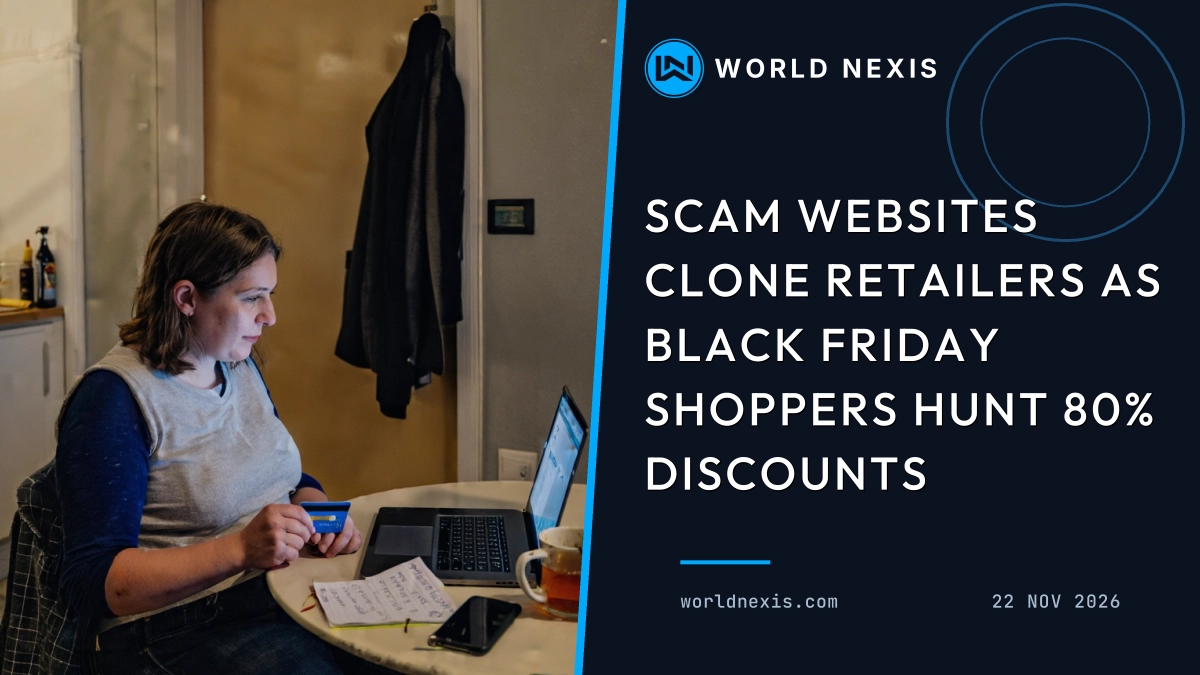
Black Friday scams are already building ahead of 27 November, with criminals using artificial intelligence to clone retailers’ websites and plant fake shops in chatbot answers. Norton, the antivirus company, expects the number of suspect sites to rise significantly as the gift-buying season reaches full swing. National Trading Standards has warned that fraudsters are now targeting the AI tools shoppers use to hunt for deals.
The cloned storefronts can look identical to the real thing, and many advertise discounts of up to 80% to tempt buyers searching for a coat, a phone or a hard-to-find gift.
Key points
- Norton expects a significant rise in suspect shopping sites as Black Friday scams peak between 27 November and Christmas.
- National Trading Standards says criminals are “poisoning” AI models such as ChatGPT so they recommend scam websites.
- Cloned stores copy real brands closely and often steer buyers towards bank transfer or cryptocurrency.
- Security experts advise checking the web address and treating very cheap, hard-to-find items as a warning sign.
Black Friday scams turn to AI-cloned storefronts
Cloned websites are frequently created using AI and can look identical to the real thing. The goods listed often carry enormous discounts, in some cases 80%, in a bid to lure people in. The web addresses are often convincingly similar to the brands they imitate.
This year’s Black Friday scams follow a template that repeats annually. Lookalike domains, cut-price goods and pressure to buy quickly all feature, and payment is where the trap closes.
Shoppers may be asked for card details, but they are usually directed to pay by bank transfer or cryptocurrency. Sometimes they are offered PayPal and then steered towards the “send to a friend” option, which they are told avoids fees.
Norton’s researchers say the pattern repeats every year. “The increase is clear every year at this time between Black Friday and Christmas,” said Luis Corrons, a security researcher at the company. Leyla Bilge, Norton’s global head of scam research, said younger shoppers should pay particular attention because they are more likely to meet scams on social media or to act on impulse.
“If a hard-to-find item suddenly turns up cheap from a seller you’ve never heard of, treat that as a warning sign rather than a stroke of luck,” she said.
How fake shopping websites reach buyers
Black Friday scams now surface in ordinary search results as well as in chatbot answers. These fake storefronts look like the real brand and often carry a similar web address. National Trading Standards has said criminals are “poisoning” AI models, such as ChatGPT, so that they produce scam sites in their results and recommend them to users.
Michael Vainshtein, a co-founder of the security firm Guardio, said the operators reach AI agents “the same way they reach people: through populating search results, Google ads and other paid ads, compromised sites and social posts pushing a hot sale”.
Red flags to check before paying
- Check the web address: legitimate UK retailers usually use .co.uk or .com, and extra words such as “official” or “deals” are a warning.
- Treat a checkout that only accepts bank transfer or cryptocurrency as an immediate red flag.
- Be suspicious of discounts far deeper than the brand’s own sale, especially on items that are normally hard to find.
The Co-operative Bank has launched a tool that lets people upload a suspicious text, email or website address to check whether it is safe. Anyone who has already handed over financial details should contact their bank and report the fraud.
Warnings are coming from other quarters too. Fire services have urged shoppers to steer clear of products that “seem too good to be true” as the discount season begins.
Why it matters
Black Friday scams land at the moment households are most willing to spend. A shopper who pays by bank transfer or cryptocurrency for a coat that never arrives has little practical route to a refund.
A cloned checkout can also hand card details to criminals long after the order is forgotten. Meanwhile, AI assistants have become an early stop for price comparisons, so a poisoned model can send many buyers to the same fake shop. The practical effect of Black Friday scams is that one tap can cost more than the discount was worth.
Analysis
Having covered cybercrime and AI policy for World Nexis News, I look first at how these sites get discovered rather than how they are built. The detail that matters is Guardio’s point that fake shops reach AI agents through the same paid ads and search rankings that reach us. In my view, that makes this an advertising and platform problem before it is a shopper problem.
The evidence supports the case for action before the peak weekend, not after. Norton and National Trading Standards have both described a Black Friday scams surge that arrives on schedule every year, so the industry has had plenty of warning. A shopper cannot audit a domain registration in the ten seconds between spotting a bargain and tapping pay.
The strongest counter-argument is that personal caution still does most of the work, and no filter will catch every clone site thrown up in a fortnight. That is fair as far as it goes, but it puts the burden on the people least able to carry it, including the younger impulse buyers Bilge warns about. I side with the researchers who want the recommendation layer cleaned up, because advice alone has not stopped this growing year after year.
What happens next
The Black Friday scams season now runs to Christmas, with 27 November the busiest day for bargain hunting. Norton expects the number of suspect sites to climb over the coming weeks. Shoppers who think they have been caught should contact their bank and report the fraud, and can flag sites that breach ChatGPT’s policies through the reporting form the service provides.
What we don’t know yet
No published figures yet show how many cloned stores are live this season or how much shoppers have lost. It is also unclear whether ad networks and chatbot operators will tighten checks on retail listings before the 27 November rush.
Related coverage
- California king tides: urgent flood warning for Thanksgiving
- Alice Webb inquest fallout: Black Friday BBL deals face safety backlash
- Cyber hygiene: 5 urgent steps as AI drives a patch surge
Further reading
About the author: Priya Nair is the Technology Correspondent at World Nexis News (WNN), covering technology. The analysis section reflects the writer’s view.

Priya Nair
Priya Nair is Technology Correspondent at World Nexis News, covering artificial intelligence, cybersecurity, consumer devices and the companies building them. Based in London, she explains how new technology works, who it affects and what the evidence actually shows, with attention to privacy, competition and the…