UK cold snap: temperatures to hit -10C on coldest night
The UK cold snap will bring the coldest night of autumn so far on Friday, with lows near minus 9C and cold health alerts across northern England.
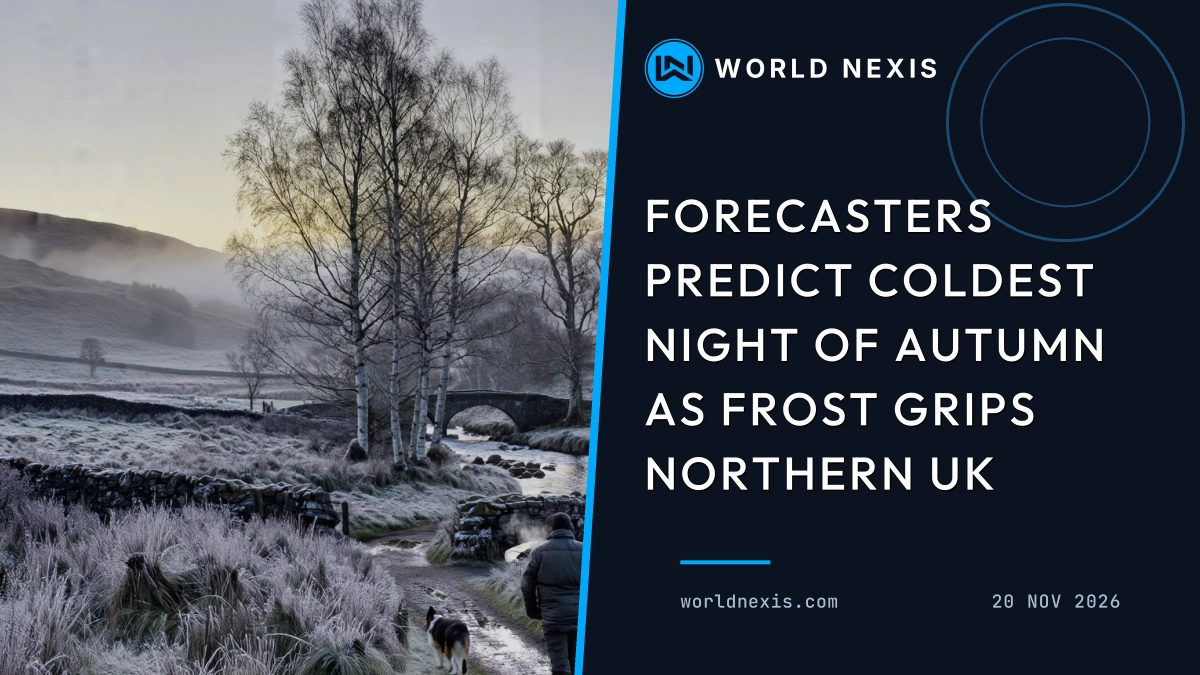
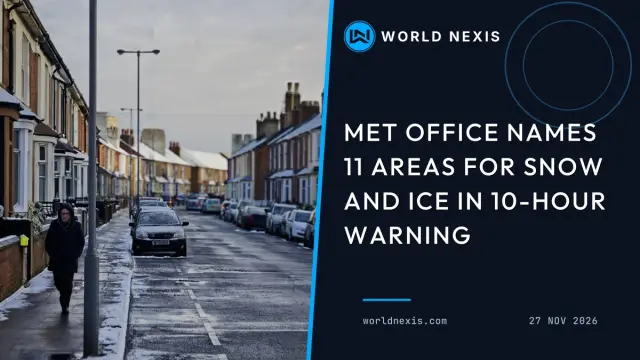
A UK cold snap will bring the coldest night of the autumn so far on Friday, with forecasters expecting lows of around minus 8C to minus 9C in sheltered rural parts of Scotland and far northern England. Thursday night had already set the seasonal benchmark when minus 8.4C was recorded at Tulloch Bridge in the Scottish Highlands. Clear skies will let frost spread southwards overnight, leaving much of the country below freezing by Saturday morning.
Key points
- Thursday night was the coldest of autumn so far, with minus 8.4C at Tulloch Bridge in the Highlands.
- Friday night is expected to be colder still, with lows of minus 8C to minus 9C in sheltered rural areas of Scotland and far northern England.
- Yellow cold health alerts cover the North West, North East and Yorkshire and the Humber until 9am on Monday.
- Twelve flood alerts remain in place for England after a spell of wet weather.
UK cold snap brings widespread frost overnight
The colder air arrived through Friday as cloud cleared and a northerly wind took hold across most of the country. Matthew Lehnert, the Met Office’s chief forecaster, said: “Tonight will be very cold across the UK, with largely clear skies allowing a widespread frost to develop.”
He said the sharpest falls would come inland and away from the coasts. “The lowest temperatures are expected in sheltered rural parts of Scotland and far northern England, with lows of around minus 8C or minus 9C,” he added.
The UK cold snap is not confined to the north. Meteorologist Clare Nasir said: “It will be severe in the north, so we could see temperatures as low as around minus 8C, minus 9C in one or two glens. And, farther south, we’re expecting some sub-zero temperatures.”
Freezing fog is a second hazard. Lehnert said: “Patches of freezing fog could also form overnight, particularly across Northern Ireland, eastern England and around the Solway Firth, with isolated patches of dense fog possible further south.”
Forecasters expect the frost to reach widely across the Midlands, Northern Ireland and Scotland, after southern areas held on to milder air for much of the week.
Saturday should bring some relief. “After a cold and frosty start on Saturday, most places will enjoy a largely dry and bright day,” Lehnert said. “It will stay chilly, particularly in northeastern parts of the UK, while temperatures in the South West will be closer to average.”
Cold health alerts remain in force across the north
Public health officials are watching the UK cold snap more closely than the temperature charts. A yellow cold health alert is in force for the North West, North East and Yorkshire and the Humber until 9am on Monday.
Yellow alerts are the middle tier of the system, indicating a moderate likelihood and level of impact rather than a certainty of severe harm. Even so, the UK Health Security Agency warns that conditions of this kind can increase the use of healthcare services and raise the risk to life for vulnerable people.
The alerts follow the first snow warning of the season, with more than an inch of snow recorded in parts of northern England on Tuesday. Twelve flood alerts, meaning flooding is possible, are also in place for England after a spell of wet weather.
Why it matters
For ordinary households, the practical consequences of the UK cold snap are concentrated overnight: hard frost, patches of freezing fog and a genuine health risk for older people and those already unwell. Because the cold health alert runs until Monday morning, the next three nights matter more than Friday’s daytime temperatures.
The UK cold snap also lands at an awkward moment for the health service, which the alert system exists to protect. The warning is not a forecast of catastrophe; it is a prompt for hospitals, care providers and community groups to check on the people most exposed.
Analysis
Having covered extreme weather and its consequences for public services for World Nexis News, I look first at the alerts rather than the thermometer. In my view the most significant line in Friday’s Met Office forecast is not minus 8C or minus 9C; it is the cold health alert covering three English regions until Monday morning. That designation exists because the weather is expected to increase demand on health services and raise the risk to vulnerable people, and it is the test of whether a warning turns into protection.
I would push back on any framing that treats this as a temperature contest. A hard November frost in the Highlands is not, on its own, extraordinary, and readers would be right to shrug at a headline built only on a number. What is not routine is three regions entering a stretch of cold that the UK Health Security Agency says could put extra strain on hospitals, care homes and GP services. The people most exposed are older residents, those with existing heart and lung conditions, and anyone living in a home that is hard to heat.
The strongest counter-argument is that cold snaps are exactly what late November delivers, so treating every frost as a crisis risks crying wolf. I accept that, and I would not want a normal seasonal chill dressed up as a disaster. But this alert is time-limited and region-specific, which is precisely the kind of targeted warning that should be judged on whether councils, hospitals and community groups act before Monday, not on how dramatic the number looks.
What happens next
The cold health alerts expire at 9am on Monday. Before then, forecasters expect Saturday to start cold and frosty but turn largely dry and bright for most places, with the chill lingering in north-eastern parts and the South West closer to average.
Twelve flood alerts, warning that flooding is possible, are still in place for England after recent wet weather, and more overnight frost is likely over the weekend.
What we don’t know yet
Forecasters are still working out how low temperatures will go in individual glens, and it is not yet clear how far south the sharpest frost will reach overnight. Whether the cold health alerts will be extended beyond Monday morning has also not been confirmed.
Related coverage
- FAA ground stop: 12,400 flights hit as chief says blame me
- Carbon farming award: 430-farm breakthrough lands top prize
Further reading
- UK weather: Temperatures to drop to -10C on coldest night of autumn
- Friday night will be ‘coldest of the autumn so far’, UK forecasters say
About the author: Hannah Lindqvist is the Climate & Environment Reporter at World Nexis News (WNN), covering climate & environment. The analysis section reflects the writer’s view.

Hannah Lindqvist
Hannah Lindqvist is Climate & Environment Reporter at World Nexis News, based in London. She covers climate policy, extreme weather, the energy transition, conservation and climate finance, grounding stories in scientific research, official data and documented commitments rather than slogans. She is interested in how…