Fred Nile state funeral call dropped after LGBTQI backlash
The Fred Nile state funeral call has been withdrawn by independent NSW MP Alex Greenwich after an LGBTQI backlash, as Premier Chris Minns rules one out.
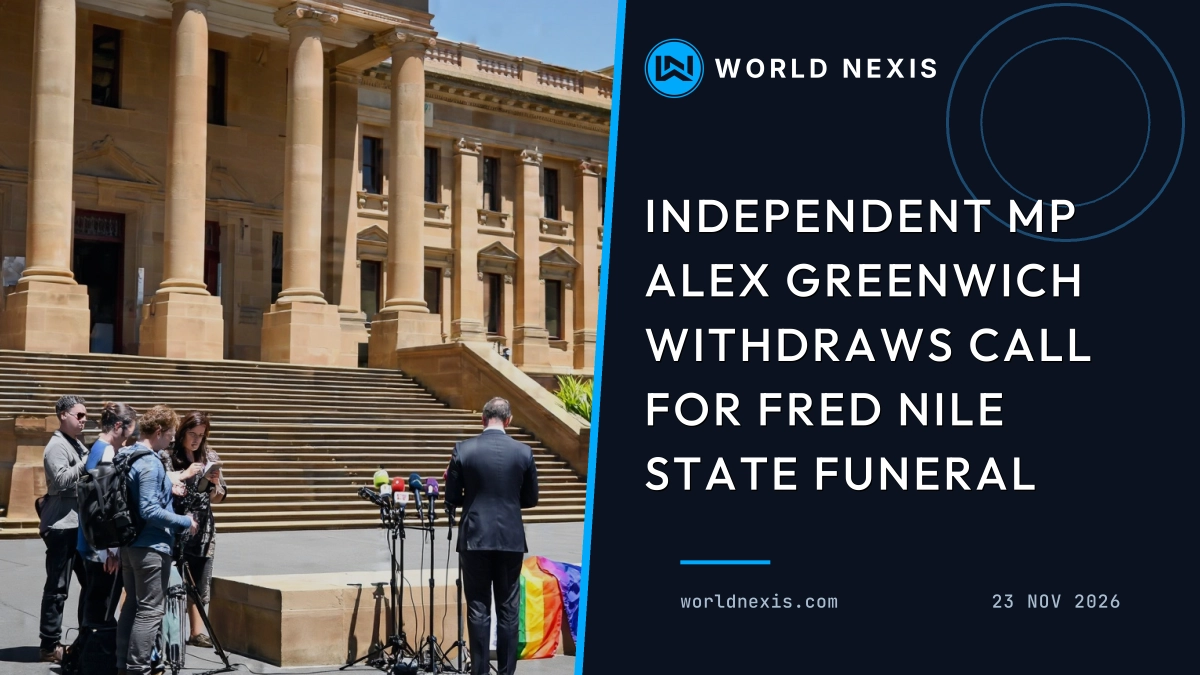
The Fred Nile state funeral call has been dropped by the independent NSW MP who made it, two days after the veteran Christian politician’s death triggered an outcry from LGBTQI Australians. Alex Greenwich, whose Sydney electorate includes the Oxford Street gay heartland, praised Reverend Nile on Sunday and asked the New South Wales government for a state service. He apologised and withdrew the request on Monday, saying he had listened to the community.
Reverend Nile died on Saturday. He spent more than 40 years in the NSW Legislative Council, making him the longest serving MP in Australia’s oldest parliament, and he built his public reputation on conservative Christian values and opposition to drug use, gay marriage and abortion.
Key points
- Reverend Fred Nile, an ordained Christian minister and NSW upper house member for more than four decades, died on Saturday.
- Independent MP Alex Greenwich suggested a state funeral on Sunday and withdrew the call on Monday after a backlash.
- Premier Chris Minns told reporters on Monday that the government was not considering a state funeral.
- Critics point to Nile’s campaigns against gay rights, including during the 1980s AIDS epidemic and at Sydney’s Mardi Gras.
How the Fred Nile state funeral call unravelled
Mr Greenwich’s first tribute was warm. He spoke of constructive work with the reverend towards the end of his life and suggested the government mark the death with a state service. Within a day, the reaction from LGBTQI groups and individual voters turned the gesture into a political problem.
The anger focused on the 1980s, when Nile campaigned hardest during the AIDS epidemic. He argued that gay men returning to Australia from a conference in San Francisco should be placed into forced quarantine. He also spent decades attacking Sydney’s Gay and Lesbian Mardi Gras, famously praying for rain before the parade each year as a punishment for those who attended.
The apology
On Monday the MP issued a short statement on social media and pulled the request.
“I’m sorry. I’ve listened, read your comments and emails, and recognise that my requests for a state service for Rev Fred Nile caused hurt and distress, particularly within the LGBTQ community,” Mr Greenwich said on Monday.
“While we worked constructively together towards the end of his life, and he apologised for past harm and supported LGBTQ reforms, this does not erase the pain and discrimination caused by his earlier campaigns.”
In the same post, the MP, one of the strongest gay rights advocates in Australian politics, said he would “always seek to change minds and work across political divides to advance equality”.
The Alex Greenwich apology closed the question quickly. Premier Chris Minns, asked by reporters on Monday, said his government was not considering a state funeral for Nile either, so the proposal now has no backer in Macquarie Street.
Nile’s record: four decades in the upper house
Nile arrived in the Legislative Council as an ordained minister and stayed for more than 40 years, a tenure no other MP in Australia’s oldest parliament has matched. His causes ranged widely. He opposed drug use, gay marriage and abortion, and he also championed Aboriginal heritage rights.
His remarks about gay Australians were repeated and public. Beyond the quarantine proposal, he criticised Labor senator Penny Wong in 2011 for announcing that her partner was pregnant, accusing her of “promoting their lesbian lifestyle and trying to make it natural where it’s unnatural”.
Former prime minister Tony Abbott paid tribute late on Sunday, describing Nile as a “God, King and Country conservative”. State funerals have recently been held for other divisive political and media figures, including Labor powerbroker Graham Richardson and shock jock John Laws, to the chagrin of many.
Why it matters
A state funeral is not a private courtesy. It spends public money and sends a public signal about which lives the state chooses to honour. That is why the Fred Nile state funeral proposal landed so badly with older gay men who lived through the AIDS years, when Nile’s words carried real weight in the public debate.
The episode also tests how NSW handles the death of a parliamentarian who was both a record-breaking legislator and a long-running campaigner against a minority. Politicians now have a recent example of how quickly a well-meant tribute can be read as a verdict on whose pain counts.
Analysis
Having covered Australian and Pacific politics for World Nexis News, I look first at what a state funeral actually does. It is the state speaking, not a family, and it says that a life of public service deserves public honour. On that test, I think the LGBTQI Australians who objected had the stronger argument. Nile’s campaigns against gay men were not a footnote to a long career; they were a central part of how he built and kept his public profile, and they continued for decades.
I also think Greenwich was right to withdraw, and right to say so plainly. His original instinct, that you can work with people whose views you find repellent and mark their death with civility, came from a decent place. It simply misjudged the weight of the office he was asking for. The strongest counter-argument is that Nile apologised for past harm and backed LGBTQ reforms late in life, and that death deserves restraint; that carries some weight, but a private condolence can hold it without the government’s seal.
What I will watch is whether this becomes a template. Australian leaders are usually reluctant to say a funeral is off the table, and Minns has now done exactly that. If the precedent holds, future governments may have to explain publicly why a controversial figure does or does not merit a state service, rather than settling it quietly among themselves.
What happens next
No state funeral is planned for Nile, according to the premier, and the family’s arrangements have not been made public. Greenwich has said he will keep working across political divides on equality issues, and he faces no formal sanction over the request he withdrew.
What we don’t know yet
It is not yet clear what form of memorial or church service will be held, or whether the premier’s position will shift if Nile’s former colleagues press the case. The size and cost of any official commemoration also remain open, as does the reaction of Mardi Gras organisers in the coming days.
Related coverage
- Molly Meldrum dies aged 83 as Australia plans state funeral
- Molly Meldrum state funeral announced as Australia mourns Countdown host
- Arizona Kansas State: Fifita seals 35-28 overtime thriller
Further reading
- Divisive MP’s memorial call ditched after LGBTQI outcry
- Divisive MP’s memorial call ditched after LGBTQI outcry
About the author: Marcus Ellington is the International Correspondent at World Nexis News (WNN), covering world affairs. The analysis section reflects the writer’s view.

Marcus Ellington
Marcus Ellington is International Correspondent at World Nexis News, reporting on diplomacy, conflict and the political forces reshaping Europe, the Middle East, Asia and the Americas. Based in London, he focuses on explaining why events unfold as they do, using official statements, diplomatic documents and…



