Overdose deaths at 10-year low as White House claims credit
US overdose deaths have fallen to a 10-year low, but the White House credits Trump-era policy while CDC data show the decline began in 2023 under Biden.
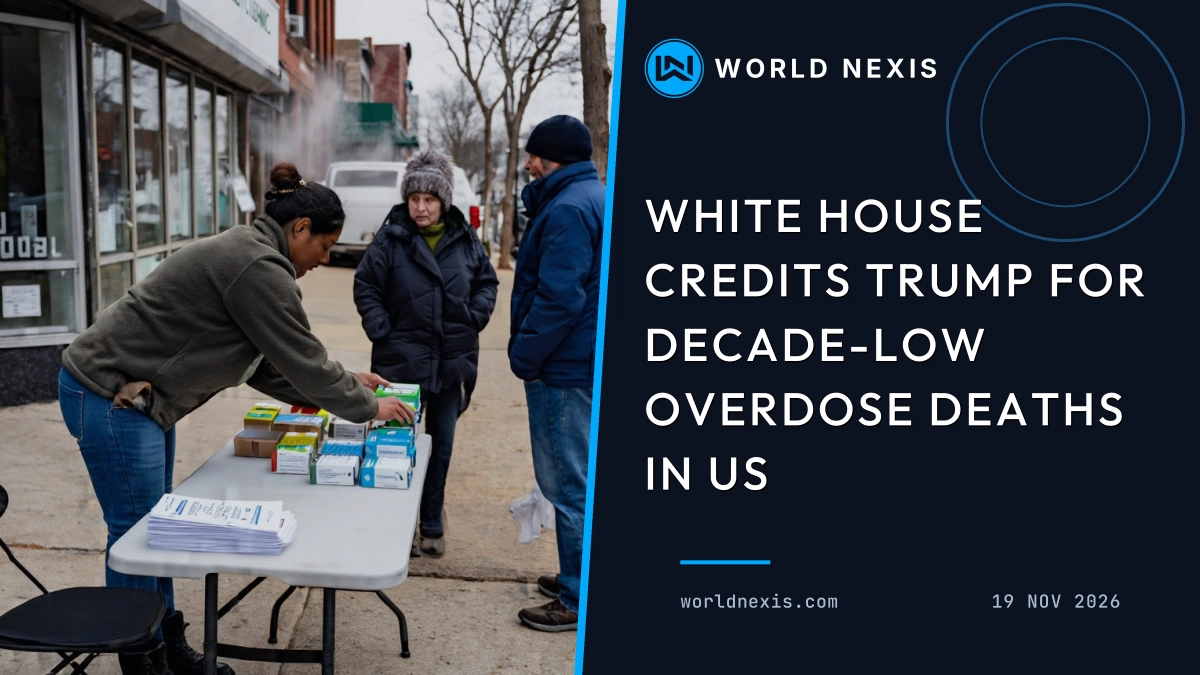
US overdose deaths have fallen to their lowest level in roughly a decade, with federal figures pointing to nearly 50,000 fewer fatalities a year — and the argument over who earned that decline has become a political fight of its own. The White House Office of National Drug Control Policy said this week that the improvement came mainly in the past 18 months under President Donald Trump. Drug policy researchers say the fall in overdose deaths actually began in 2023 under Joe Biden and has now run for at least 39 consecutive months.
Key points
- Centers for Disease Control and Prevention data show US drug deaths at their lowest level in about a decade, saving nearly 50,000 lives each year.
- The White House credits border security and operations against cartels under Trump for most of the gain.
- CDC figures show the decline started in 2023, and fatal overdoses had already dropped by about a third before Biden left office.
- Fentanyl remains the leading cause of drug deaths nationwide.
Overdose deaths decline began in 2023, figures show
The administration’s statement placed the turning point in early 2025, after Trump returned to the White House. The CDC series does not support that timeline. Reductions in drug deaths started in 2023 and have continued steadily for at least 39 consecutive months, not the 18 months described by the drug control office.
By the end of Biden’s term, fatal overdoses had already fallen by roughly one-third. Addiction experts described that improvement at the time as unprecedented. Nabarun Dasgupta, a street drug researcher at the University of North Carolina at Chapel Hill, was among the first scientists to detect the shift.
He said the change surfaced in some regions and demographic groups as early as 2021, then gathered pace nationwide. “It was really the period early 2024 through spring 2025 where we were seeing the greatest rate of decline that we’ve ever seen,” Dasgupta said.
The longer fentanyl history
Fentanyl smuggled from Mexico began driving deaths upward in 2013, during Barack Obama’s presidency, and the trend accelerated in Trump’s first term. Overdoses spiked sharply in Biden’s first two years, when the COVID-19 pandemic disrupted treatment and supply chains.
White House credits border security for falling overdose deaths
Sara Carter, director of the White House Office of National Drug Control Policy, framed the numbers as a decisive win. “The historic decline in drug overdose deaths demonstrates that America is unequivocally winning the fight against illicit drugs,” she said in a statement.
Carter pointed to tighter border enforcement under Trump and to operations against what she called “narco-terrorist” organizations. She also said the figures represent “an approximately 41.5% decrease in total drug overdose deaths compared to the peak under the previous administration.”
What researchers say drove the drop
Vanda Felbab-Brown, a drug policy expert at the Brookings Institution, said the pattern is longer and steadier than the White House suggests. “Since the spring of 2023, we have seen a steady decline in overdose deaths,” she said. “The fact that it has been sustained is very important.”
Researchers credit the Biden administration with widening access to health care and making the overdose-reversal drug naloxone easier to obtain. They also point to a November 2023 deal with China, struck on the sidelines of the Asia-Pacific Economic Cooperation summit in Woodside, California, in which Xi Jinping agreed to curb shipments of the industrial chemicals used to make fentanyl.
Felbab-Brown said interdiction efforts against Mexican cartels stretch back further than the current administration. “We have certainly been seeing over many years, going back to the Biden administration, important efforts to crack down against them,” she said.
Why it matters
A falling overdose curve is one of the few genuinely good public health stories in the US right now, and the scale of it is close to 50,000 lives a year. For families who have lost someone to fentanyl, the difference is measured in households rather than percentages.
Credit also carries money and policy weight. An administration that can claim a historic win is better placed to defend its border and enforcement budget, and to set the terms of the treatment and naloxone funding debate that follows. That is why the dating of the fall in overdose deaths is not a technicality.
Analysis
Having covered accountability reporting for World Nexis News, I look first at the timeline, because timelines are hard to spin. The CDC curve is a public series: overdose deaths turned down in 2023 and kept falling. The White House’s 18-month framing does not survive that comparison, and the 41.5% figure is measured from a peak that occurred under Biden, which flatters the current administration.
I side with Felbab-Brown and Dasgupta here. The evidence supports a story of sustained, multi-year progress built on naloxone access, wider treatment and a supply shock from Chinese precursor controls, most of it in place before Trump returned. That does not mean the current White House did nothing. Border seizures and cartel operations plausibly help hold the line, and a fair reading lets the administration claim some credit for not reversing course.
But claiming the cause is different from inheriting the trend, and it matters because false credit tends to justify the wrong policies. The strongest counter-argument is that supply is decisive in drug policy, and precursor controls only bite while enforcement keeps the pressure on. Even granting that, the drug control office’s own numbers show the decline was already two years old before this administration began.
What happens next
The sources set out no hearings, votes or deadlines on this dispute. The argument will instead run through the next releases of federal mortality figures and through the administration’s public messaging. Both researchers say the improvement in drug mortality has continued, which means coming data points will test the White House’s story rather than settle it.
What we don’t know yet
It is unclear whether the decline can be sustained while fentanyl remains the leading cause of drug deaths nationwide. The drug control office has not said how it will answer the researchers’ critique of its timeline. Whether treatment and naloxone funding hold at current levels is also unresolved.
Related coverage
- US embassy warning: citizens told to keep low profile
- GTA 6 launch: record $1.5bn pre-sales end 13-year wait
- Cambridge Word of the Year 2026: ‘human’ wins amid AI fears
Further reading
- As overdose deaths fall, White House makes misleading claims about who deserves credit
- As overdose deaths fall, White House makes misleading claims about who deserves credit
About the author: Ayesha Rahman is the Senior Political Correspondent & Columnist at World Nexis News (WNN), covering politics & opinion. The analysis section reflects the writer’s view.

Ayesha Rahman
Ayesha Rahman covers politics and opinion for World Nexis News from London, focusing on elections, legislatures and the policy choices that shape everyday life in the US and UK. She writes analysis and columns that separate what is confirmed from what is claimed, working from…



