DEA fentanyl pills: 1.4 million left to flow in major probe
DEA fentanyl pills: investigators found at least 1.4 million doses were allowed to reach the streets of New Mexico as agents built a record case.
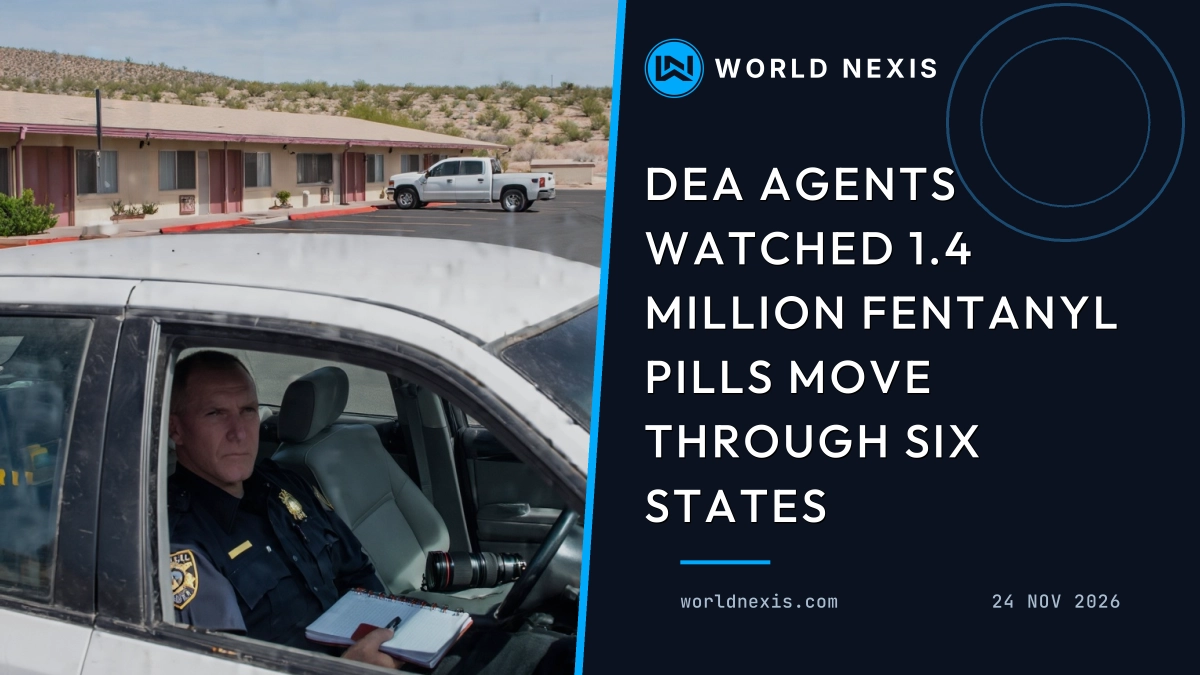
A DEA fentanyl pills scandal widened on Monday. New findings show federal agents let at least 1.4 million doses of the opioid be trafficked between August 2024 and April 2025. The surveillance continued while the agency closed in on the largest fentanyl case in American history.
Court records, wiretap reports and surveillance footage show agents in New Mexico and five other states watching deals without moving in. Federal and state authorities are now examining a strategy that left lethal counterfeit painkillers on the street in the name of a bigger prosecution.
Key points
- At least 1.4 million DEA fentanyl pills moved to the street while agents watched, on top of hundreds of thousands disclosed in New Mexico earlier this year.
- Dealers used plastic bins and duffel bags in hotels, apartment complexes, short-term rentals and self-storage units across six states.
- The Justice Department told agents in 2017 to seize fentanyl whenever it was “practicable”, then loosened the rules in 2024.
- A DEA whistleblower and a former senior executive at the agency say the risk was not worth the case.
How the DEA fentanyl pills moved through six states
The pattern was set on a Sunday afternoon in August 2024 in Albuquerque. Agents staked out the parking lot and lobby of a Home2 Suites hotel while a surveillance plane circled overhead. At 2:24 p.m. a buyer pulled up in a white pickup, greeted a courier with a mohawk and walked inside.
Eight minutes later the two men left separately. One carried a backpack holding as many as 100,000 potentially lethal counterfeit pills. Nobody intervened, and eight months passed before agents dismantled the ring that was flooding the Southwest.
A tally built from wiretaps and video
The DEA fentanyl pills total rests on thousands of pages of court records, detailed wiretap reports and 12 hours of surveillance footage. Packages passed through heavily used hotels, apartment complexes, short-term rentals and self-storage facilities. Agents logged the deliveries but did not take the drugs.
The DEA fentanyl pills figure is a floor, not a ceiling. Deals mentioned in the records without specific pill counts, and transactions agents did not watch, were left out of the tally.
Why fentanyl was meant to be different
Letting drugs “walk” is an old investigative technique. Agents have long allowed shipments of cocaine, heroin and marijuana to continue under strict surveillance rather than spook bigger targets. Fentanyl was supposed to be exempt because of its extraordinary danger, and the agency spent years running a campaign built on the slogan “One Pill Can Kill”.
In 2017 the Justice Department instructed agents to seize the drug whenever it was “practicable”, since even unintentional contact can prove deadly. Officials loosened that guidance in 2024 to give agents more discretion. The change followed questions from a DEA whistleblower, David Howell, about the morality and effectiveness of letting fentanyl reach the street.
The DEA has previously denied ever knowingly allowing fentanyl to be trafficked. The new DEA fentanyl pills findings sit badly with that denial. “Agents are driving around in a car plastered with ‘One Pill Can Kill’ and at the same time walking hundreds of thousands of pills of fentanyl,” said Kevin Small, a former colleague of Howell.
Brian Besser, a former DEA senior executive who oversaw the agency’s Rocky Mountain division, said the gamble was not worth taking. “Everybody wants the big fish, but the big fish isn’t guaranteed,” he said. “When you’re dealing with a substance that can take this much human life, you can’t gamble like that.”
Why it matters
The United States is still reeling from an epidemic of opioid overdose deaths. Counterfeit fentanyl pills sit at the center of it, and they move through the same motels and storage lockers named in the logs. The DEA fentanyl pills findings therefore land on household safety, not on a bureaucratic argument about case-building.
The second consequence is trust. Prosecutors ask juries to accept that Washington treats fentanyl as uniquely deadly, and the White House calls it a weapon of mass destruction. When the fentanyl trafficking investigation’s own records show agents letting the drug move through six states, that argument gets harder.
Analysis
Having covered breaking news and verification for World Nexis News, I read documents like these for one thing first: whether the surveillance was disciplined. The records suggest it was. That is not the same as safe.
In my view the critics have the stronger case. The DEA drug walking tactic can be defended when the contraband is recoverable and the harm stays contained; fentanyl defeats both conditions. Pills are tiny, easily divided and impossible to recall once they leave a hotel lobby.
The counter-argument deserves a hearing. Agents did eventually dismantle the ring behind the largest fentanyl bust in American history, and a bigger case can mean wider charges. But that trade only works if nobody dies in the interval, and no agency can promise that.
What unsettles me most is the gap between message and practice. The same agency that printed “One Pill Can Kill” loosened the rule that kept its own agents from letting the pills walk. My reading of the DEA fentanyl pills record is that the tactic was used far more widely than the public knew.
What happens next
Federal and state authorities are already scrutinizing the strategy. That review began with earlier disclosures about New Mexico cases and has widened with the new tally. The prosecution of the trafficking ring remains the centerpiece of the government’s case.
The DEA fentanyl pills surveillance record will now be examined by investigators outside the agency. Defense lawyers will also comb it for flaws. The open policy question is whether the 2024 discretion guidance survives.
What we don’t know yet
Nobody has established how many of the 1.4 million pills reached users, or how many overdoses followed. It is also unclear whether the agency will revise its guidance. Nor is it settled whether the state and federal reviews will publish findings or stay internal.
Related coverage
- Medicare open enrollment 2027: 4 million face major shift
- ICE arrests spark major backlash after 3 high-profile cases
- ICE airport arrest of two sparks major Seattle outcry
Further reading
- Democrats probe whether Trump Jr.-aligned businesses benefit from government access
- AP investigation: The DEA allowed 1.4 million fentanyl pills to go unseized in major probe
About the author: Tariq Al-Mansoori is the Breaking News Reporter at World Nexis News (WNN), covering breaking news. The analysis section reflects the writer’s view.

Tariq Al-Mansoori
Tariq Al-Mansoori is a Breaking News Reporter at World Nexis News, covering major incidents, official statements and developing stories across the UK, US and internationally. Based in London, he works to confirm details before publication, attributes information to named sources where possible and updates stories…



