South East Water loss hits £22.9m after supply failures
South East Water loss hits £22.9m for the six months to September 30, as Ofwat redress and a £29m summer heatwave bill push the supplier into the red.
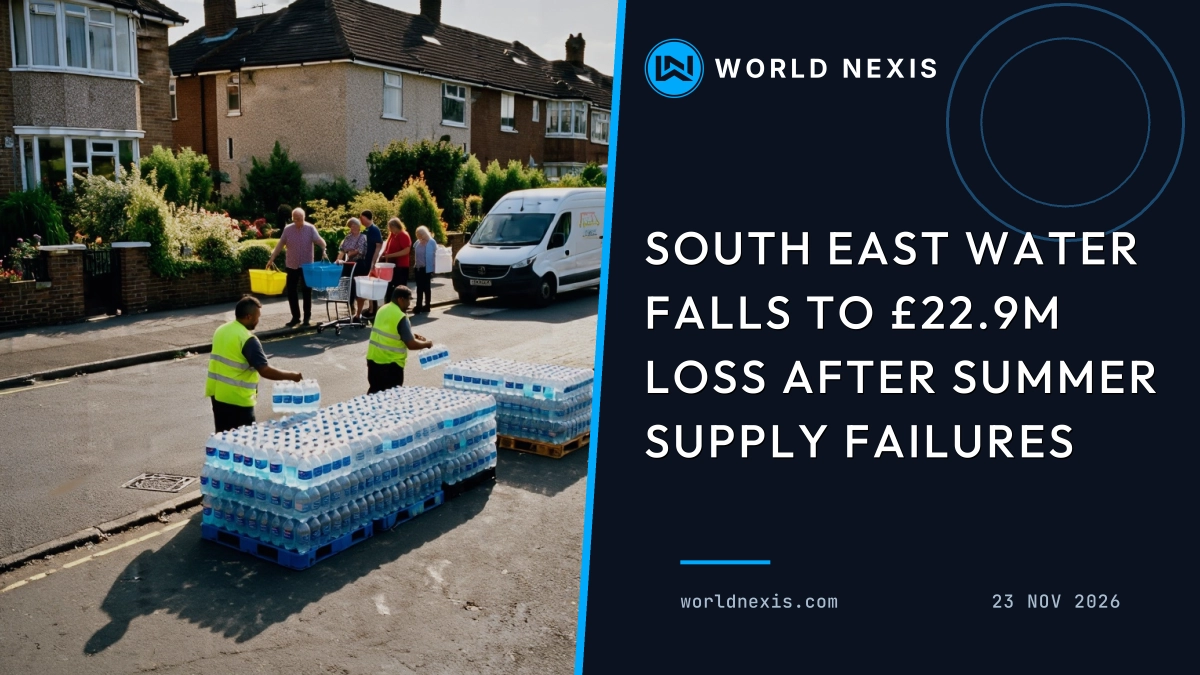
South East Water loss hit £22.9 million before tax in the six months to September 30, the supplier has confirmed, swinging from an £18.2 million profit a year earlier. The company, which serves around 2.4 million customers across the south east of England, blamed regulatory redress and the cost of repeated supply failures.
Key points
- The South East Water loss of £22.9 million covers the half year to September 30, against an £18.2 million profit a year earlier.
- Ofwat ordered the company to pay £30.5 million in July over three investigations into outages between 2020 and 2023.
- A further £29 million went on emergency support during this summer’s heatwaves in Kent and Sussex.
- Shareholders injected £50 million in October, and Richard Morse becomes chairman on December 3.
South East Water loss follows a £30.5m settlement with Ofwat
The South East Water Ofwat fine of £30.5 million, ordered in July, settled three investigations into supply interruptions between 2020 and 2023. Those South East Water supply outages affected more than 286,000 people.
In its first-half accounts, the company set aside a £14.6 million provision for the redress package. The six-month period also includes this summer’s heatwaves, so emergency costs and the redress charge land in the same set of figures.
Those two charges sit at the heart of the South East Water loss. Redress payments are designed to return money to customers who lost supply, and they hit the income statement directly.
Summer outages in Kent and Sussex cost another £29m
Repeated outages across parts of Kent and Sussex during this summer’s heatwaves added £29 million to the bill. The money covered emergency support, including bottled water stations and compensation for affected households.
That is a heavy sum for a regional supplier to absorb in one season. The spending was also unavoidable once households had lost supply.
Tankers, bottled water and payments had to be arranged at short notice while customers were already cut off. Emergency responses of that kind protect public health, but they do nothing to fix the pipes.
Fresh capital and a new leadership team
In October the group tapped shareholders for £50 million. It had warned in the summer that it needed fresh financing to stay afloat.
John Halsall was appointed chief executive earlier this year. His predecessor, David Hinton, and former chairman Chris Train stepped down after a scathing report by MPs into the outages, in which the MPs said they had “no confidence” in the company’s leadership.
Richard Morse has been named as incoming chairman. He takes over from interim chairwoman Lisa Clement on December 3.
“We know that customers will not judge us on the number of initiatives we launch or the promises we make. They will judge us on whether their water supply is more reliable, whether we communicate better and whether we provide the right support when they need it – we look forward to providing the evidence in future results.”
The company said it was seeing the “early signs of improvement” after its management overhaul and promised a “significant transformation”. It added that the full benefits will take time.
Why it matters
For households in Kent, Sussex and the wider south east, the figures translate into a simple question: will the taps stay on next summer? Reliability is not abstract when a cut means no washing, no cooking and a trip to a bottled water station.
The South East Water loss also matters for what it leaves unspent. A £22.9 million loss, a £30.5 million penalty and a £50 million shareholder injection leave less headroom for the pipe repairs and new storage that prevent outages. Customers end up funding both the failures and the fixes.
Analysis
Covering public services for World Nexis News, I read results like these as a service story first and a finance story second. The South East Water loss confirms what residents in Kent and Sussex already knew: the failures were real, they were repeated, and they now carry a price. I side with the regulator and with customers on this. A company that leaves more than 286,000 people without water across three separate episodes should expect to pay redress.
The strongest counter-argument is that penalties and emergency costs drain the same pot of money meant for resilience, and that a new management team deserves room to rebuild. There is something in that. But it holds only if the money visibly reaches the network rather than being swallowed by firefighting.
So I would watch one number in the next results: how much capital actually lands in infrastructure. The company says customers will “judge us on whether their water supply is more reliable”, which is the right test. Until the taps hold through a hot summer, “early signs of improvement” is a claim rather than evidence.
What happens next
Richard Morse becomes chairman on December 3, replacing interim chairwoman Lisa Clement, with John Halsall already in place as chief executive. The company has promised to provide evidence of improvement in future results, and the next set of figures will show whether the South East Water loss was a one-off.
What we don’t know yet
It is unclear whether this summer’s outages will lead to further enforcement action, or whether the £50 million raised in October is enough to fund the investment promised. Repairs across Kent and Sussex are the measure customers will apply.
Related coverage
- East Lothian car theft: urgent appeal after woman, 44, hurt
- UK cold snap: coldest night since January hits minus 10.6C
- Alastair Campbell speech: media told to be braver
Further reading
- South East Water slumps to loss after hefty bill from supply failures
- South East Water slumps to loss after hefty bill from supply failures
About the author: Liam O’Connor is the UK Politics Reporter at World Nexis News (WNN), covering uk politics. The analysis section reflects the writer’s view.

Liam O'Connor
Liam O'Connor is UK Politics Reporter at World Nexis News, covering Westminster, devolved politics and the issues that matter to voters across England, Scotland, Wales and Northern Ireland. Based in London, he reports from primary sources — Hansard, official statements, published data — and explains…



