Huw Edwards documentary: Channel 4 defiant over backlash
Channel 4 says its Huw Edwards documentary does not grant the disgraced newsreader redemption, as Downing Street and abuse survivors criticise the film.
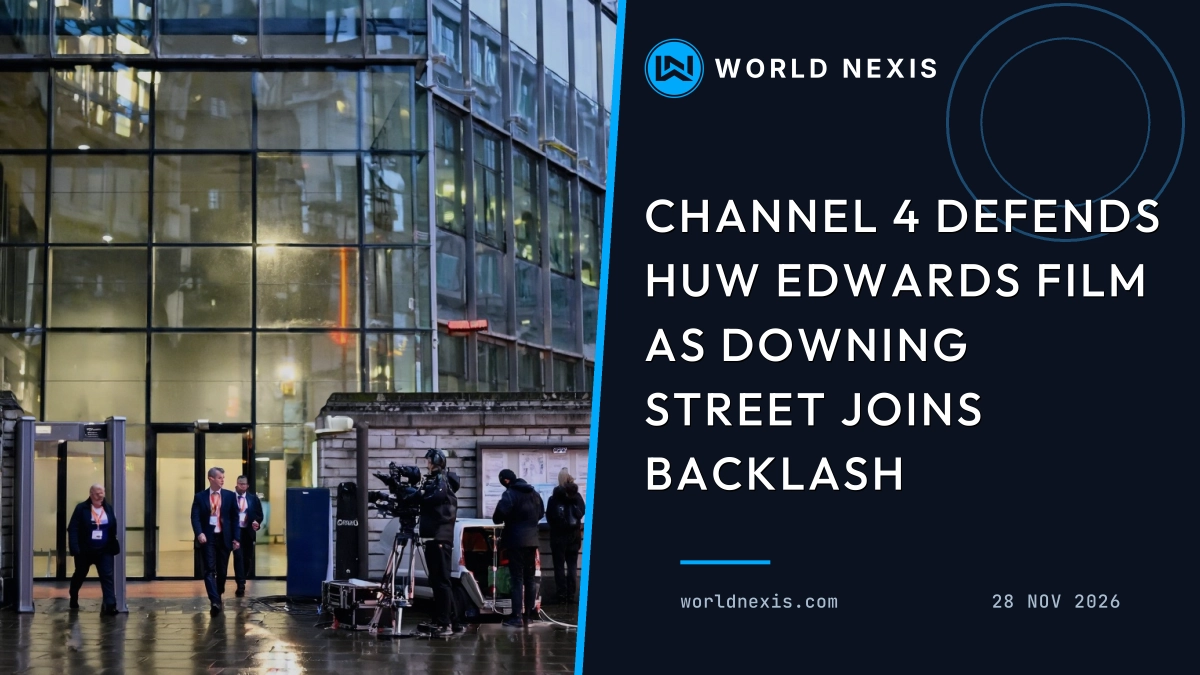
Channel 4 has defended its Huw Edwards documentary after a backlash from Downing Street and campaigners for abuse survivors. The broadcaster insists the film does not give the disgraced former BBC newsreader “sympathy, redemption or rehabilitation”. Huw Edwards – Guilty airs on Tuesday and follows the former newsreader in the wake of his conviction for making indecent images of children.
Key points
- Channel 4’s Huw Edwards documentary, Guilty, is due to be broadcast on Tuesday
- Edwards admitted three counts of making indecent images of children in July 2024 and received a suspended six-month sentence
- Downing Street said it had “no interest in hearing” from him and told broadcasters to “act responsibly”
- Channel 4 says Edwards was not paid, had no control over the film and faced no limits on the questions put to him
Channel 4 defends Huw Edwards documentary amid backlash
Channel 4 set out its case in a detailed statement from Louisa Compton, its director of news, digital and audience. She said it was “reasonable to ask why Channel 4 has made this film, and why now”. A public service broadcaster, she argued, must balance the public interest in questioning powerful people against the impact on audiences, “and particularly on victims and survivors of abuse”.
Compton rejected the charge that an interview amounts to an endorsement. “Journalism isn’t about only putting people on television whose actions or opinions we approve of,” she said. “Interviewing someone is not an endorsement of them; it is an opportunity to challenge what they have done, interrogate their account and allow audiences to judge their answers for themselves.”
She stressed that Edwards was questioned throughout by an experienced director and was not paid. He had no control over the content of the film and there were no restrictions on the questions he could be asked, she added.
The broadcaster also said the programme “holds him to account, with no questions off limits”. Channel 4 described the film as part of its remit to “cover challenging and controversial issues of public interest”.
Downing Street and abuse survivors push back
Criticism of the Huw Edwards documentary has come from several directions. Downing Street intervened before broadcast, with a spokesperson calling the offences “extremely serious” and saying: “We have no interest in hearing what he has to say.” Number 10 also said broadcasters must “act responsibly”.
Duncan Craig, head of We Are Survivors, which supports male survivors of sexual abuse and rape, said the interviews had gone ahead without thought for victims. Giving a platform to sexual offenders “gives them the ability to nail themselves to the cross”, he said.
Three people who have previously alleged that Edwards behaved inappropriately towards them also criticised the decision. One anonymous accuser, who said in 2023 that Edwards had sent them threatening messages, called it “incredibly bizarre that anyone, big names like Channel 4, are platforming him when he’s a convicted sex offender”.
A second, who claimed he sent suggestive messages while they worked at the BBC, said they were “disgusted”. A former junior BBC employee who said they received inappropriate messages from him described the film as “strange and irresponsible”.
The conviction that ended a BBC career
Edwards spent decades as the BBC’s most senior news presenter, anchoring its flagship News at Ten. He pleaded guilty in July 2024 to three counts of making indecent images of children. He admitted having 41 images that had been sent to him on WhatsApp, including some involving children as young as seven.
He was sentenced to six months in prison, suspended for two years. The conviction ended his career at the corporation and removed its most recognisable news face from the screen.
Compton said the Huw Edwards documentary raises “wider and uncomfortable questions about power, trust and accountability”, as well as about the criminal justice system. “Nothing about making this film diminishes the seriousness of that harm,” she said. “His account is there to be tested, not accepted.”
She added: “We should be capable of examining difficult issues rather than looking away because we don’t like what we see.” Channel 4 accepts that “some people will profoundly disagree” with the decision, she said. “But discomfort is not, in itself, a reason for journalism not to ask difficult questions.”
Why it matters
The dispute over the Huw Edwards documentary is really a question about what public service broadcasting is for. Channel 4 is built to take risks that commercial schedules avoid, and its case rests on the idea that accountability means questioning people we dislike rather than pretending they have vanished.
For survivors, and for anyone who raised concerns about Edwards, the test is whether the film adds anything beyond his own account. That is why the wording of the defence matters: “tested, not accepted” is a promise about how the programme was edited, and viewers will decide whether it was kept.
Analysis
I think Channel 4 has the better of the narrow argument on the Huw Edwards documentary. Interviewing a convicted offender is not the same as celebrating one, and Edwards has never submitted to sustained public questioning about what he did. A broadcaster that only interviews people it approves of is not doing journalism; it is doing public relations for the public mood.
The strongest counter-argument is about form rather than principle. A film built around one man’s reckoning risks turning a crime against children into a study of his discomfort, and victims’ groups are right that the cost of that risk is not carried by Channel 4. My concern is not that the film exists, but that the genre rewards confession and quietly invites sympathy.
I also think Downing Street should have stayed out of it. Telling broadcasters to “act responsibly” is a short step from telling editors what they may air, and the same instinct will be tested on less sympathetic subjects. Channel 4 has staked its reputation on the content of the film, so the honest verdict will come on Tuesday night, not from a press release.
What happens next
The Huw Edwards documentary airs on Tuesday. Channel 4 has said the film puts its subject through detailed questioning with no restrictions, and the broadcaster has not signalled any change to its schedule despite the political pressure.
What we don’t know yet
It is not clear what new information the film contains about how concerns raised about Edwards were handled before his arrest. Nor is it known how audiences and survivors will respond once the programme is broadcast.
Related coverage
- Princess Kate documentary shows tears, mountains and a new cancer role
- Kate cancer documentary reveals 30-minute film on diagnosis
- NBC anti-Israel ad pulled as $400 Gaza spot sparks backlash
Further reading
- Channel 4 executive defends Huw Edwards documentary
- Huw Edwards documentary does not entitle him to redemption, Channel 4 says
About the author: Liam O’Connor is the UK Politics Reporter at World Nexis News (WNN), covering uk politics. The analysis section reflects the writer’s view.

Liam O'Connor
Liam O'Connor is UK Politics Reporter at World Nexis News, covering Westminster, devolved politics and the issues that matter to voters across England, Scotland, Wales and Northern Ireland. Based in London, he reports from primary sources — Hansard, official statements, published data — and explains…



