Trump arch: federal judge extends 14-day building freeze
The Trump arch construction block has been extended 14 days by a US federal judge, keeping the 250-foot memorial on hold until early December.
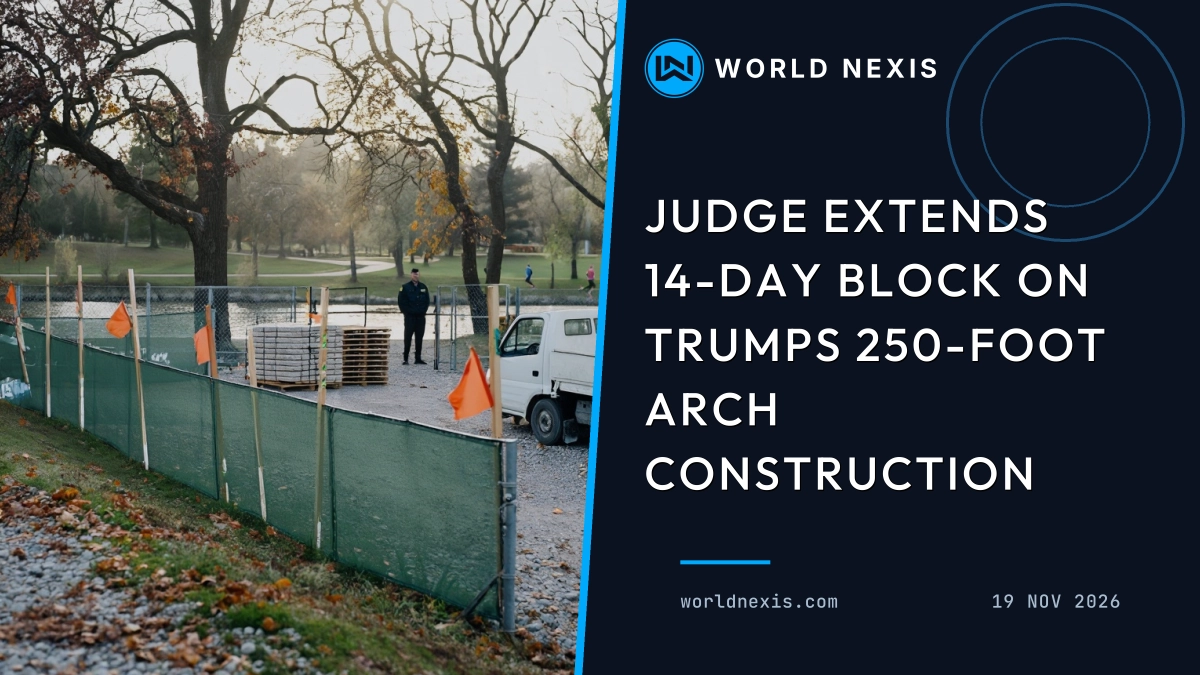
A federal judge has extended the block on construction of the Trump arch for another 14 days, keeping the 250-foot (76-meter) memorial planned beside Arlington National Cemetery on hold until early December. US District Judge Tanya Chutkan issued the extension in a brief order on Wednesday, the day before her earlier restraining order was due to expire.
Key points
- Judge Tanya Chutkan extended her November 5 restraining order on the Trump arch by two weeks.
- The original order was due to lapse on Thursday, so construction of the Trump arch is now frozen into early December.
- Virginia, the District of Columbia, Vietnam veterans and members of the Kennedy family are all challenging the project.
- The White House says Congress authorized the arch more than a century ago and that it would honor veterans.
What the Trump arch ruling does
Chutkan said the extra two weeks would give her time to weigh a request from plaintiffs, including Virginia and the District of Columbia, for a longer-term injunction that would halt building work while the case proceeds. She found that nothing had significantly changed in the litigation since she first stepped in. She therefore chose to maintain the status quo until she rules on that request.
The practical effect is that the Trump arch construction block now runs to early December. The order stops ground-breaking on a structure intended to rise 250 feet (76 meters) near the Potomac River, between Arlington National Cemetery and the Lincoln Memorial.
Renderings of the Trump arch show a flame held by a 60-foot gold winged female figure, flanked by gold flying eagles. The site is among the most sensitive pieces of federal land in the country. It sits in the sightlines of the Lincoln Memorial and next to the cemetery where US service members are buried.
Who is challenging the Trump arch
Several lawsuits are now moving through the same Washington courtroom. Virginia and the District of Columbia are among the plaintiffs. The original case was brought by a group of Vietnam veterans and an architectural historian.
Historic preservation groups and other plaintiffs allege the administration bypassed federal reviews, lacked congressional authorization for the project and would damage public space. Members of the Kennedy family have mounted their own challenge, saying the arch would obstruct views and cast shadows over relatives’ graves at Arlington.
Nicolas Sansone, an attorney with the Public Citizen Litigation Group who represents the plaintiffs in the original lawsuit, said they were “gratified to see that the judge recognized that the circumstances that required emergency relief two weeks ago haven’t changed.”
“We’re hopeful the additional two-week pause will give the court the opportunity to assess our arguments in favor of a longer-term preliminary injunction that will block construction of the arch while the lawsuit proceeds.”
The administration’s case for the Trump arch
The White House did not immediately respond to a request for comment on Wednesday’s order. In court, the administration has argued that Congress effectively approved the project more than 100 years ago, when it also authorized construction of a bridge across the Potomac River. Officials have said the Trump triumphal arch would honor veterans.
Trump has described the design in far more expansive terms. In September he called it on social media a “top grade Military Complex/Triumphal Arch” that would “house, store, and have the rapid ability to use large numbers of drones, plus Snipers, on both the roof and plaza areas.”
The dispute is one of several legal fights over the president’s building plans in Washington, which include a ballroom project at the White House, a renovation of the Lincoln Memorial Reflecting Pool and a proposed championship-level golf course a short distance from the White House. In each case, the central question is similar: how much can a president build on federal land without fresh approval from Congress?
Why it matters
For people who live in and around Washington, the ruling decides whether a large construction site opens within sight of the Lincoln Memorial and the rows of graves at Arlington. Residents and visitors have a direct stake in the views, the traffic and the use of public land along the Potomac.
More broadly, the case tests the limits of executive power over federal property. If the administration’s reading of a century-old bridge authorization holds, future presidents would have a far easier route to build monuments and complexes without returning to Congress. If it fails, the Trump arch becomes a template for how challengers can slow such projects down.
Analysis
Constitutional law and accountability reporting are the lenses I bring to this beat. On the record set out in court, the challengers currently have the better of the argument. The administration’s legal footing is a congressional authorization for a Potomac bridge passed more than a century ago. Treating that as approval for a 250-foot arch is a very long stretch. In the president’s own words, the structure would store drones and host snipers on its roof and plaza.
I also think the timing matters. Chutkan’s order was triggered because work could have begun almost immediately. Courts are rightly wary of letting a project advance so far that a later ruling becomes meaningless. The strongest counter-argument is that presidents do hold broad latitude over federal land, and that drawn-out litigation carries its own cost. That is a fair point, but it does not answer the missing review.
What I will be watching is whether Chutkan converts the temporary pause into a preliminary injunction. If she does, the Trump arch is unlikely to rise during this term, and the fight shifts to Congress and the appeals courts.
What happens next
Chutkan’s extension lasts 14 days, so the restraining order now runs into early December, or until she rules on the plaintiffs’ request for a preliminary injunction. That decision is the one that matters: it would either free the administration to start work or lock the site down for months.
What we don’t know yet
There is no timetable for a ruling on the longer injunction. It is also unclear whether the administration will appeal Wednesday’s extension, and how much site preparation, if any, can continue while the order stands.
Related coverage
- Trump Asia trip: 4-day swing begins with Alaska detour
- FDA nominee Heidi Overton dropped one day before major vote
- FAA ground stop: Trump denies blame for 12,000-flight crisis
Further reading
- Judge extends block on construction of Trump’s triumphal arch
- US judge extends block on construction of Trump’s arch
About the author: Ayesha Rahman is the Senior Political Correspondent & Columnist at World Nexis News (WNN), covering politics & opinion. The analysis section reflects the writer’s view.

Ayesha Rahman
Ayesha Rahman covers politics and opinion for World Nexis News from London, focusing on elections, legislatures and the policy choices that shape everyday life in the US and UK. She writes analysis and columns that separate what is confirmed from what is claimed, working from…



