Hashtag United funding fuels major inclusive football push
Hashtag United funding from the Trident Community Foundation is behind inclusive junior and adult teams plus a Friday session for people with early-stage…
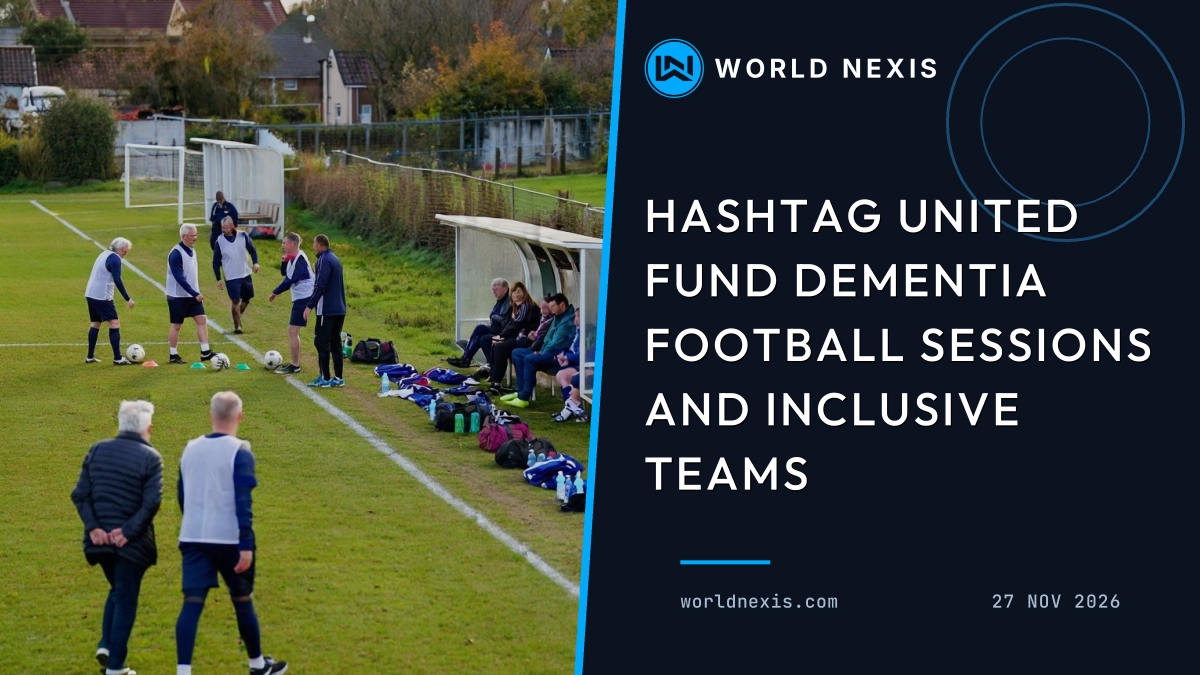
Hashtag United funding from the Trident Community Foundation sits at the centre of the club’s claim to be one of the most inclusive in English football, with inclusive junior and adult teams run from an extensive youth section in Billericay and a Friday session for people living with early-stage dementia. The Tags, relegated from the Pitching In Isthmian Premier Division last season, say the grants have paid for specialist coaching, tailored equipment and kit as participation has grown year on year. Co-chairman Derrick Pearson said the money has helped the club keep a simple promise: nobody is turned away.
Key points
- Hashtag United credit grant funding from the Trident Community Foundation with supporting inclusive junior and adult football in Billericay.
- The adult programme includes a Friday session for people with early-stage dementia, which the club has run for four or five years.
- The money covers specialist coaching, equipment tailored to participants’ needs, tracksuits and an annual event for families.
- On the pitch, the Tags sit in the Division One North play-off places after relegation from the Isthmian Premier Division last season.
How the Hashtag United funding is spent
Trident Community Foundation grants are delivered through Pitching In, the league sponsor’s programme, and are reserved for non-capital projects at Step 3 and Step 4 clubs. That rules out bricks and mortar, but it covers much of what an inclusive section actually needs: qualified coaches, adapted equipment and the growing cost of kit.
Pearson said demand has climbed every year, forcing the club to keep buying additional items. Tracksuits and other kit have helped attract more young people over the last four years, particularly those who tried mainstream football and decided it was not right for them.
Working with participants who need extra support requires particular skills and training, and the funding helps meet those costs. Equipment is bought to suit the people using it rather than the other way round.
A Friday session for people with early-stage dementia
The adult section’s most distinctive offering is a Friday football session for people with early-stage dementia, built on the idea that the game has a role at every stage of life. The club runs regular training and now hopes to organise matches, while offering respite and support to families.
Pearson said very few community clubs offer that kind of support and that the session has been running for four or five years. Some Hashtag United funding also pays for an annual event where families of people living with dementia meet, discuss the challenges they face and back one another.
“It’s not just about football. There’s a huge social impact too. We use funding to help make these events affordable so that people can come along without worrying about the cost.”
He added that the sessions help evoke old memories for lifelong supporters. “It brings back wonderful memories for people,” Pearson said.
Derrick Pearson: ‘We don’t turn anyone away’
The co-chairman rejected any suggestion that inclusion at the club is a box-ticking exercise driven from above. Hashtag, he said, have been around for 30 years, particularly on the youth side, and built the programme out of conviction rather than guidance from the governing body.
“It wasn’t something we started because the FA suggested clubs should offer it. We did it because we genuinely believe that’s what a community club should provide.”
“We don’t turn anyone away. Whatever someone’s ability, experience level or skill set, they can come and play football with us. That’s one of the reasons the club has continued to grow over the past 30 years.”
He described Hashtag as a community club that does not want to simply tick boxes, and said the aim is to make sure everyone locally has the chance to play. Beyond the coaching, the club wants matches and tournaments for its dementia participants, arguing that they enjoy competing as much as they enjoy training.
On the pitch, a promotion push
The off-field work has coincided with a strong start in Division One North, where the Tags currently occupy a play-off place. Relegation from the Isthmian Premier Division last season could have destabilised a club with a heavy community workload, but the first team have responded quickly.
That matters for the finances as much as the mood. A competitive side draws crowds, and crowds make the inclusive sessions more visible to families who might never otherwise walk through the gate.
Why it matters
Grassroots clubs are increasingly the first and only place where families affected by dementia can find structured, affordable activity. The cost of specialist coaching and adapted kit is exactly the sort of small barrier that quietly ends programmes before they start.
For readers in Essex and beyond, the practical effect is simple: a local session that costs participants little, an annual event that does not price families out, and a club that keeps its doors open to children who did not settle in mainstream teams.
Analysis
Having covered non-league football for World Nexis News, I look first at how money is actually spent, not at the slogan attached to it. On that test, the strongest evidence here is the dementia session. It has run for four or five years, it involves specialist coaching, and it supports families as well as players. That is a much harder thing to sustain than a single inclusive fixture staged for photographs, and it is the part of this story I would defend most strongly.
The claim to be among the most inclusive clubs in the country is harder to stand up, because nothing in the club’s programme is measured against a national benchmark. I side with Pearson on the substance and with the sceptics on the wording. The counter-argument is fair: Step 4 budgets are tiny, grants for tracksuits and coaching are modest, and a club with a strong brand gains goodwill from talking about inclusion. But goodwill does not keep a Friday session running for half a decade.
What I would watch is whether the model spreads. If other Step 3 and 4 clubs copy the dementia format rather than simply the press release, the Trident Community Foundation money will have done more than plug a gap in one club’s budget.
What happens next
Hashtag intend to spend the coming season trying to connect with other groups and arrange matches and tournaments for their dementia participants, alongside the existing training sessions. The club also expects participation to keep rising, which means further spending on kit and equipment.
What we don’t know yet
The club has not disclosed the value of the grants or how many people take part in the inclusive and dementia sessions. It is also unclear whether the funding runs beyond the current cycle, or how any future matches for dementia participants would be organised and insured.
Related coverage
- Prison restaurant opens at HMP Drake Hall in major jobs push
- DWP cyber incident takes major benefit services offline
- Democratic majorities vow major corruption crackdown
Further reading
- Tags hail grant funding in bid to become most inclusive club
- Tags hail grant funding in bid to become most inclusive club
About the author: James Okoro is the Sports Correspondent at World Nexis News (WNN), covering sports. The analysis section reflects the writer’s view.

James Okoro
James Okoro is Sports Correspondent at World Nexis News, covering football, cricket, rugby, tennis, Formula 1, golf, boxing and the major American leagues from London. He reports results and the wider story around them — money, governance, athlete welfare and the data behind performance —…