Sarina Wiegman masterclass for 3 aspiring female coaches
Sarina Wiegman masterclass: England's head coach hosted three aspiring female coaches at St George's Park, as Chase funding passes 7,000 qualifications.
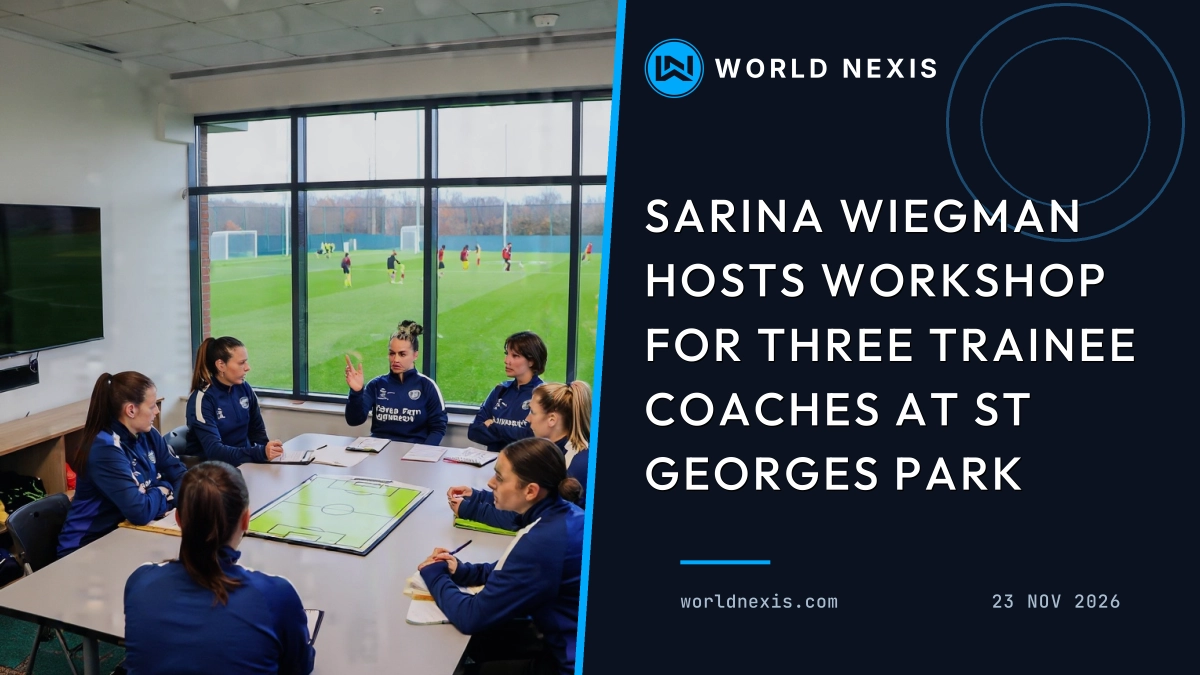
A Sarina Wiegman masterclass has given three aspiring elite female coaches a rare look inside the women’s game, after England’s head coach welcomed them to St George’s Park for a tour of the national football centre and an interactive workshop. The visit came as the Lionesses prepare for their upcoming fixtures against Ukraine, and offered the trio access to the training facilities used by the senior squad.
The three coaches are working towards UEFA B or C qualifications and are beneficiaries of the Chase football coaching programme, which pays for coaching courses and bursaries for people from low-income backgrounds in England, Scotland, Northern Ireland and Wales.
Key points
- A Sarina Wiegman masterclass at St George’s Park hosted three trainee coaches completing UEFA B or C courses.
- The group toured England’s training facilities and joined a workshop on the elite coaching mindset.
- The Chase football coaching programme has funded more than 7,000 qualifications, over 5,000 of them completed since 2024.
- YouGov research found 57% of female coaches say watching high-profile women coaches on television gave them more confidence.
Inside the Sarina Wiegman masterclass
The workshop was built around the practical business of elite coaching. Wiegman shared lessons from her own career and set out how she approaches pre-match preparation and decision-making under pressure, two areas where the margin between winning and losing is measured in minutes.
The session was not a one-way lecture. The three coaches were invited to describe their own experiences in the game, and the discussion that followed covered the step from junior and grassroots roles into performance environments.
Wiegman said:
“Coaching is such a rewarding career path to take and one that gives you the opportunity to make a real difference to players both on and off the pitch. It was a pleasure to meet these talented coaches and hear about their ambitions for the future. Having visible role models is important, but so is ensuring that people have access to the opportunities and support they need to develop. Programmes like this can play an important role in helping more women take that next step and fulfil their potential.”
Removing the cost barrier behind the pathway
The coaches on the visit are among thousands supported by a scheme designed to widen who can afford to qualify. Fully funded places and bursaries are aimed at people from low-income backgrounds, and the Chase football coaching programme operates across all four home nations rather than England alone.
Organisers say more than 7,000 coaching qualifications have been funded to date, with over 5,000 completed since 2024. That volume matters because the entry costs of a UEFA pathway, together with travel and the unpaid hours needed to build a portfolio, are the point at which many aspiring coaches quietly stop.
Deborah Keay, chief marketing officer at Chase, said:
“Role models have the power to inspire confidence and ambition, and there are few better examples in football than Sarina Wiegman. We’re proud that the Chase football coaching programme is helping more women access coaching opportunities by removing financial barriers and creating pathways into the game. By investing in the next generation of coaches, we hope to help build a stronger and more inclusive future for football across the country.”
What the female coaches role models research found
YouGov polling cited by the programme suggests visibility carries real weight. More than half of female coaches, 57%, said watching high-profile women’s coaches on television gave them greater confidence to continue their own coaching journey.
More than a third said they have a coaching role model at all, with Wiegman and Emma Hayes, head coach of the US Women’s National Team, named most often. Coaches with a role model reported higher confidence, motivation and participation in sport than those without one.
Leah Williams, a beneficiary of the programme, said:
“Meeting Sarina was an incredible experience. To hear directly from one of the most successful coaches in international football and learn about her approach to coaching was hugely inspiring. The Chase football coaching programme has opened doors that otherwise may not have been available to me, and experiences like this give you even more confidence to keep pushing forward in your coaching journey.”
Why it matters
Coaching is the part of the women’s game where progress has been slowest, and the pipeline starts with who can afford a badge rather than who can read a game. Every funded qualification is a candidate who stays in football instead of drifting out in her twenties.
For families with daughters in grassroots football, that is the practical difference: a route into the game that does not depend on savings. For the sport, it is a talent pool currently being lost.
Analysis
Having covered the women’s game for World Nexis News, I look first at what remains after the cameras leave. The Sarina Wiegman masterclass is a genuinely good day for three people, and the photographs will do the rounds. But a workshop does not pay for a UEFA A licence, and the gap between a B badge and a job in a professional academy is where most women’s coaching careers stall.
So I side with the argument that the funding line is the important one. The number worth quoting is not three coaches in a classroom but 7,000 qualifications paid for, because that is a structural intervention rather than a gesture. The strongest counter-argument is that inspiration is not nothing: if 57% of female coaches say seeing women on television gave them confidence, exposure is doing work that money alone cannot, and the two reinforce each other.
Where I part company with the campaign framing is the suggestion that this solves the problem. It widens the entrance. It does not tell us whether the women who walk through it are hired, mentored and promoted once they qualify.
What happens next
Attention returns to the pitch, with the Lionesses preparing for their fixtures against Ukraine. The Chase football coaching programme continues to fund qualifications across England, Scotland, Northern Ireland and Wales.
What we don’t know yet
The programme has not set out how many places will be funded in its next intake, or whether more workshops with the England head coach are planned. Nor is it clear how many of those 7,000 qualified coaches have moved into paid roles in the professional game. Until those numbers are published, the case for the model rests on anecdotes as much as evidence.
Related coverage
- Tarik Skubal’s record $450m Mets deal reshapes MLB market
- Tom Jackson dies at 75: family asked ESPN to hold the news until Sunday
- Arizona Kansas State: Fifita seals 35-28 overtime thriller
Further reading
- Sarina Wiegman delivers masterclass for aspiring female coaches
- Sarina Wiegman delivers masterclass for aspiring female coaches
About the author: James Okoro is the Sports Correspondent at World Nexis News (WNN), covering sports. The analysis section reflects the writer’s view.

James Okoro
James Okoro is Sports Correspondent at World Nexis News, covering football, cricket, rugby, tennis, Formula 1, golf, boxing and the major American leagues from London. He reports results and the wider story around them — money, governance, athlete welfare and the data behind performance —…