Regional picture theatres: 4 historic Australian cinemas
Four regional picture theatres in Australia still screen films every weekend, kept alive by volunteers, two floods and a 1941 Wurlitzer organ.
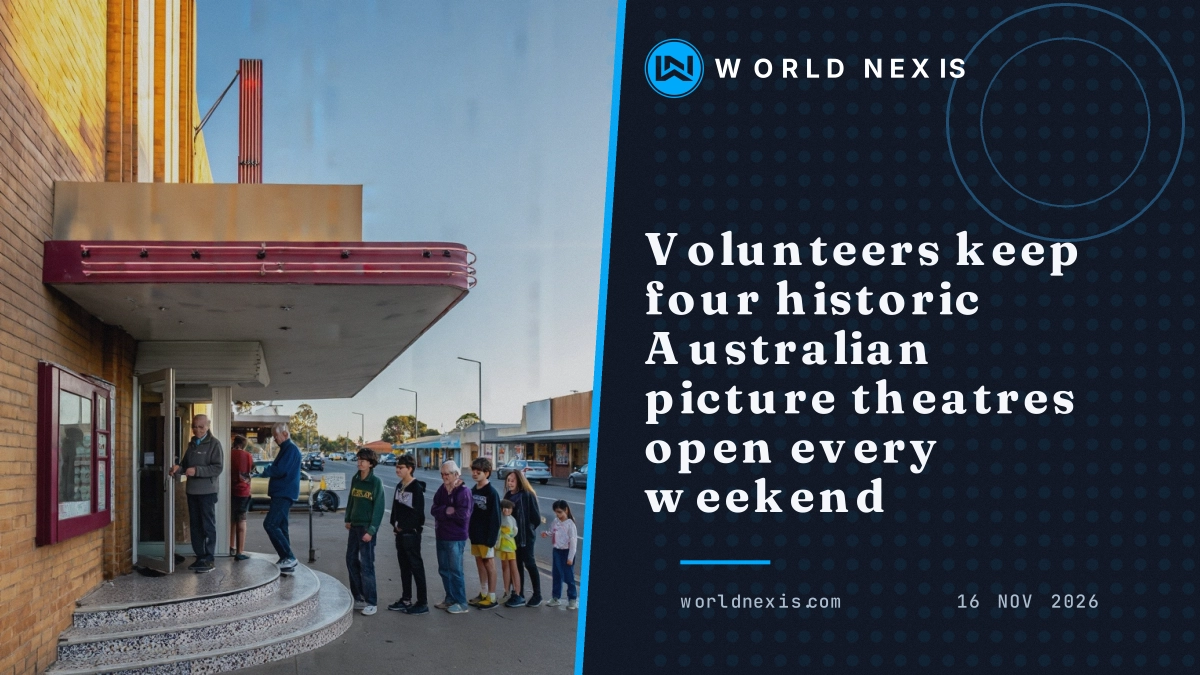
Four regional picture theatres across Australia are still firing up their projectors every weekend, according to a road-trip feature carried by the Western Advocate, the Newcastle Herald and the Muswellbrook Chronicle. The venues it profiles — the Roxy, the Rex, the Capri and the James — span more than a century of Australian film-going, from open-air screenings in 1912 to a 1941 movie house built to feel like an ocean liner.
The piece, published on 15 November, credits passionate volunteers for keeping the doors open, and argues that a night at one of these regional picture theatres offers something no lounge-room screen can match.
Key points
- Four historic cinemas in regional Australia still screen films, run largely by volunteer committees.
- Cinema and Theatre Historical Society secretary Mike Trickett said streaming services have none of the charm of a classic picture palace.
- The Rex Theatre in Charlton has survived fires, long closures and two massive floods, and was bought by community volunteers in 2007.
- Photographer Gavin John spent two years documenting 65 historic venues for his book, Australian Theatres and Cinemas.
Inside the regional picture theatres still screening
The four historic Australian cinemas share a striking trait: each has a survival story as dramatic as anything shown on its screen. All four remain in regular use, and three were bought or saved outright by local campaigners rather than a cinema chain.
The Roxy, known as Big Red
Known to Riverina residents as Big Red for its brilliant neon sign, the Roxy Theatre opened in 1930 and blends art deco swagger with Spanish Mission curves. The town rallied to buy and rescue it in the late 1970s, and a recent restoration means travellers can still take a seat under its majestic ceilings. It was designed to echo the grand spectacle of an inner-city movie house, with two levels of seating, an orchestra pit and a proscenium arch over the stage.
The Rex, Charlton
The Rex Theatre in Charlton opened in 1938 and was built so fast that council approval arrived barely a week before its premiere screening of A Star is Born. Since then it has beaten fires, long closures and two massive floods. Community volunteers bought the building in 2007, shovelled out mud and rebuilt the space so regional film-lovers could watch classic cinema from plush seats.
Mr Trickett said the Rex’s dedicated volunteer community now runs regular screenings and matinees, drawing steady crowds from across Victoria’s north-west.
The Capri and its Wurlitzer
Built in 1941, the Capri channels the glamour of an ocean liner with sleek curves, circular portals and a grand staircase. Organ enthusiasts saved it in 1978, and its headline act is a Wurlitzer pipe organ described as the second largest in the southern hemisphere. The theatre originally seated nearly 1,500 patrons, giving wartime audiences an escape into Hollywood glamour complete with imported carpet and a cosmetic powder bar.
The James, Williams River Valley
Tucked into the Williams River Valley, the James is described as Australia’s oldest continuously operating, purpose-built picture theatre. What began with open-air screenings in 1912 evolved into a handsome Spanish Mission venue by 1930. Today volunteer booking officer Gregg Parrey and his crew keep the 230-seat house buzzing with choc-tops and community film events.
“People come here to be entertained, and we’ve got to be part of that entertainment because we’re the first people they see,” Mr Parrey said. “We make it a very enjoyable experience.”
Why the regional picture theatres still pull a crowd
Mr Trickett was blunt about the competition. Modern streaming services, he said, have none of the charm of a classic country picture theatre. “There’s nothing like going to the theatre or cinema to watch a movie,” he said. “You go to the cinema, there’s an audience there reacting to what’s happening, a bit of laughter, a bit of giggling, and it all adds to the experience.”
Gavin John’s two-year road trip suggests the appeal of these regional picture theatres is architectural as well as social. The photographer documented 65 beautiful, historic venues for his book, Australian Theatres and Cinemas, and said one building’s dramatic facade was “one of the first ones that pulled us in”, adding that it was the reason the book began.
He was equally taken with the Capri’s organ, saying the quirky instrument stopped him in his tracks when he first saw the pipes flanking the stage. Hearing the resident organist play, he said, was an experience like no other.
For readers planning a weekend away, the practical appeal of these historic Australian cinemas is simple. They sit in small towns, they run weekend screenings and matinees, and they offer a detour that costs little more than a ticket. Whether country picture theatres can keep that going depends less on nostalgia than on the volunteers who staff the box office, sell the choc-tops and sweep out the auditorium.
Analysis
Having covered film and the economics of streaming for WNN, I look first at what actually keeps a cinema open: bodies in seats, week after week. On that measure the evidence in this piece points one way. The Rex fills matinees across Victoria’s north-west, the James keeps a 230-seat house busy, and neither relies on a chain’s marketing budget. Mr Trickett’s argument, that a shared audience is part of the art form, is better supported by the facts than the idea that convenience alone decides where people watch.
I side with the volunteers here. The strongest counter-argument is that sentiment never pays for a new roof, and that two floods and long closures show how fragile these buildings are. That is fair, which is why the rescue stories matter more than the architecture: the Roxy, the Rex and the Capri were each bought or saved by local enthusiasts rather than rescued by the market. The case for country picture theatres rests on labour, not longing.
What readers should take from a 65-venue survey is scale, not just charm. These regional picture theatres are a national network of small auditoriums kept alive by unpaid work, and the obvious risk is that the model lasts only as long as those volunteers do. That is the question I would put to anyone who assumes a subscription replaces a night out.
What happens next
The source material announces no funding, reopening or closure decisions. What it does set out is a working schedule: the Rex’s volunteer community runs regular screenings and matinees, and the James continues its community film events and hospitality in the Williams River Valley. The Roxy stays open to visitors after its recent restoration, and the Capri’s headline act remains its Wurlitzer organ.
For travellers, the immediate next step is a weekend detour. For the sector, the next test is the one the article leaves open: whether a new generation of volunteers steps forward to keep these regional picture theatres running.
Related coverage
Sources
- Hit the highway: 4 classic country picture theatres still screening today (westernadvocate.com.au)
- Hit the highway: 4 classic country picture theatres still screening today (newcastleherald.com.au)
- Hit the highway: 4 classic country picture theatres still screening today (muswellbrookchronicle.com.au)
- Hit the highway: 4 classic country picture theatres still screening today (gloucesteradvocate.com.au)
- Hit the highway: 4 classic country picture theatres still screening today (cootamundraherald.com.au)
About the author: Emily Carver is World Nexis News’s Culture & Entertainment Writer, covering culture & entertainment. The analysis section reflects the writer’s view.

Emily Carver
Emily Carver is Culture & Entertainment Writer at World Nexis News, covering film, television, music, gaming, books and the creative industries from Los Angeles. She writes about the business and craft behind the work — streaming economics, production decisions, criticism and the way culture travels…