Favourite Christmas carol Silent Night wins 42% in UK poll
Silent Night has been voted the favourite Christmas carol in Britain with 42% of a 2,015-person poll, as eight in 10 say carol singing is declining.
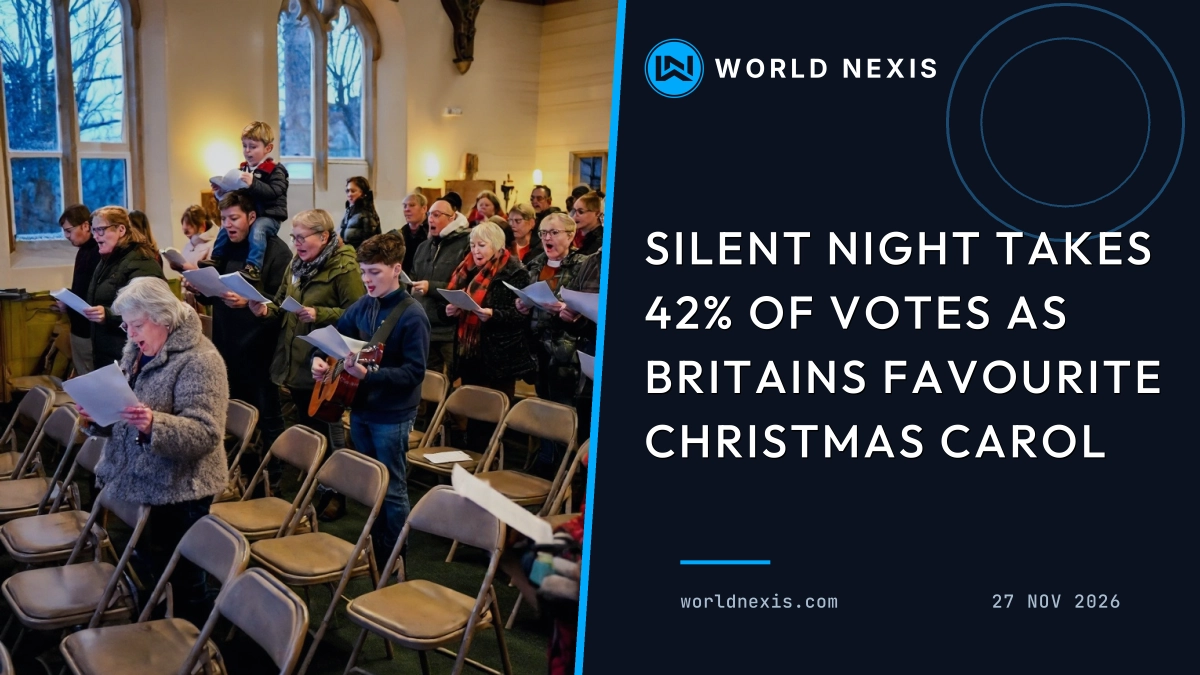
Silent Night has been voted Britain’s favourite Christmas carol, taking 42% of the vote in a nationwide poll of 2,015 people. The 19th century ballad finished well clear of O Come, All Ye Faithful, which came second with 25%. The study was commissioned by the Postcode Lottery and lands as the Christmas season gets under way.
Key points
- Silent Night is Britain’s favourite Christmas carol, with 42% of the vote in a poll of 2,015 people.
- O Come, All Ye Faithful came second on 25%, while Away in a Manger and Hark! The Herald Angels Sing took 23% each.
- Eight in 10 respondents said carol singing has declined, yet 65% would like more carol singers on their street.
- Almost six in 10 (57%) prefer traditional carols to festive pop songs by Wham!, Slade and Mariah Carey.
A clear winner for the favourite Christmas carol
The favourite Christmas carol vote produced a decisive margin. Silent Night took 42%, while O Come, All Ye Faithful drew 25%. Away in a Manger and Hark! The Herald Angels Sing followed on 23% each, leaving the rest of the field behind.
The Silent Night poll also suggests that appetite for singing together has not faded, even if the chances to do it have. Almost two thirds of respondents (65%) said they would like to see more carol singers on their street. At the same time, eight in 10 believe carol singing has declined in recent years.
David Miller, communications director at the Postcode Lottery, said the findings underline the social pull of the season.
“Christmas is all about bringing people together, and nothing does that quite like a festive sing-a-long. Our research shows how much we still love these traditions.”
How a broken organ in Austria created the favourite Christmas carol
Silent Night began as an emergency measure. Legend holds that mice gnawed through the bellows of the organ at St Nicholas Church in the Austrian village of Oberndorf, silencing the instrument before midnight mass. With no time for repairs, the priest, Father Joseph Mohr, asked his friend Franz Gruber to set music to a poem he had written two years earlier, Stille Nacht Heilige Nacht.
The result was scored for choir and guitar and first performed on Christmas Eve 1818. It was translated into English in 1863 and was sung in the trenches during the Christmas truce of 1914. It has since been carried into about 300 languages and dialects, and it holds Unesco Intangible Cultural Heritage status.
Traditional carols hold off Mariah Carey and Wham!
Behind the favourite Christmas carol vote sits a more complicated picture of British singing habits. Almost six in 10 respondents (57%) said they still prefer traditional carols to festive pop songs from artists such as Wham!, Slade and Mariah Carey. Both categories were put to the same people, and the older repertoire won comfortably.
The Silent Night result therefore sits alongside a wider affection for the hymns people learn young. Carol services, school concerts and street singing now fill the December calendar, and the Christmas Eve service remains the fixed point for many congregations.
Why it matters
Carol singing is one of the cheapest forms of communal life left in Britain. It needs no ticket, no subscription and no equipment beyond a printed sheet or a phone screen. A finding that eight in 10 people think carol singing in Britain is fading points to a gap between what people want and what their streets actually offer.
For churches, schools, choirs and village halls, the favourite Christmas carol result is an argument for staging more events rather than fewer. Two thirds of those asked said they would welcome singers outside their door.
Analysis
I cover music culture for World Nexis News, and the figure I keep returning to here is not 42%. It is the 65% who want more carol singers on their street, sitting beside the eight in 10 who believe the tradition is shrinking. Those two answers describe a supply problem, not a change of taste.
My reading is that the favourite Christmas carol result reflects a repertoire people already know by heart, and that what has thinned out is the organising: the choir leader, the rehearsal room, the licence, the person willing to knock on doors in the dark. The counter-argument is fair up to a point, because a survey commissioned by a lottery operator is built to produce a warm seasonal story, and telling a questionnaire you would like carol singers costs nothing. Preference is not the same as turning out on a wet Tuesday in December.
Even so, the evidence here favours the view that tradition survives when somebody makes room for it. Nobody in this poll was asked to choose between Silent Night and a Mariah Carey track as a way of life; they were asked what they liked, and they named the old song by a margin of 17 points over the runner-up. That is worth acting on.
What happens next
No formal next step follows from the poll. Carol services, school concerts and street singing will run through December, and Christmas Eve remains the centrepiece for many congregations, being the occasion Silent Night was written to serve.
What we don’t know yet
The published figures describe a national picture only. There is no regional or age breakdown, and nothing to show whether the people who named Silent Night as their favourite Christmas carol sing themselves. No fieldwork dates or margin of error have been released, and no follow-up study has been announced to test whether carol singing in Britain actually revives.
Related coverage
- Kate Middleton makes solo Scotland visit as Heal film nears
- Dolly Parton Torn hits No 39 as U2 make record country debut
- Miraval lawsuit settlement ends Pitt and Jolie’s 2022 case
Further reading
- Silent Night voted Britain’s favourite Christmas carol
- Silent Night voted Britain’s favourite Christmas carol
About the author: Emily Carver is the Culture & Entertainment Writer at World Nexis News (WNN), covering culture & entertainment. The analysis section reflects the writer’s view.

Emily Carver
Emily Carver is Culture & Entertainment Writer at World Nexis News, covering film, television, music, gaming, books and the creative industries from Los Angeles. She writes about the business and craft behind the work — streaming economics, production decisions, criticism and the way culture travels…